

Courrèges
Overview
Courrèges is a Paris fashion house founded in 1961 by André and Coqueline Courrèges after both had worked at Balenciaga. Its early couture moved from Balenciaga-derived construction towards short geometric silhouettes, trousers, flat boots, substantial double-faced fabrics and an optical palette of white with saturated colour. The breakthrough developed across 1964 and 1965; the familiar “Space Age” label is retrospective shorthand, not a verified collection title.
After withdrawing from normal press presentations in 1965 amid widespread copying, the founders rebuilt the house around controlled production and distribution. Public activity resumed in 1967 alongside Couture Future, followed by the Prototype made-to-measure tier and the younger Hyperbole line. Menswear, fragrance, accessories, uniforms, retail interiors and industrial design extended the house during the 1970s. Itokin control, trademark disputes and André’s withdrawal reduced couture activity in the 1980s, while Coqueline later directed a smaller founder house through archive re-editions, fragrance, technology projects and a 2002 couture return.
Jacques Bungert and Frédéric Torloting acquired the company in 2011 and rebuilt it through products, e-commerce, collaborations and manufacturing before appointing Sébastien Meyer and Arnaud Vaillant in 2015. Yolanda Zobel followed in 2018, the year Artémis took control. Nicolas Di Felice led an integrated seasonal, menswear, fragrance, accessories, retail and image revival from 2020 to March 2026. Drew Henry became Artistic Director effective May 2026 under CEO Marie Leblanc; his first collection had not yet been presented at the research cutoff.
Philosophy
Courrèges developed around movement, legibility and controlled geometry. Tailored planes, trapeze and chemise forms, slim trousers, ribbed second-skin layers and flat boots replaced the weight and ornament associated with much post-war couture. White operated as light and spatial structure, while primary colour, visible topstitching and reflective surfaces clarified cut. The work addressed an active body, even when the materials were firm enough to hold an architectural line.
Its modernity was also organisational. Couture, industrial ready-to-wear and younger product were separated into Prototype, Couture Future and Hyperbole; boutiques, packaging and interiors carried the same visual system. The house used patent finishes, polyurethane, synthetic leather and other reflective materials, but no single substance defines every period. Later re-edition programmes likewise differ: the 1995 archive return, Trésors, Essentiels, Fin de Plastique and the current Collection Réédition each belong to a distinct commercial and material context.
Recent directors have treated the archive as a set of working principles. Meyer and Vaillant organised collections by categories and materials; Zobel used collaborators and material-transition projects; Di Felice translated circles, spirals, ergonomic seams and short proportions into a broader wardrobe shaped by club culture and daily use. Henry’s appointment statement emphasised modern, useful and direct clothing, but no public collection existed by July 2026, so a new design system cannot yet be described.
Timeline
Disclaimer
Creative timeline
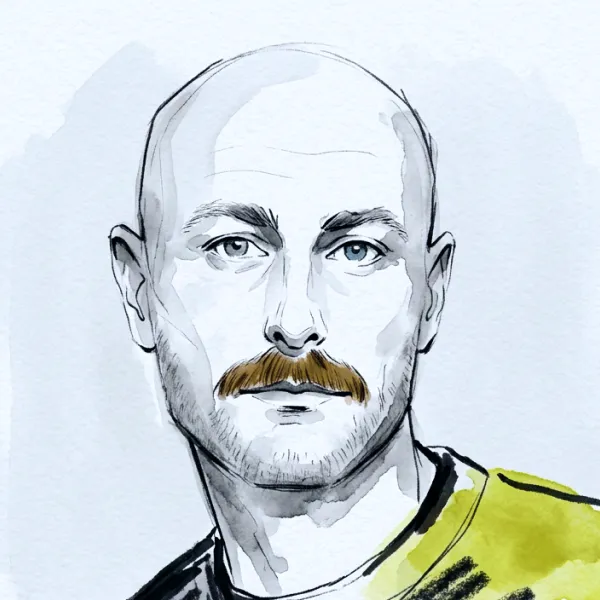
Button TextCourrèges announced Drew Henry as Artistic Director on 30 March 2026, effective in May. The appointment is his first public house leadership; no credited Courrèges collection or product had appeared by 15 July 2026.
Courrèges announced Nicolas Di Felice’s departure on 24 March 2026, twenty days after his final credited collection. No separately documented contractual last day was published.
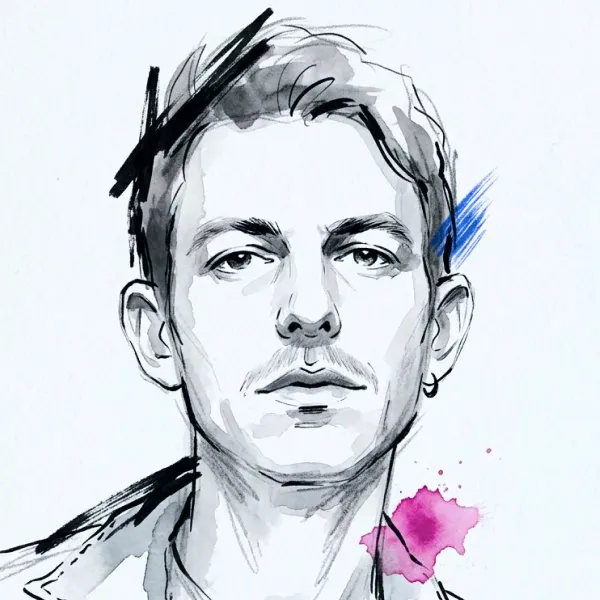
Nicolas Di Felice became Artistic Director effective 10 September 2020. His tenure developed seasonal collections, re-edition, menswear, fragrance, accessories, stores and a recurring show-image system before his departure was announced on 24 March 2026.
Courrèges and Yolanda Zobel separated by mutual decision in early January 2020. Fall 2020 was published after her departure without a designer byline and belongs to the in-house transition.
Yolanda Zobel became Artistic Director effective 26 February 2018. Her programme joined archival geometry to event-led presentation, material transition and a network of collaborators; Spring 2020 was her final securely credited runway collection.
Courrèges announced the mutual departure of Arnaud Vaillant and Sébastien Meyer on 20 July 2017. The following seasonal collection was attributed to an unnamed in-house team.
Courrèges announced the mutual departure of Sébastien Meyer and Arnaud Vaillant on 20 July 2017. Fall 2017 was their final credited output; Spring 2018 was designed by the in-house team.
André Courrèges died on 7 January 2016 aged 92. His death did not define the end of his founder status, which is permanent, or the earlier end of his active design authority.
Arnaud Vaillant and Sébastien Meyer were appointed joint artistic directors of Courrèges womenswear in May 2015. Both held equal formal authority and joint collection credit through the departure announced on 20 July 2017.
Sébastien Meyer and Arnaud Vaillant were appointed joint artistic directors of Courrèges womenswear in May 2015. Their equal public authority converted the product-led relaunch into a seasonal programme running from Spring 2016 through Fall 2017.
Around 1995, Coqueline Courrèges became the principal operating leader of the restored founder house. Her authority covered design realisation, archive re-editions, fragrance, the Pau facility and technology projects until the 2011 sale, while exact title wording varied across patrimony and registry sources.
Itokin’s decision to stop haute couture coincided with André Courrèges ceasing regular design work around 1985. This ended active design authority in stages but did not end his founder status, ownership interests or later legal involvement.
Nicolas Di Felice authored Jean Paul Gaultier’s Autumn/Winter 2024 haute couture collection as the house’s invited guest designer. The commission was limited to a single couture season alongside his continuing role at Courrèges.
Coqueline and André Courrèges jointly opened the house in 1961. Her founder relationship is permanent; her later operating leadership and the 2011 sale are recorded separately from that status.
André and Coqueline Courrèges jointly opened the Paris couture house in 1961. André became its named public designer, while the institution developed through their shared design, realisation and operating partnership.
Di Felice's first Courrèges collection established the stripped-back, club-inflected revival that would quickly define the house's new phase.
Courrèges divisions and related structures
Courrèges has repeatedly organised couture, ready-to-wear, fragrance and archive-derived product through named programmes whose functions changed with the house.
Historical fashion programmes
- Prototype
- made-to-measure
- The couture or made-to-measure tier was publicly identifiable by the early 1970s, preserving individual fitting and atelier work alongside industrial production.
- Couture Future
- deluxe ready-to-wear
- Launched in 1967, Couture Future placed controlled, high-end ready-to-wear between couture and mass diffusion without replacing the couture activity.
- Hyperbole
- young ready-to-wear
- Introduced around 1970 and active by 1971, Hyperbole offered a younger and less expensive expression of the house vocabulary.
- Courrèges Homme
- menswear
- Menswear launched in 1973 and operated through a distinct historical company before contracting in the mid-1980s; the category returned within the main house programme in 2021.
- Second Peau
- product system
- The second-skin top-and-tights idea entered the house vocabulary around 1969 and later reappeared through licensed and collaborative product programmes.
Fragrance and archive programmes
- Courrèges Parfums
- fragrance company
- Registered in 1971, the separate fragrance company began with Empreinte and has passed through ownership, licensing and formulation changes distinct from fashion authorship.
- Trésors
- archive reissues
- During the 2011–15 relaunch, Trésors identified pieces reproduced close to archival models.
- Essentiels
- core products
- Essentiels identified newly developed staples using the house vocabulary during the same product-led relaunch.
- Collection Réédition
- ongoing re-edition
- From 2021, the house separated recurring archive-derived carryover product from its seasonal main collections and pre-collections.
- Colorama
- fragrance range
- The modern perfume programme revived the geometric bottle system and introduced a gender-neutral permanent range led by Slogan in 2021.
Courrèges collaborations
Courrèges has applied its fashion language to uniforms, transport, beauty, retail architecture, image-making and specialist material or show projects.
Uniforms, transport and product
- Munich Olympic staff uniforms
- 1972 commission
- Courrèges designed staff clothing for the Munich Olympics within a tender and manufacturing system involving external German producers.
- UTA uniforms
- 1973 aviation
- The house developed a uniform programme for the French airline UTA, extending its geometric dress system into corporate clothing.
- Matra-Simca Bagheera Courrèges
- 1974 special edition
- A named Bagheera edition translated the Courrèges colour and trim identity into an automotive object, although the precise design contract remains incompletely documented.
- Evian
- 2011 bottle
- A limited-edition bottle formed part of the acquisition-era return to tightly defined product collaborations.
Fashion, accessories and beauty
- La Redoute
- 2007 and 2013 capsules
- Two catalogue collaborations brought Courrèges clothing and related product to a wider distribution network without constituting mainline runway relaunches.
- Alain Mikli
- eyewear
- The partners developed a small eyewear range during the early-2010s product-led revival.
- Gerbe
- Second Skin
- A 2013 project revisited the Second Skin top-and-tights system through hosiery production expertise.
- Estée Lauder
- 2015 cosmetics
- The thirteen-piece makeup capsule used circular packaging and the house colour vocabulary across beauty products.
Architecture, image and performance
- Jean Bottineau
- founder-period interiors
- The architect and designer worked over many years on Courrèges boutiques, interiors and furniture, although a complete project list is not yet recovered.
- Peter Knapp
- photography and exhibition
- Knapp photographed the Spring–Summer 1965 work for Elle and later curated the 2026 Fondation Maeght exhibition centred on that image archive.
- Bernard Dubois
- store architecture
- Dubois developed documented modern retail environments, including the SoHo store opened in 2022.
- Rémy Brière, Matière Noire and La Mode en Images
- show environments
- Across documented 2023–25 seasons, concept, light, spatial design and production were distributed among recurring specialist collaborators.
- Instituto E and Lafawndah
- Spring 2020
- Material research involving algae-based material and Pirarucu fish skin accompanied a Canal Saint-Martin presentation with a live performance by Lafawndah.


