

Introduction
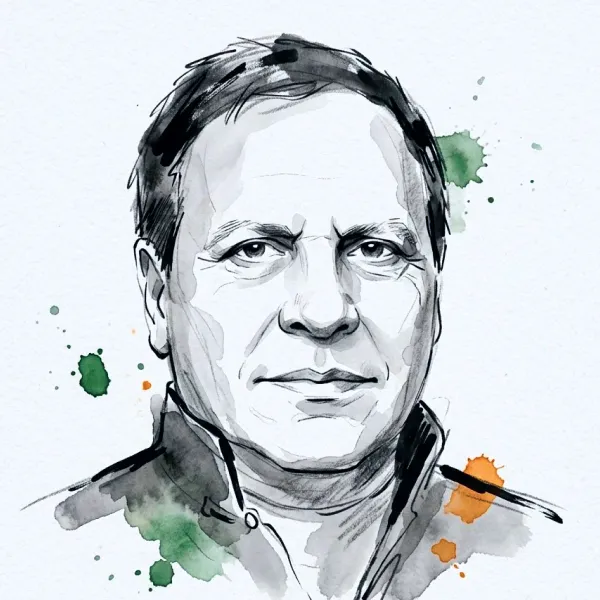
Azzedine Alaïa was a Tunis-born couturier whose Paris career developed outside the usual ascent through established houses. After sculpture studies at the Tunis Institute of Fine Arts and practical sewing work for Madame Richard, he arrived in Paris in June 1956. His employment at Christian Dior lasted only four or five days; he later worked at Guy Laroche, built a private clientele through domestic and social networks, and opened an apartment atelier at 60 rue de Bellechasse in 1964.
His public ready-to-wear career emerged from a rejected 1979 Charles Jourdan leather commission. Alaïa presented to international press and buyers at Bergdorf Goodman in 1982 and staged his first Paris show under the Alaïa name in 1983. Through knitwear developed with Italian manufacturers, close work on fit models and a command of leather, jersey and corsetry, he established a house whose influence did not depend on a conventional seasonal rhythm.
Alaïa regained the ready-to-wear business from Prada in 2007 before Richemont entered the company. He continued to design until his death on 18 November 2017, while also building a major historical fashion collection and establishing the association that became the Fondation Azzedine Alaïa. His career joins private dressmaking, industrial textile development, couture technique, collecting and an unusually independent model of authorship.
Design ethos
Alaïa designed through the body. Sculpture training gave him an exact understanding of volume and anatomy, but his garments were resolved through repeated fittings: fabric was pinned, stretched, cut and corrected directly on a model until support and movement became part of the same structure. He could use knitted tension in place of conventional boning, or expose the functional force of zips, lacing and corset seams.
Material development was collaborative and exacting. Long relationships with knitwear manufacturers and yarn specialists allowed him to build jacquards, rib structures and stretch surfaces that changed pressure across the garment. Leather could be laser-cut, eyeleted or joined without ordinary stitching, while jersey and viscose were engineered into hoods, wrapped dresses and compressed tubes.
His archive was also a working instrument. Alaïa collected garments by Balenciaga, Vionnet, Grès, Dior and other designers to study their internal construction, then revisited his own patterns across decades. The refusal of the official calendar followed the same logic: presentation came after resolution. The method privileged technical continuity and revision over the demand for a new visual theme every season.
Disclaimer
Career history
2018
The Design Museum in London opened Azzedine Alaïa: The Couturier on 10 May 2018. Conceived with the designer before his death, the exhibition grouped more than sixty works by technique and archetype and became a major posthumous technical survey.
2017
Azzedine Alaïa died in Paris on 18 November 2017 at the age of eighty-two. His death ended the founder-led house and initiated a four-year period in which the commercial studio maintained output without naming a creative director.
2015
Alaïa Paris Eau de Parfum launched in summer 2015 under the BPI licence. Marie Salamagne composed the scent from Alaïa’s brief, while Martin Szekely designed a perforated black bottle that translated the house’s material vocabulary into packaging.
2013
The Palais Galliera mounted the first major Paris retrospective devoted to Alaïa in 2013. The exhibition placed his construction methods and body of work within a museum history while he was still directing the commercial house.
2007
Prada S.p.A. sold 100% of Azzedine Alaïa S.a.S. back to its founder in late July 2007, restoring his control of the company and name. Public accounts indicate that Prada may have continued producing footwear and leather goods, but the terms and duration of that later manufacturing relationship remain unresolved.
2007
Azzedine Alaïa, Christoph von Weyhe and Carla Sozzani established the Association Azzedine Alaïa in 2007 to protect the designer’s work and historical fashion collection. The organisation was legally separate from the commercial house and later became the Fondation Azzedine Alaïa.
2003
On 23 January 2003 Alaïa presented his first runway devoted exclusively to haute couture. The event did not begin his made-to-measure practice; it formalised a public couture programme enabled in part by the expanded atelier assembled after the Saint Laurent closure.
2002
Alaïa returned to public runway presentation with the house-named Summer/Winter 2002 collection at 7 rue de Moussy. The show ended a long period of reduced public presentation while preserving the founder’s independent timing.
2002
After Yves Saint Laurent’s couture house closed in January 2002, Alaïa hired about fifteen former Saint Laurent atelier workers, including senior tailoring and flou specialists. Their arrival expanded the house’s technical capacity and supported the couture programme presented in 2003.
1995
By the mid-1990s Alaïa had sharply reduced wholesale runway presentations and seasonal public output. Private clients, select retail relationships and work at rue de la Verrerie sustained the house through a period defined by irregular delivery rather than closure.
1991
For Spring/Summer 1991, Alaïa brought Tati’s pink-and-white check into the main collection and designed a bag, T-shirt and espadrilles for the discount retailer. The project connected couture-level construction to a mass-retail visual code without creating a permanent diffusion line.
1988
Alaïa presented Spring/Summer 1988 in May, two months after Paris fashion week. The delayed show made explicit an operating principle that developed across subsequent years: collections would be presented when resolved rather than to satisfy the official calendar.
1985
CAPC Bordeaux presented A Day with Azzedine Alaïa: Fashion 1980–1985, the first French museum invitation identified in the Foundation chronology. The survey helped establish the early ready-to-wear canon while Alaïa’s international profile was accelerating.
1983
The Fondation chronology records 1983 as the establishment of the Maison under the Alaïa name and the year of its first Paris show, Spring/Summer 1983, at rue de Bellechasse. The event is separate from the legal creation of AZZEDINE ALAIA SAS in 1985.
1982
Alaïa presented Autumn/Winter 1982 to international press and buyers at Bergdorf Goodman in New York. It was the first official ready-to-wear presentation of his work, distinct from the first Paris Maison show the following year.
1979
Charles Jourdan commissioned a ready-to-wear leather project from Alaïa and rejected it before release. Alaïa retained the eyeleted, zipped and perforated pieces; their later editorial exposure helped move his work from private clientele towards a public ready-to-wear business.
1979
Azzedine Alaïa designed tuxedo suiting for Mugler’s Autumn/Winter 1979–80 Futures Spirales collection. The contribution joined two designers working through tightly controlled silhouette while preserving Thierry Mugler’s authorship of the collection as a whole.
1976
Between 1976 and 1979 Alaïa designed costumes for Crazy Horse dancers and worked on fur projects for Panther’s Club, Robert Sack and Paul and Christian Imbert. These commissions extended his private practice into performance and specialist production before the public Maison emerged.
1968
When Cristóbal Balenciaga’s house closed in 1968, Alaïa began acquiring garments to preserve and study. The activity grew into a major historical fashion collection and became a working resource for his construction research.
1965
Azzedine Alaïa contributed to the construction of a Mondrian dress prototype within the founder house’s 1965 couture development. The role concerns atelier realisation inside the season and does not convert the Mondrian series into a separate Creative Era or collection title.
1964
Alaïa established a private made-to-measure atelier in his apartment at 60 rue de Bellechasse in 1964. The practice developed into a public ready-to-wear house in the early 1980s and remained under his creative authority until his death in 2017.
1958
Alaïa joined Guy Laroche’s atelier on 30 June 1958 and remained for three seasons, leaving in November 1959. The sustained placement gave him experience inside a growing Paris couture house between his brief Dior employment and the private-client practice that preceded his own atelier; no evidence supports a senior title or independent collection credit.
1956
Azzedine Alaïa entered Dior’s atelier on 26 June 1956 and was dismissed on 29 June amid the bureaucratic hostility directed at North African immigrants during the Algerian War. The four-day tenure produced no documented design authorship.
1950
Alaïa enrolled at the Tunis Institute of Fine Arts to study sculpture while learning sewing through domestic work and employment with the dressmaker Madame Richard. Anatomical study and the practical reconstruction of Paris couture established the two technical strands of his later method.
You’re in
When the archive opens, you’ll be among the first to know.
That’s all.


