

Introduction
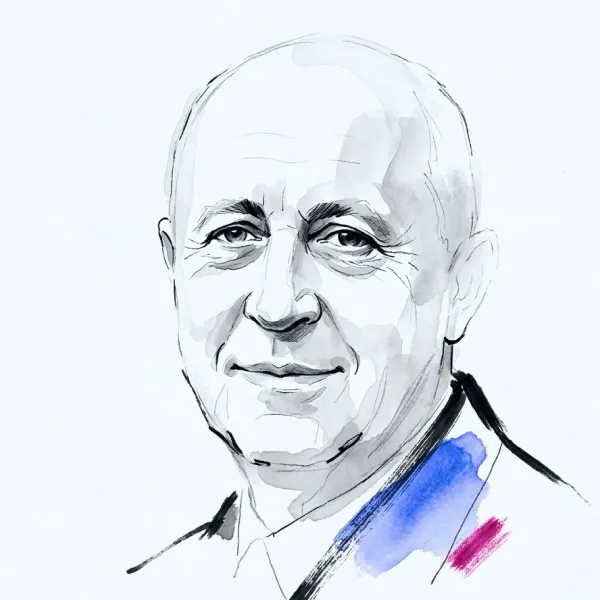
Christian Dior was a French couturier who founded his Paris house in 1946 with the financial backing of Marcel Boussac. Before the foundation he worked for Robert Piguet and, from 1942 to 1946, at Lucien Lelong alongside Pierre Balmain. Dior’s company was created in October 1946 and the couture house opened at 30 Avenue Montaigne on 16 December, supported by a network that included Jacques Rouët, Raymonde Zehnacker, Marguerite Carré, Mitzah Bricard and Serge Heftler-Louiche.
The first collection was presented on 12 February 1947 under the Corolle and Huit line names. Carmel Snow’s description of the silhouette as a New Look supplied the public name by which the collection became known. Dior led the house until his death on 24 October 1957, while perfume, licensing and international branches turned the new couture business into an unusually modern post-war institution.
Design ethos
Dior organised the silhouette through internal structure: rounded shoulders, a tightly controlled waist, shaped hips and skirts built from considerable lengths of fabric. The Bar jacket made tailoring and padding serve a floral conception of the body, while the Corolle and Huit lines treated couture as an architecture of posture rather than a decorative surface.
The work also relied on gardens, historical dress and the technical intelligence of the ateliers. Changes such as the H-Line show that Dior did not repeat one formula unchanged; he adjusted the relation between waist, torso and skirt while retaining a disciplined interest in proportion. The visual luxury of the finished garment depended on fittings, handwork and a commercial organisation capable of carrying couture imagery into perfume and licensed product.
Disclaimer
Career history
1957
Christian Dior died in Montecatini on 24 October 1957, ten years after his first collection. The death forced the young international house to formalise a creative succession almost immediately.
1946
Christian Dior entered a partnership with Marcel Boussac to create the company in October 1946 and opened the couture house at 30 Avenue Montaigne in December. He directed its creative programme until his death in 1957. Marcel Boussac financed the Dior company and supplied the industrial capital behind its foundation. His role was structural rather than creative, and the Boussac group’s 1978 bankruptcy ended the original ownership system.
You’re in
When the archive opens, you’ll be among the first to know.
That’s all.


