

Introduction
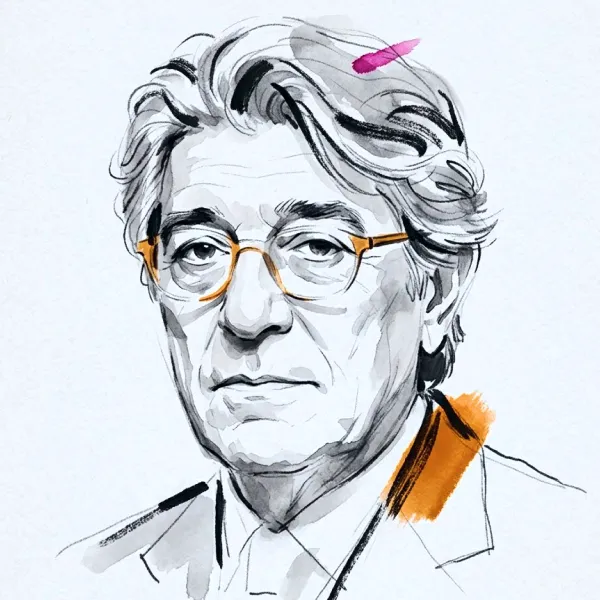
Ciro Paone was the founder of Kiton, the Neapolitan tailoring house he launched in Arzano in 1968 after an earlier career in fabrics and menswear. His importance lies less in a conventional designer role than in the construction of a luxury system: a family company devoted to soft Neapolitan tailoring, extreme material standards and the defence of handwork at industrial scale.
Paone turned the workshop into a vertically disciplined house where cloth, cut, sewing, education and client service were treated as parts of one culture. The Scuola di Alta Sartoria, founded in 2000, gave that culture an institutional form, training young tailors in the techniques that Kiton considered impossible to preserve through machinery alone. He died in 2021, but the company continues to use his idea of quality as both a production method and a moral vocabulary.
His legacy is visible in Kiton’s refusal to separate luxury from labour. The Arzano headquarters, the tailoring school, the Carlo Barbera textile connection and the family succession all extend the same principle: that the value of a garment comes from material truth, time and the intelligence of skilled hands.
Design ethos
Paone’s design ethos was not built around seasonal authorship or visual shock. It was built around the belief that the finest garment should feel inevitable: light on the body, exact in its proportions, quiet in its surface and obsessive in its construction. The soft Neapolitan shoulder, hand-sewn details and rare fabrics became the visible signs of a deeper discipline around comfort, dignity and longevity.
His phrase “the best of the best +1” is best understood as an instruction to production rather than a slogan. It demanded better cloth, longer training, finer handwork and a more respectful relation between maker and wearer. In that sense, Paone’s contribution to fashion was infrastructural: he made craft continuity itself the house style.
Disclaimer
Career history
2026
The naming of Viale Ciro Paone in Arzano gives Kiton’s founder a civic memorial tied directly to the company’s headquarters and to the industrial district shaped by the house’s growth.
2000
The Scuola di Alta Sartoria gives Kiton’s craft philosophy an institutional form, training young tailors inside the company’s Arzano workshops and making education part of the house’s public heritage.
1968
Ciro Paone founded Kiton in Arzano in 1968 and built the house around Neapolitan tailoring, rare fabrics and the belief that handwork could remain the centre of an international luxury company.
1956
Ciro Paone’s pre-Kiton menswear activity begins with CiPa, the Neapolitan foundation from which the later Kiton house would emerge. It belongs as pre-history rather than as a replacement for Kiton’s 1968 founding date.
You’re in
When the archive opens, you’ll be among the first to know.
That’s all.


