

Introduction
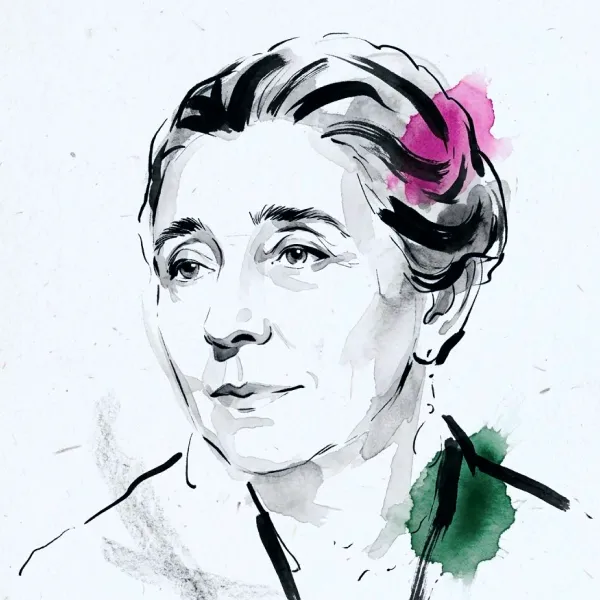
Jeanne Lanvin was a French milliner, couturière and entrepreneur who founded her Paris house in 1889. After independent millinery work from the mid-1880s, she built a business that expanded from hats into children’s dress, women’s couture, decorative arts, colour production, fragrance, sport and menswear.
Her daughter Marguerite Marie-Blanche was a wearer, family figure and stimulus for the children’s department, though not a co-founder. Lanvin remained the principal creative and institutional authority of the house until her death in 1946, working through specialised ateliers, head seamstresses, collaborators and industrial infrastructure rather than as the sole maker of every object.
Design ethos
Lanvin’s practice moved between full-skirted robe de style forms, narrow evening lines, tailored daywear and ceremonial dress. Colour, embroidery, beadwork and surface carried as much weight as silhouette, with proprietary blues and dense workshop technique binding otherwise varied historical and cultural references.
Her method was expansive and collaborative. Children’s clothing informed women’s design; Armand-Albert Rateau developed interiors and objects; specialist perfumers and graphic artists shaped fragrance; and the couture workrooms translated her direction into seasonal collections. The house’s breadth came from co-ordination, not from undifferentiated personal authorship.
Disclaimer
Career history
1946
Jeanne Lanvin died in Paris on 6 July 1946. Her death ended the founder’s personal authority but did not dissolve the ateliers or produce an instantaneous transfer of every creative and corporate function.
1889
Jeanne Lanvin founded her millinery business in Paris in 1889 and expanded it into children’s dress, women’s couture and a multi-division house. Her authority continued until her death on 6 July 1946, realised through specialised ateliers and named collaborators rather than sole authorship of every object.
You’re in
When the archive opens, you’ll be among the first to know.
That’s all.


