

Introduction
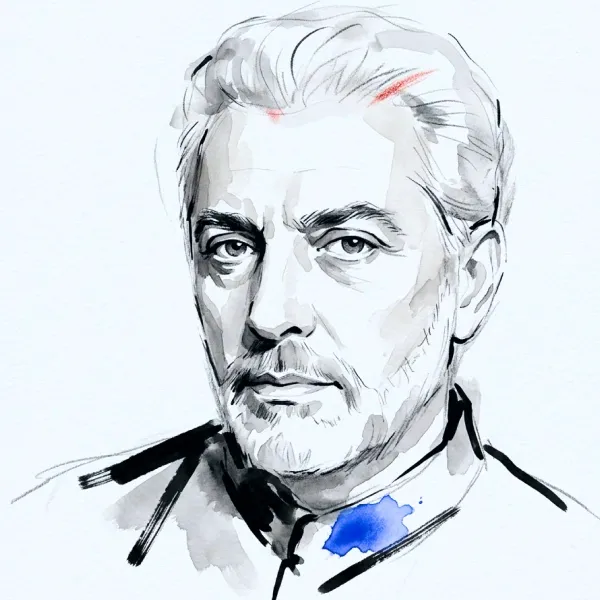
Paco Rabanne, born Francisco Rabaneda y Cuervo, was a Spanish-born designer and a defining figure of the 1960s Space Age movement. Trained as an architect, he initially designed avant-garde jewellery for houses such as Balenciaga and Dior before founding his eponymous brand in Paris in 1966. He became one of the most provocative figures in fashion, famously challenging the traditional boundaries of garment construction.
His influence extended beyond the runway into film and costume design, notably creating the iconic wardrobe for Jane Fonda in ‘Barbarella’. Rabanne’s career was defined by a relentless pursuit of the new, earning him a reputation as a visionary who saw fashion as an experimental frontier rather than a conventional craft.
Design ethos
Garment construction is approached through the logic of architecture and metallurgy rather than traditional dressmaking. Rejecting the needle and thread, the process relies on industrial techniques such as pliers, blowtorches, and wire to assemble pieces from unconventional materials. This radical methodology was introduced in the 1966 debut ‘12 Unwearable Dresses in Contemporary Materials’, which utilised rhodoid, metal discs, and plastic to create modular, non-textile forms.
The resulting silhouettes often function as a form of metallic armour, exploring textures that are reflective, rhythmic, and strictly geometric. There is a persistent focus on the tactile qualities of hard materials and their interaction with the human body, creating a futuristic aesthetic that prioritises innovation over comfort. By treating the dress as a structural problem to be solved, the work highlights a belief that the only remaining frontier for fashion lies in the discovery and application of new, non-traditional materials.
Disclaimer
Career history
You’re in
When the archive opens, you’ll be among the first to know.
That’s all.


