

Introduction
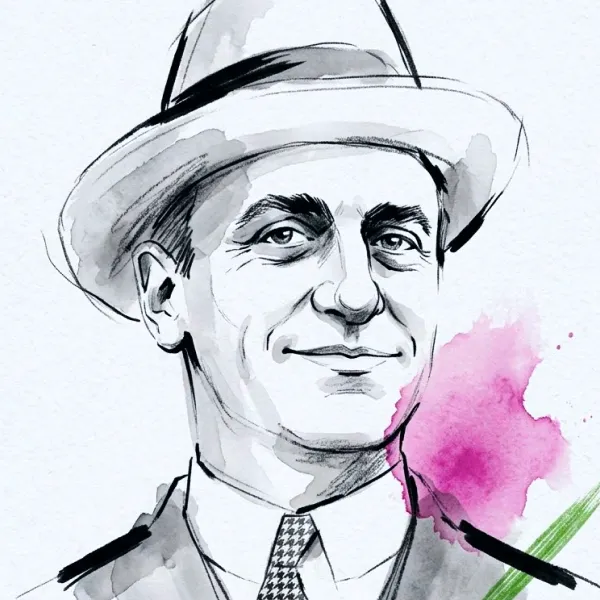
Pierre Wertheimer was a French businessman who, with his brother Paul and Galeries Lafayette founder Théophile Bader, formed Les Parfums Chanel in 1924. The brothers’ Bourjois business supplied the industrial chemistry, manufacturing and international distribution that Gabrielle Chanel’s boutique operation lacked. The ownership split gave the Wertheimers 70 per cent, Bader 20 per cent and Chanel 10 per cent.
The partnership was commercially effective and personally hostile. During the German occupation the Wertheimers transferred the company to Félix Amiot to protect it from Aryanisation, defeating Chanel’s attempt to claim the business under anti-Jewish law. Pierre negotiated the 1947 settlement that ended her competing Swiss perfume operation and secured a worldwide royalty and expenses for her.
In 1954, Wertheimer financed Chanel’s return to couture and consolidated family control of the fashion and fragrance businesses. His contribution was not creative authorship but the construction of a privately held industrial system capable of carrying the name across perfume, fashion and international distribution beyond its founder’s lifetime.
Design ethos
Wertheimer’s operating method joined concentrated ownership to industrial scale. Manufacturing and distribution were treated as permanent infrastructure, while the designer’s name, formulas and visual codes were protected as assets requiring consistent international control.
The approach was pragmatic rather than harmonious. Litigation, proxy ownership and settlement were used when necessary, but financing also preserved couture when it was not independently profitable. This separation between commercial governance and creative authorship became a defining feature of the modern Chanel organisation.
Disclaimer
Career history
1954
Pierre Wertheimer financed Gabrielle Chanel’s 1954 couture return as the family consolidated ownership of the fashion and fragrance businesses. The settlement ended the earlier fractured control and established the private ownership structure that continued under later Wertheimer generations.
1947
Pierre Wertheimer and Gabrielle Chanel settled their perfume dispute on 17 May 1947. Chanel ended her competing Swiss operation in exchange for wartime profits, a worldwide royalty and continuing expenses, while ownership remained with the Wertheimer structure.
1924
Pierre and Paul Wertheimer formed Les Parfums Chanel with Théophile Bader and Gabrielle Chanel in 1924. The separate company gave the Wertheimers 70 per cent ownership and supplied the industrial production and distribution behind the fragrance business.
You’re in
When the archive opens, you’ll be among the first to know.
That’s all.


