

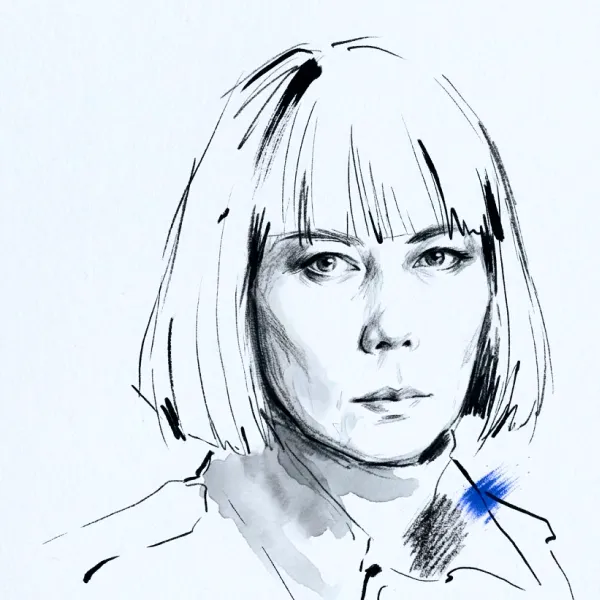
Introduction
Rei Kawakubo is a visionary Japanese fashion designer and the founder of Comme des Garçons, which she established in Tokyo in 1969. Based between Tokyo and Paris, she is widely considered one of the most influential and disruptive figures in fashion history. Kawakubo is known for her 'anti-fashion' stance, consistently challenging traditional notions of beauty, gender, and garment construction. Her influence extends beyond her own label to her creation of Dover Street Market, a global retail concept that has redefined the intersection of art and commerce.
In 2017, Kawakubo became only the second living designer to be the subject of a major solo retrospective at the Metropolitan Museum of Art's Costume Institute. Her work has inspired generations of designers and artists, and she remains the fiercely independent head of her brand. Through her various sub-labels and collaborations, she has built a creative empire that prioritises intellectual depth and artistic integrity over conventional market trends.
Design ethos
Conceptual rigour and a commitment to 'making clothes that did not exist before' define an aesthetic that consistently subverts traditional ideas of garment shape and function. The work explores the 'art of the in-between', utilizing deconstruction, asymmetry, and intentional imperfection to challenge the wearer's relationship with the body. Early collections pioneered 'Hiroshima Chic', featuring distressed, oversized black garments that rejected the polished glamour of the era in favour of a more intellectual, often challenging, visual language.
Recurring formal concerns include the distortion of the human figure through the use of padding and unusual proportions, most famously seen in the 'Lumps and Bumps' collection. The design process integrates Japanese aesthetic principles such as wabi-sabi—the beauty of the imperfect—and ma, the significance of the space around the object. By rejecting standard silhouettes in favour of sculptural, often abstract forms, the output functions as a form of social and artistic critique. This ethos prioritises the cerebral over the decorative, resulting in a body of work that remains at the avant-garde of global fashion.
Disclaimer
Career history
2025
Not Suits, But Suits compresses the Homme Plus argument into one clear contradiction: the suit stays visible while its authority, line and certainty are pulled apart.
2020
The publicly recoverable SHIRT show history is selective rather than complete, with verified presentations around Fall 2020, Fall/Winter 2021, Spring/Summer 2025 and Fall 2026.
2017
Recent Homme Plus pushes boyhood, punk, crazy suits and suit-not-suit contradictions into a late vocabulary of altered archetypes, inflated form and formal unease.
2009
From the stronger 2009-onward public spine, Homme Plus sharpens into a study of tailoring rupture, ceremony, skull imagery, anti-theme refusal and broken formal menswear.
2004
From 2004, the house’s universe widened through Dover Street Market and a broader ecology of retail, product and cultural projects without making the runway work less exacting.
1996
Body Meets Dress, Dress Meets Body remade the dressed silhouette through padded forms, turning body distortion into one of Kawakubo’s most influential collection statements.
1988
Comme des Garçons SHIRT works as a long-running diffusion and presentation line, using the shirt as a flexible frame for print, proportion, fabrication and light formal disruption.
1984
The early Homme Plus period establishes the line as Kawakubo’s menswear runway laboratory, treating mens' clothes as a system to be tested: suits, ceremony, youth, punk and formal codes are kept recognisable while being made unstable.
1982
The distressed Autumn/Winter 1982 collection made holes, damage and anti-finish feel like deliberate design language rather than absence or poverty of finish.
1981
The Pirates presentation announced Comme des Garçons in Paris through black, asymmetry and rough finish, turning an arrival show into a lasting rupture in fashion memory.
1981
From the early Paris presentations through the major 1990s body-form collections, Kawakubo turned black, damage, volume and anti-fashion refusal into a recognisable Comme des Garçons language.
1981
tricot Comme des Garçons is kept as its own house-line lineage, distinct from both Tao Comme des Garçons and the current tao relaunch.
1969
Kawakubo’s continuing direction keeps Comme des Garçons deliberately unresolved, using distortion, abstraction and contradiction to push the house beyond ordinary brand logic.
1969
Rei Kawakubo founded Comme des Garçons as a house built on refusal: asymmetry, intellectual tension, roughened beauty and a persistent distrust of easy polish.
You’re in
When the archive opens, you’ll be among the first to know.
That’s all.


