


Tod's
Overview
Tod’s developed from a family shoemaking system in the Marche rather than from one uncontested incorporation date. Filippo Della Valle’s early-twentieth-century workshop was expanded after the Second World War by Dorino Della Valle, and Diego Della Valle joined the business in 1975, directing it towards proprietary products and international buyers. J.P. Tod’s emerged in the early 1980s; the public name was shortened to Tod’s in 1997.
Footwear remains the house’s technical base. The Gommino adapted an existing driving-shoe type through Diego’s product brief, Dorino’s factory and unnamed artisans; leather goods followed in 1997, with the D Bag established by 2000. The business grew through a vertically supervised network in the Marche that combined internal plants, specialist external laboratories, model makers and a central style and product office.
Named fashion direction began with Derek Lam’s women’s commission and 2006 appointment. Alessandra Facchinetti established a six-season women’s runway sequence from 2013, while Andrea Incontri directed menswear from 2014; Walter Chiapponi unified women’s and men’s direction in 2019. Matteo Tamburini succeeded him in December 2023 and remains creative director of both collections.
Philosophy
Tod’s builds its design language from leather, low-profile footwear and objects intended for repeated use. The most persistent methods are material rather than emblematic: hand stitching, rubber-studded soles, soft bag construction, precise outerwear and tailoring that allows movement.
Craft at Tod’s operates through a supervised industrial network, not through a claim that every object is made by one person or in one room. Designers set collection direction; internal and external specialists develop lasts, patterns, hardware, leather treatments and samples; manufacturing teams translate those decisions into consistent production.
Seasonal fashion has repeatedly returned to the same question: how can a house grounded in shoes and leather goods make a complete Italian wardrobe without losing functional clarity? Runways, films and guest projects have changed the setting, while proportion, touch and technical finish remain the test of continuity.
Timeline

Disclaimer
Creative timeline
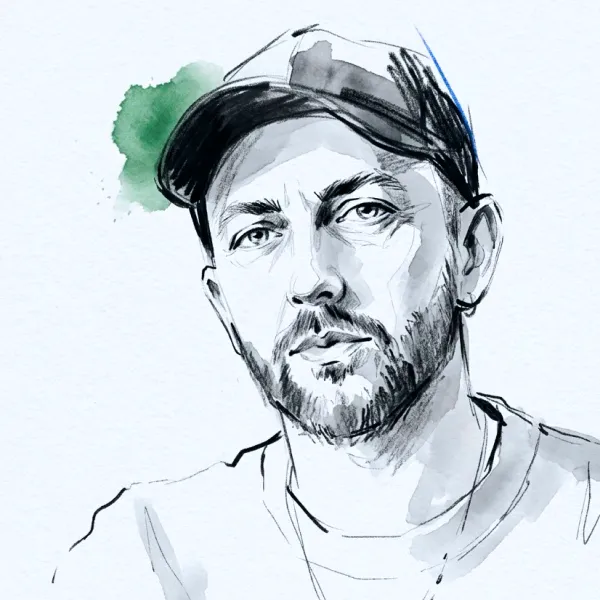
Button TextMatteo Tamburini presented his first Tod’s collection, Autumn–Winter 2024–25 womenswear, at a Milan tram depot on 23 February 2024. The debut established his material direction through leather outerwear, elongated tailoring and revised Gommino and Di Bag forms.
Tod’s appointed Matteo Tamburini creative director of women’s and men’s collections on 1 December 2023. He remains in the role through the research cutoff, directing a unified system with separate seasonal presentation calendars.
Walter Chiapponi presented his final Tod’s collection at Laboratori Scala Ansaldo on 22 September 2023. The runway closed his unified women’s and men’s direction and was followed by a short in-house studio transition.
Tod’s announced on 12 July 2023 that Walter Chiapponi would leave by mutual agreement after presenting Spring–Summer 2024 womenswear. Public creative work continued through the final runway on 22 September.
Walter Chiapponi presented his first public Tod’s collection, Autumn–Winter 2020–21 menswear, on 12 January 2020. The women’s runway followed in February and completed the first season under his unified remit.
Tod’s appointed Walter Chiapponi creative director of women’s and men’s collections on 17 October 2019. The appointment unified public direction across both categories and began with the Autumn–Winter 2020–21 season.
Andrea Incontri’s menswear creative-director term ended on 30 June 2019. His departure closed the category-split structure before Walter Chiapponi’s appointment across both women’s and men’s collections.
Tod’s returned women’s collections to team authorship after Facchinetti’s departure. The first confirmed studio-designed season was Spring–Summer 2017, presented on 23 September 2016; the system continued beside Incontri’s menswear remit until Walter Chiapponi unified both categories in October 2019.
Alessandra Facchinetti left Tod’s on 5 May 2016 after presenting Autumn–Winter 2016–17. The house did not appoint an immediate women’s successor; an in-house team continued the line while menswear remained under Andrea Incontri.
Tod’s engaged Monica Chiozzi as an independent contractor for women’s leather goods in 2015. She designed handbags for Spring–Summer 2016 and the Double T hardware introduced in September 2015, preserving object-level authorship beneath Facchinetti’s collection direction.
Tod’s appointed Andrea Incontri creative director of menswear on 20 June 2014. His category-specific appointment ran in parallel with Facchinetti’s women’s remit and later with a team-designed womenswear system; it did not make him overall creative director.
Andrea Incontri began collaborating with Tod’s menswear in 2013 before receiving a public category title. The preliminary phase distinguishes his working start from the June 2014 appointment and prevents the later tenure from being compressed into one unsupported date.
Tod’s appointed Alessandra Facchinetti creative director of women’s collections on 20 February 2013. Her six-season runway tenure established a sustained women’s fashion system and treated leather as a textile across clothing, footwear and accessories.
Derek Lam’s fixed-term Tod’s agreement ended on 30 September 2012. His final publicly presented collection was Autumn–Winter 2012, shown earlier that year, leaving a studio interval before Alessandra Facchinetti’s appointment.
Tod’s appointed Derek Lam creative director for women’s ready-to-wear and fashion-driven accessories on 30 November 2006. The external fixed-term relationship expanded the seasonal wardrobe while preserving product development through the house’s leather-goods teams.
Tod’s introduced its first securely documented women’s ready-to-wear line under Derek Lam for Spring 2006. The event records a durable category launch; the underlying capsule is not treated as a runway Collection because its public presentation format and exact date remain unresolved.
Tod’s commissioned Derek Lam by October 2005 to develop a women’s ready-to-wear capsule. The external project began his relationship with the house before the later creative-director appointment and introduced named fashion authorship into a product system previously led by internal teams.
The family manufacturer launched J.P. Tod’s as a proprietary international label in the early 1980s. Diego led the brand and market transition, while Dorino’s manufacturing system and the surrounding artisans supplied the technical base; no single exact launch year is uncontested.
Diego Della Valle joined the established family footwear business in 1975 and led its move towards proprietary products, international buyers and a public brand. His contribution combined product direction, naming and market positioning rather than sole technical design.
Dorino Della Valle expanded the family workshop into a small manufacturer after the Second World War and developed a skilled footwear workforce. His factory supplied outside labels and later supported the technical adaptation of the driving moccasin associated with Tod’s.
Filippo Della Valle operated a small footwear workshop in Casette d’Ete in the early twentieth century. The exact opening year is not established; this row records the family craft origin, not the later public launch of J.P. Tod’s.
Tod’s divisions and related structures
Footwear
- Core house category
- Driving shoes, loafers, boots and seasonal variants
- The Gommino family remains the central construction and image reference, alongside formal shoes and later Winter and Bubble revisions.
Leather goods
- Established in 1997
- Bags, small leather goods and belts
- The category includes the D or Di Bag lineage, Greca, Double T, T Timeless and later Shirt Bag and T-Box developments.
Womenswear
- Seasonal ready-to-wear
- Runway-led from 2013
- Derek Lam expanded the early wardrobe; Alessandra Facchinetti established the sustained runway sequence, followed by studio, Chiapponi and Tamburini systems.
Menswear
- Seasonal ready-to-wear
- Category direction and house studio
- Andrea Incontri held the first named menswear directorship before Chiapponi and Tamburini directed both principal collections.
Tod’s Factory
- Guest collaboration platform
- Launched in 2018
- Bounded projects pair an external designer or brand with Tod’s development and manufacturing resources; it is not a separate brand.
No_Code
- Experimental footwear project
- Introduced in 2018
- The project explores hybrid footwear and industrial design outside the main seasonal runway chronology.
Selected collaborations
Tod’s Factory
- Alessandro Dell’Acqua, 2018
- Alber Elbaz, 2019
- Mame Kurogouchi, 2020
- Hender Scheme, 2021
- Palm Angels and Moncler, 2022; Palm Angels, 2023
- Rahul Mishra, 2024
- Each project retained guest authorship while using Tod’s leather development and manufacturing.
Product and retail projects
- Mr Porter, 2017
- Automobili Lamborghini, from 2023
- These bounded product relationships sit outside the main women’s and men’s creative-director succession.
Presentation and art commissions
- Vanessa Beecroft, 2016
- Lorenzo Quinn, 2024
- Nelly Agassi, 2025
- The credited artists shaped individual presentation environments without receiving fashion-collection authorship.


