

Introduction
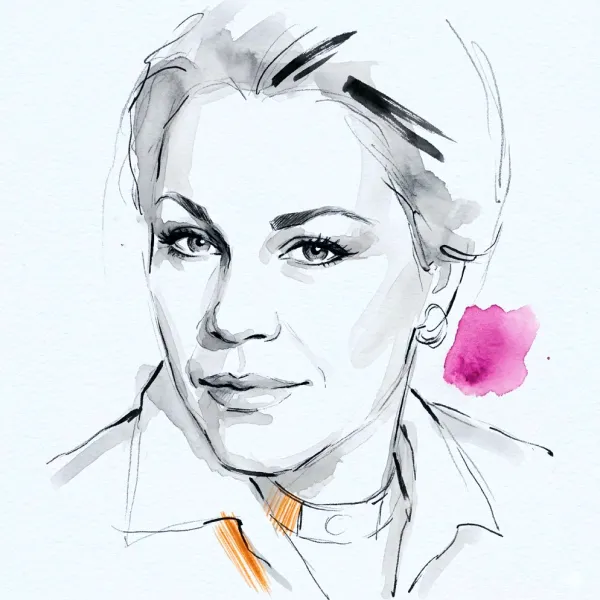
Céline Vipiana was the French co-founder and principal designer of Celine. In 1945 she and her husband, Richard Vipiana, opened a made-to-measure children’s shoe shop at 52 rue de Malte in Paris. The business expanded into women’s moccasins, handbags and gloves, fragrance and Italian leather production before introducing Couture Sportswear in 1967, a ready-to-wear line built around coordinated separates and ease.
Vipiana guided the house from specialist footwear into an international fashion and leather-goods company. The Sulky emblem and the interlocking-C motif later known as Triomphe emerged during her direction and remained available to subsequent designers as working house codes. Bernard Arnault’s Financière Agache acquired Celine in 1987; Vipiana nevertheless remained connected to the house until her death in 1997, spanning the transition from family control to LVMH ownership.
Design ethos
Vipiana’s work began with fit and utility. Children’s shoes made to measure, women’s moccasins, culottes, blouses and travel-ready separates placed comfort inside a luxury register without treating practicality as a lesser value.
Leather, knitwear and coordinated pieces supported a wardrobe that could move between work, leisure and travel. Graphic emblems supplied recognition, but the design argument rested on cut, material and repeated use. Couture Sportswear condensed that position: clothing with the finish and discipline of a Paris house, organised around the rhythms of everyday life rather than ceremonial dressing.
Disclaimer
Career history
1997
Céline Vipiana died in 1997 after remaining the house’s founder, designer and public figure through its transfer into LVMH. Her death closed the direct founder era as Michael Kors began the first sustained outsider-led ready-to-wear tenure.
1973
Celine adopted the interlocking-C chain emblem later called Triomphe. The year is supported as probable, while the familiar Arc de Triomphe origin story remains house lore rather than independently documented design history.
1969
Céline Vipiana’s Mistral bag used a wave-like front line that later supplied a historical reference for Michael Rider’s New Luggage. The design demonstrates that Celine’s leather-goods archive developed recognisable construction details before the Triomphe emblem became dominant.
1967
Céline Vipiana introduced Couture Sportswear, moving Celine decisively into ready-to-wear through culottes, blouses, knitwear and coordinated separates designed for an active daily wardrobe.
1966
Celine opened a leather-goods factory in Florence, formalising the Italian manufacturing base behind its growing footwear and handbag categories.
1964
Celine released Vent Fou, its first documented fragrance, adding scent to a business then organised around footwear, handbags and women’s accessories.
1945
Céline Vipiana co-founded Celine as a made-to-measure children’s shoe shop and directed its expansion into women’s footwear, leather goods, fragrance and ready-to-wear. She remained connected to the house through its transition from family control to LVMH ownership.
You’re in
When the archive opens, you’ll be among the first to know.
That’s all.


