

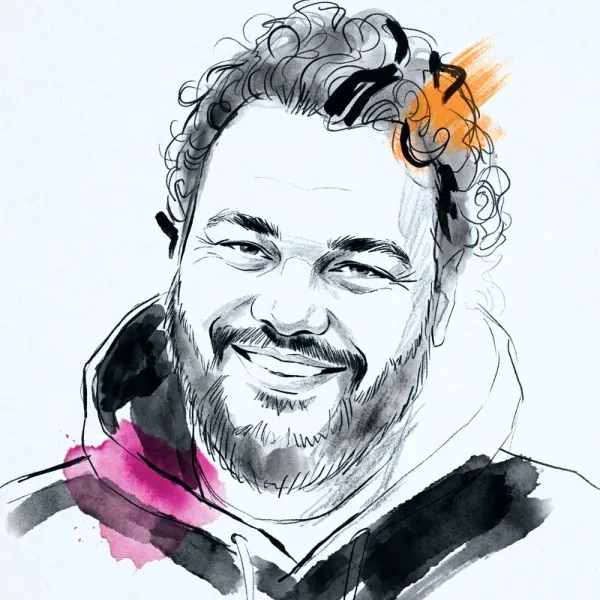
Introduction
Duran Lantink is a Dutch designer based in Amsterdam whose independent work is built around reconstruction, deadstock and the physical alteration of existing garments. His eponymous label developed a collage method that cuts apart and recombines finished clothing, using recognisable luxury materials without preserving their original hierarchy.
On 15 April 2025, Jean Paul Gaultier appointed Lantink permanent Creative Director with responsibility for ready-to-wear and haute couture. His own label was placed on hold rather than absorbed into the house. At Gaultier he restored a continuing named-designer runway programme with JUNIOR for Spring/Summer 2026, followed by Autumn/Winter 2026–27 ready-to-wear, Resort 2027 and his July 2026 couture debut.
Design ethos
Lantink works through deconstruction and recombination. Existing garments, deadstock and leftover luxury materials are cut into components, then rebuilt as composite pieces whose seams, joins and mismatched origins remain legible. The method treats circularity as a design process rather than a finish applied after production.
Silhouette is driven by displacement: hips, shoulders, breasts and musculature are padded, hollowed or moved away from expected anatomy. At Jean Paul Gaultier, this sculptural approach meets the house’s corsetry, body politics and archive, producing garments that quote familiar codes while resisting straightforward revival.
Disclaimer
Career history
2025
Jean Paul Gaultier appointed Duran Lantink permanent Creative Director on 15 April 2025 with responsibility for ready-to-wear and haute couture. The appointment ended the rotating guest-couture model and restored continuing named authorship across the house’s fashion programmes.
You’re in
When the archive opens, you’ll be among the first to know.
That’s all.


