

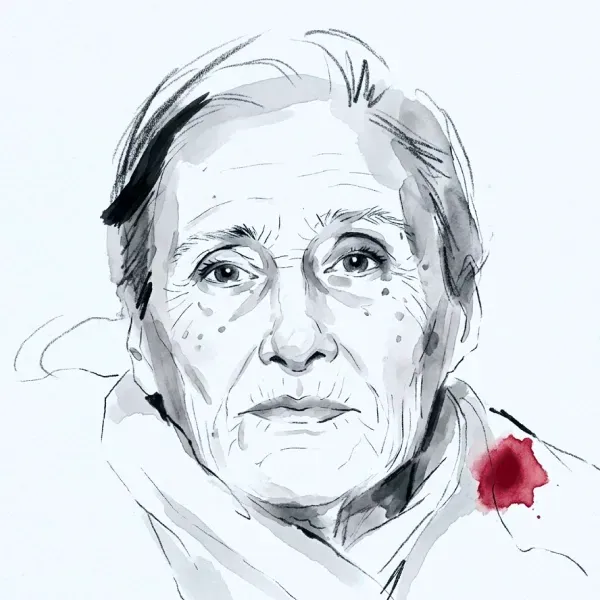
Introduction
Gaby Aghion (1921–2014) was an Egyptian-born French fashion entrepreneur who founded Chloé in Paris in 1952. Born Gabrielle Hanoka in Alexandria, she settled in Paris with Raymond Aghion in 1945 and began the label with six summer dresses made in her apartment and sold through Left-Bank boutiques. She chose the name Chloé instead of her own and formed a business partnership with Jacques Lenoir in 1953.
Aghion proposed original, finely made clothing available in standard sizes, describing the model as luxury ready-to-wear. Chloé’s current archive dates its first fashion show to 1957, presenting Spring/Summer 1958 at Café de Flore. Aghion then built a collaborative studio around young designers, selecting, buying and refining sketches by figures including Gérard Pipart, Maxime de La Falaise, Michèle Rosier, Graziella Fontana and Karl Lagerfeld.
She remained Chloé’s artistic organiser and co-owner until the 1985 sale to Alfred Dunhill. Her contribution was recognised with the Légion d’honneur in 2013, a year before her death, and later exhibitions have established her multi-author studio as central to the history of post-war Paris ready-to-wear.
Design ethos
Aghion pursued clothes that could move through ordinary life without losing quality. Light construction, fine cotton, jersey, silk, simple hems and adjustable shapes countered couture stiffness; the 1960 Embrun shirt-dress, developed with Maxime de La Falaise, joined sporting ease to polished fabric and became an early success.
Her authorship was also editorial and organisational. She selected designers, fabrics and silhouettes, modified proposals and maintained a coherent house mood across different hands. That structure allowed Chloé to change repeatedly while preserving ease, feminine agency and the practical intelligence of ready-to-wear.
Disclaimer
Career history
1952
Gaby Aghion founded Chloé in Paris in 1952 and developed an original luxury ready-to-wear model based on fine materials, standard sizing and boutique distribution. She directed the house through creative selection and a multi-designer studio until the 1985 sale to Alfred Dunhill.
You’re in
When the archive opens, you’ll be among the first to know.
That’s all.


