

Introduction
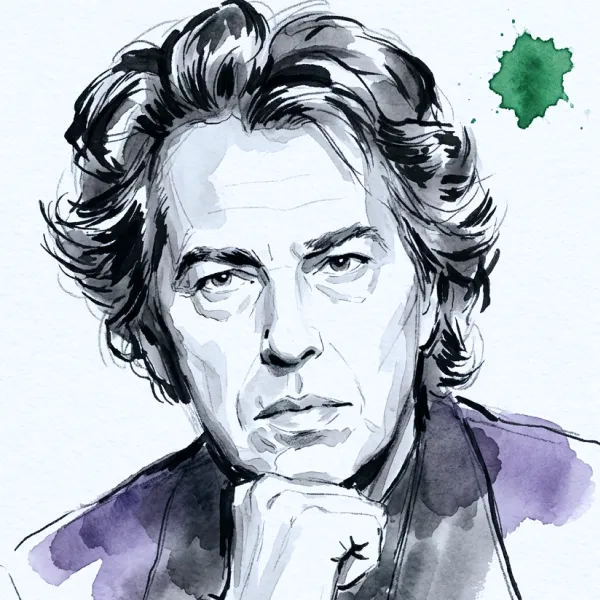
Gilles Dufour is a French fashion designer and studio director whose career is closely tied to Karl Lagerfeld’s Paris studios. He worked with Lagerfeld at Chloé before joining the team around Chanel’s 1983 revival, where he became one of the designer’s principal studio figures. Contemporary accounts identify him as a close right-hand designer and studio director, helping convert Lagerfeld’s prolific sketches into collections.
Dufour’s relationship with Lagerfeld extended for roughly fifteen years and included work around the eponymous Karl Lagerfeld operation during the 1980s and 1990s. His responsibilities overlapped with Chanel during the formative years of both businesses. The role demanded close contact with ateliers, fittings and Lagerfeld’s rapid changes of theme.
In 1998 Dufour left Chanel and took responsibility for Balmain’s prêt-à-porter, presenting approximately three seasons during Oscar de la Renta’s haute couture tenure. His collections updated the house through narrow jackets, strong colour, knitwear and younger styling. The appointment ended in 2000, after which Dufour developed work under his own name. Across these roles he moved from collaborative studio authorship into a public designer position and retained an emphasis on precise Parisian ready-to-wear.
Design ethos
Dufour’s early practice was formed inside Lagerfeld’s fast studio culture. The task was interpretive and technical: understand a drawing quickly, preserve its line and attitude, and guide it through an atelier capable of producing a finished garment at collection pace. That experience favoured precision, clear silhouette and strong control of construction.
At Balmain he brought this discipline into a younger prêt-à-porter vocabulary. Small jackets, low-waisted trousers, vivid colour, knitwear and direct slogans placed the house’s Parisian polish in a more contemporary register. His work could be elegant and provocative in the same collection, using styling and surface detail to change the social tone of familiar tailoring.
Dufour has described his own clothing in terms of precision and unusual pieces, with knitwear holding a particular interest. The through-line is an insistence on clothes that register through cut and character before elaborate narrative. His career also illustrates the importance of studio authorship in late twentieth-century fashion, where a highly visible creative director depended on trusted designers able to turn speed and reference into material decisions.
Disclaimer
Career history
2025
ERDOS marked its seventeen-year partnership with Gilles Dufour in July 2025 and granted him an honorary artistic-director certificate. The honour closed the active phase of one of the designer’s longest house relationships.
2008
Gilles Dufour created an own-label knitwear capsule for Browns in 2008. The project was conceived as a one-off retail collaboration and did not extend into a standing design role.
2008
Dufour begins a long artistic-director relationship with the Chinese cashmere house ERDOS.
2004
Gilles Dufour designed a limited project for Etam in 2004. The collaboration brought his work into the retailer’s wider audience for a single commercial season.
2000
Gilles Dufour’s ready-to-wear tenure at Balmain ended after three seasons. Autumn 2000 was his final known runway for the house.
2000
A trademark is established in December 2000 and the first namesake ready-to-wear is presented in March 2001 with Basile backing.
1998
Gilles Dufour left the Chanel studio in 1998 after serving as Lagerfeld’s principal assistant and studio director since 1983. His move to Balmain ended a central operational partnership of the early and middle Lagerfeld period.
1998
Gilles Dufour led Balmain diffusion ready-to-wear and licence studios from 1998 to 2000 alongside de la Renta’s couture direction.
1984
Gilles Dufour was active in Lagerfeld’s eponymous design operation by 1984 and remained part of the wider studio orbit into the 1990s. His responsibilities overlapped with Chanel.
1983
Gilles Dufour joined Lagerfeld’s Chanel operation as principal assistant and studio director in 1983. He managed the daily translation of drawings through the workrooms during the expansion of couture, ready-to-wear and accessories.
You’re in
When the archive opens, you’ll be among the first to know.
That’s all.


