
Introduction
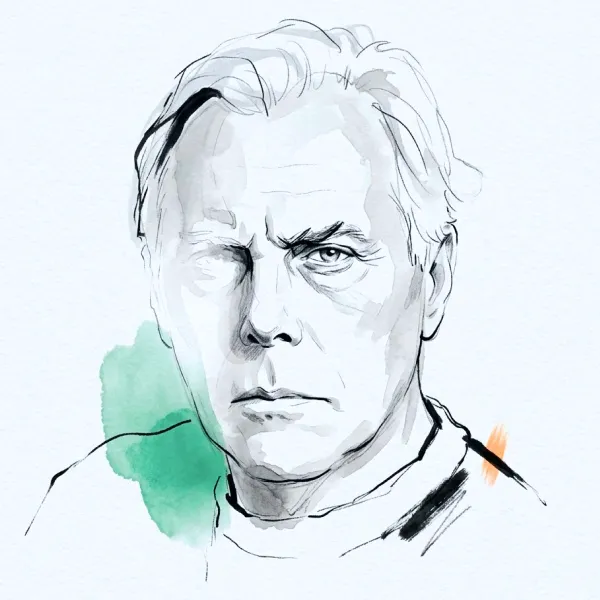
Giorgio Armani was an Italian designer and company founder whose career joined industrial menswear, precise image control and private ownership. Born in Piacenza on 11 July 1934, he studied medicine briefly, completed military service and entered La Rinascente in Milan in 1957, working across display, merchandising and menswear buying before moving into design.
From about 1964 to 1970 he designed menswear for Nino Cerruti’s Hitman operation, then worked independently as a consultant. He and Sergio Galeotti opened a Milan office by 1973 and founded the Giorgio Armani company on 24 July 1975. Armani directed the clothes while Galeotti led the commercial and operational system; together they built a house whose softened tailoring moved from menswear into a fully developed women’s programme, cinema, international retail and a tiered group of labels.
Armani also founded Emporio Armani in 1981, A|X Armani Exchange in 1991 and Giorgio Armani Privé couture in 2005. He remained the company’s controlling shareholder, chief executive and principal creative authority until his death in Milan on 4 September 2025. His final work included Privé Fall 2025, Emporio Armani Spring–Summer 2026 and the posthumously presented Giorgio Armani Spring–Summer 2026 collection Pantelleria, Milan.
Design ethos
Armani treated tailoring as an engineering problem. By reducing padding, altering lapels and fastening, softening the shoulder and choosing cloth for movement, he replaced the rigid suit with a structure that could follow the body. The method travelled between men’s and women’s wardrobes without making them identical, producing fluid jackets, broad or elongated trousers, skirts, blouses and evening clothes organised around ease.
His palette is often associated with greige, navy and black, but colour was subordinate to material behaviour. Wool, silk, velvet, linen, embroidery and technical surfaces allowed silhouette to shift between opacity and transparency, day and evening, restraint and sheen. Historical and geographic references were absorbed into proportion and textile rather than applied as costume.
Armani’s working practice extended beyond individual garments to line, retail and image systems. He separated mainline, younger fashion, couture, sportswear and accessible product by construction and audience while maintaining final approval over design and presentation. Change was usually cumulative: familiar codes were adjusted through length, weight, texture and balance instead of discarded for a seasonal reset.
Disclaimer
Career history
2025
Giorgio Armani died in Milan on 4 September 2025 after retaining controlling, executive and principal creative authority to the end of his life. His death activated a divided succession across ownership, governance, executive office and line-specific design.
2025
Armani/Silos opened Giorgio Armani Privé 2005–2025: Twenty Years of Haute Couture in Milan. Approximately 150 looks from around 40 collections made the division’s archive publicly accessible across the museum.
2024
Giorgio Armani and Kith released The Archetype, a four-part menswear and accessories project made in Italy. The collaboration joined Armani tailoring to Kith’s retail and product system without transferring design credit to its campaign cast.
2023
Emporio Armani and Our Legacy Work Shop developed two archive-based releases. The second project, delivered for Spring–Summer 2025, added womenswear and recreated archival fabrics rather than relying only on customised vintage stock.
2022
This runway is now represented in Collections rather than the Creative Eras chronology.
2021
Emporio Armani and C.P. Company released a twenty-piece menswear capsule combining Armani restraint with C.P. Company’s proprietary technical fabrics. The project was a co-developed clothing collection outside the main seasonal runway.
2020
This runway is now represented in Collections rather than the Creative Eras chronology.
2017
The group announced a portfolio reorganisation on 27 February 2017 and applied it from Spring–Summer 2018. Armani Collezioni and Armani Jeans ended as separately classified lines, leaving Giorgio Armani, Emporio Armani and A|X as the principal fashion brands.
2016
Giorgio Armani established the Giorgio Armani Foundation to safeguard governance and principles of the company. The structure prepared for succession but did not displace the founder while he lived.
2014
Giorgio Armani S.p.A. acquired the remaining half of the A|X operating venture, bringing production, distribution and retail operations under full group control. The transaction did not refound the brand, which dates to 1991.
2010
Giorgio Armani developed performance wardrobes for Lady Gaga’s Monster Ball and Born This Way Ball tours between 2010 and 2012. The work was a sustained stage-costume relationship rather than a seasonal collection or an isolated celebrity dressing.
2010
Reebok and Armani developed connected Emporio Armani footwear and EA7 apparel and footwear ranges. The project combined Reebok technology with Armani fashion and performance design rather than functioning as a logo licence.
2005
Giorgio Armani launched Privé in Paris as the house’s dedicated haute couture and made-to-measure division. A newly established Milan atelier produced the first collection and sustained the subsequent couture programme.
2004
EA7 launched as Emporio Armani’s sports and performance clothing division. Its technical remit separated activewear and institutional kit programmes from the main Emporio fashion collections.
2001
Armani/Teatro opened in Via Bergognone, Milan, in a space created with Tadao Ando. It gave the house a permanent presentation environment rather than a new clothing line.
2000
Earlier bridge-line functions were consolidated under the Armani Collezioni name. The Trimil joint venture governed menswear production and commercialisation while design authority remained with Armani.
1998
Giorgio Armani designed the costumes for Robert Wilson and Susan Sontag’s The Lady from the Sea, first staged in Ferrara and later remounted internationally.
1995
Giorgio Armani announced a dedicated golf-wear programme in 1995 for intended Spring 1996 delivery. The launch is retained at year precision because the first delivered collection and the programme’s end remain unresolved.
1995
Giorgio Armani launched Neve as a men’s and women’s ski and après-ski clothing programme. Its eventual end and formal relationship to EA7 remain unresolved.
1995
Giorgio Armani designed the costumes for Jonathan Miller’s Royal Opera House production of Così fan tutte. The production returned in later revivals without becoming a new commission for every restaging.
1991
Giorgio Armani launched A|X Armani Exchange as an accessible urban fashion brand aimed initially at the American market. Its first store opened in SoHo, New York, in December 1991.
1990
Martin Scorsese directed Made in Milan, a short documentary centred on Giorgio Armani’s working process and relationship to the city. It is an image and cultural collaboration rather than a costume commission.
1988
Giorgio Armani launched an eyewear programme through the Luxottica licensing relationship. Specialist production expanded the house into optical products without creating a separate fashion brand.
1988
Giorgio and Rosanna Armani transformed a collection catalogue into Emporio Armani Magazine, placing clothing within wider visual, cultural and geographic narratives. The programme developed a durable editorial identity separate from the runway calendar.
1985
Sergio Galeotti’s death ended the founding 50–50 partnership. Near-contemporary reporting states that his share passed to Giorgio Armani by bequest, consolidating ownership and ultimate management while the company’s studio and executive organisation continued.
1984
Giorgio Armani and costume designer Marilyn Vance collaborated on the lead costumes for Streets of Fire, with garments made in multiples in Milan. Vance retained the production’s overall costume-designer credit.
1984
Emporio Armani used the Via Broletto billboard in Milan for a monumental outdoor campaign. The site became a recurring urban image platform rather than a seasonal collection or retail location.
1981
Giorgio Armani launched Emporio Armani in Milan as a younger, more accessible and metropolitan fashion brand with its own retail, product and visual identity. Armani Jeans and Armani Junior entered the wider group architecture in the same year.
1980
Giorgio Armani created dresses for Janis Martin in La Scala’s production of Arnold Schönberg’s Erwartung. The commission is the house’s first documented theatre engagement, without implying responsibility for every production costume.
1980
American Gigolo credited Giorgio Armani S.p.A. for assistance with Richard Gere’s wardrobe. The film retained its credited costume personnel, so the project is recorded as character wardrobe support rather than complete costume design.
1978
The agreement with Gruppo Finanziario Tessile introduced licensed industrial manufacture and distribution for selected Armani lines. A United States operating structure followed in 1979 without transferring collection authorship or ownership of the house.
1976
Barneys New York introduced Giorgio Armani clothing to the United States in 1976. The relationship established an early American retail audience for the house before the later expansion of its own operating structure.
1975
Giorgio Armani and Sergio Galeotti founded the company in Milan on 24 July 1975. Armani led design; Galeotti was co-owner, chairman and the commercial and operational partner.
You’re in
When the archive opens, you’ll be among the first to know.
That’s all.