

Introduction
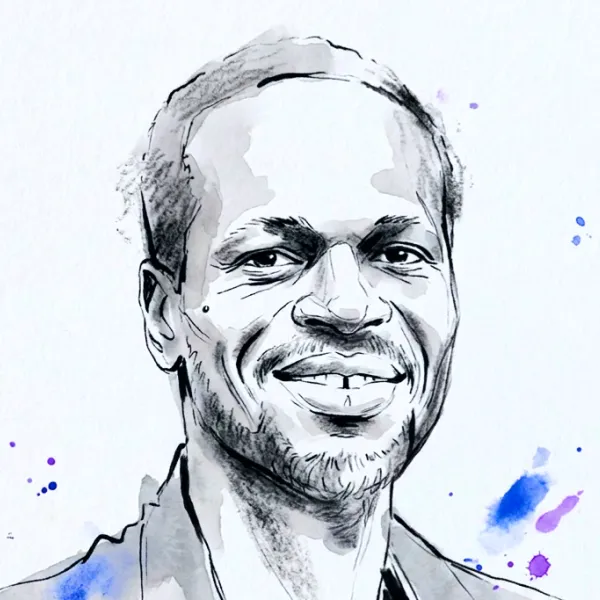
Imane Ayissi is a Cameroonian couturier, former dancer and former fashion model based in Paris. He grew up in an artistic family and first understood dress through performance and through the gowns of his mother, Julienne Honorine Eyenga Ayissi, Miss Cameroon 1960. Before establishing his fashion house, he toured with the Ballet National du Cameroun and later modelled for houses including Dior, Lanvin, Givenchy, Yves Saint Laurent and Valentino.
Ayissi developed independent collections and made-to-measure work in Paris before formally founding his eponymous house in 2004. He began presenting during Paris Haute Couture Week in 2010 and joined the official FHCM calendar as a Guest House in January 2020. The invitation made him the first designer from sub-Saharan Africa admitted to that programme.
His practice brings African textile knowledge into a Paris couture framework without treating either system as static. Work in kente, Faso Dan Fani, Cameroonian bark cloth, raffia and hand-dyed cotton sits beside silk, organza and precise atelier finishing. His collections have entered the V&A collection and were surveyed in the 2024–25 SCAD FASH exhibition Imane Ayissi: From Africa to the World.
Design ethos
Ayissi designs from the moving body. Dance gave him an understanding of weight, suspension and the moment when volume changes around a wearer; modelling gave him direct knowledge of fitting, runway rhythm and the internal standards of Paris houses. His strongest silhouettes use wrap, cape, boubou-like geometry and drape to make posture part of the garment.
His textile research is specific rather than symbolic. Kente, Ntutuere, Faso Dan Fani, Obom and raffia are identified by origin and method, then cut with silk, wool or organza through couture techniques. He avoids treating wax print as a universal African code, preferring materials that support local weaving, dyeing and embroidery traditions.
Recent work frames this method as regenerative couture. Natural fibres, hand production and long-lived clothes are joined to themes of fallow land, ecological pause and the unfinished sketch. Ornament and structure are allowed to coincide: woven pattern, raffia fringe or embroidery can determine a garment’s architecture instead of decorating it after the cut is complete.
Disclaimer
Career history
2024
Imane Ayissi: From Africa to the World opened at SCAD FASH in Atlanta on 18 September 2024. The first solo museum exhibition devoted to the designer assembled more than forty looks, connecting his dance background, couture construction, environmental position and use of African textiles. The exhibition converted a dispersed collection history into a sustained institutional survey.
2024
Imane Ayissi opened the January 2024 Paris Haute Couture Week schedule. The first official show slot reflected the house’s growing visibility within the FHCM programme four years after its admission as a Guest House. The position placed African woven textiles and Ayissi’s movement-led couture vocabulary at the beginning of the international season.
2022
The Victoria and Albert Museum included an Imane Ayissi ensemble in Africa Fashion, which opened in 2022. The display used the work to examine contemporary African luxury, artisanal production and the circulation of fashion across the continent and its diaspora. It extended the museum’s earlier acquisitions into a major public exhibition and gave Ayissi’s material practice a prominent institutional reading.
2020
On 23 January 2020, Imane Ayissi made his first appearance on the official Paris Haute Couture Week calendar as an FHCM Guest House. He became the first designer from sub-Saharan Africa invited into the programme. The recognition followed ten years of presentations during couture week and gave the independent Paris atelier an official position without conferring permanent member status under France’s protected haute couture system.
2015
By the mid-2010s, Ayissi was working with the Cameroon Fashion Designers Center as a lecturer and mentor. His involvement extended the maison’s activity beyond collection production into skills development, collection planning and market preparation for emerging designers. The role connected his Paris couture practice to fashion infrastructure and professional training in Cameroon.
2014
From the mid-2010s, Ayissi’s garments entered international museum collections. The Afro-Brazilian Museum in São Paulo acquired work from the 2014 and 2015 collections, while the Victoria and Albert Museum acquired three pieces between 2017 and 2020. These acquisitions recognised the house’s textile and couture practice before its first official FHCM appearance and provided the basis for later exhibitions.
2010
Ayissi began presenting during Paris Haute Couture Week in 2010, a decade before entering the official FHCM calendar. These independently organised shows gave the house a recurring Paris platform while it developed the body of work and institutional relationships required for formal guest status. The period established African woven textiles, sculptural drape and natural materials as central to its couture identity.
2006
The short-lived Sept & Imane Ayissi project tested a co-branded ready-to-wear structure in 2006 and 2007. It translated Ayissi’s drape and textile vocabulary into repeatable garments and gave the young house experience beyond private couture commissions. The project ended, but it anticipated the wearable-couture and prêt-à-porter offer later maintained by the maison.
2004
Imane Ayissi formally established his eponymous Paris house in 2004 and remains its founder and artistic director. The independent atelier combines Parisian couture construction with African weaving, bark cloth, raffia and wrapped-dress traditions. Couture remains its public centre, supported by made-to-measure, bridal and wearable-couture activity without separating those categories from Ayissi’s authorship.
1992
Ayissi produced made-to-measure work and small independent collections through the 1990s and early 2000s. Surviving records include Koué Meutouana, Bilik, Eternity and Badjaga, although documentation remains uneven. This period established a continuous design practice before the formal creation of Maison Imane Ayissi in 2004.
1992
After relocating to Paris, Ayissi modelled for houses including Dior, Lanvin, Givenchy, Yves Saint Laurent and Valentino. The work gave him direct experience of fittings, runway production and couture finishing from the wearer’s position. It also placed his knowledge of African dress and performance inside the daily systems of established European maisons before he formalised his own house.
1980
Before entering fashion professionally, Imane Ayissi danced with the Ballet National du Cameroun and toured internationally. Performance trained his attention on balance, gesture and the behaviour of cloth around a moving body. That experience later informed garments built through drape, wrapped volume and materials such as raffia whose movement and sound become part of the finished work.
You’re in
When the archive opens, you’ll be among the first to know.
That’s all.


