

Introduction
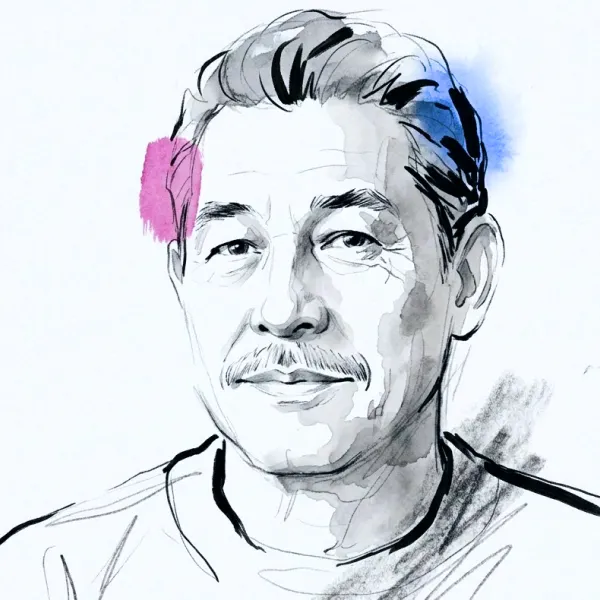
Issey Miyake was a transformative Japanese designer who established the Miyake Design Studio in 1970, marking the beginning of a career that would redefine the boundaries between technology and fashion. A survivor of the Hiroshima bombing, his global perspective was shaped by a desire to create rather than destroy, leading him to become a pioneer in the application of industrial methods to garment construction. He remains a central figure in the evolution of modern design, celebrated for his ability to merge avant-garde concepts with commercial accessibility.
Throughout his prolific career, Miyake was most closely associated with his namesake brand and the development of revolutionary lines such as Pleats Please and A-POC. His work garnered international acclaim for its distinct departure from traditional Western tailoring, instead proposing a new vocabulary of movement and form. As a visionary who consistently looked toward the future, he bridged the gap between artisanal heritage and the possibilities of late-twentieth-century industrialisation.
Design ethos
The design philosophy developed by Issey Miyake is centred on the fundamental concept of 'a piece of cloth', or A-POC, which explores the dynamic relationship between a single textile and the human form. This approach bypasses conventional cutting and sewing, instead focusing on how a flat surface can be transformed into a three-dimensional garment through the movement of the wearer. His work is characterised by architectural silhouettes that appear both structural and fluid, often achieved through his signature permanent pleating techniques that allow for immense flexibility and ease of care.
Miyake’s practice represents a rigorous fusion of traditional Japanese craftsmanship and cutting-edge high-tech fabric development. He frequently utilised industrial innovation to solve aesthetic problems, resulting in textiles that are as much a product of engineering as they are of artistic expression. By prioritising the dialogue between the body and its covering, he moved away from the constraints of restrictive ornament, opting instead for a restrained yet theatrical utility that remains a benchmark for contemporary textile research and industrial design.
Disclaimer
Career history
2022
After Issey Miyake’s death in 2022, the house’s public history increasingly reads through a founder legacy while the studio, brand teams and current designers continue the work as an active design ecosystem.
2022
Issey Miyake’s death closed one of fashion’s foundational modern design legacies in technology, movement and form.
2021
A-POC ABLE launched in March 2021 as a current commercial-research brand. It develops A-POC’s manufacturing logic, but it is not simply a relaunch of the earlier A-POC system.
2021
IM MEN launched in March 2021 as the current Miyake menswear entity. Its origin story points to the legacy of im product and to team-based material and product development, not to a confirmed legal rename of ISSEY MIYAKE MEN.
2013
HOMME PLISSÉ launched in 2013 as a menswear expression of Miyake’s garment-pleating system. It belongs to the pleating-system layer and remains separate from ISSEY MIYAKE MEN and IM MEN.
2012
IN-EI ISSEY MIYAKE launched with Artemide in April 2012 as a lighting/product-design project linked to 132 5. and Reality Lab. research.
2012
The 2012 Designs of the Year Fashion Award recognised 132 5. beyond a normal product launch, reinforcing the line’s position between clothing, design research and institutional reception.
2010
BAO BAO ISSEY MIYAKE launched as an independent brand with its Autumn/Winter 2010 first collection, built around bags made from compositions of triangular pieces.
2010
The REALITY LAB exhibition at 21_21 DESIGN SIGHT gave the research environment around 132 5. a public institutional form, connecting the line to design experimentation rather than only fashion-season output.
2010
The November 2010 launch of 132 5. ISSEY MIYAKE converted Reality Lab. research into a commercial research brand built around folding, recycled material development and flat-to-volume transformation.
2010
The summer 2010 Tokyo and Paris introduction brought 132 5.’s flat-to-volume research into public view before the line’s recorded November launch.
2007
The 2007 R&D work by Issey Miyake and Reality Lab. is the origin point for 132 5. ISSEY MIYAKE. It precedes the public introduction and defines the line through folding, flatness, volume and material research.
2006
MoMA’s 2006 A-POC context reinforces the system’s status as design research, not seasonal fashion output.
2003
The 2003 Nannano? exhibition continued A-POC’s research communication through a Miyake and Fujiwara authorship frame.
2001
The 2001 Vitra exhibition made A-POC’s research process and Miyake–Fujiwara authorship visible institutionally.
2000
The 2000 Good Design Grand Prize recognised A-POC as a design method and manufacturing system.
2000
me ISSEY MIYAKE launched in July 2000 as a compact everyday clothing/product brand. Its logic is lightweight, easy-care clothing and stretch pleats, not a smaller version of PLEATS PLEASE.
2000
HaaT launched in July 2000 with Makiko Minagawa as its central textile and design authorship figure. HaaT’s ongoing identity centres textile direction, material knowledge and production relationships across Japanese and Indian contexts.
2000
A-POC’s February 2000 launch turned the 1998 research project into a commercial continuous-cloth system.
1998
This stretch shifted Issey Miyake towards systems design, prototyping and shared studio authorship, even as the founder’s research ethos still framed the house.
1998
The MAKING THINGS exhibition context placed A-POC within a broader account of Miyake’s design process before and around its commercial launch.
1998
The Making Things exhibition positioned A-POC within Miyake’s wider research into making, process and wearer participation.
1998
A-POC began in 1998 as Miyake and Dai Fujiwara developed continuous cloth, programmed textiles and wearer participation.
1994
The Spring/Summer 1994 independent collection marks PLEATS PLEASE as its own public collection entity, separate from the mainline womenswear chronology while still rooted in Miyake’s pleating research.
1993
PLEATS PLEASE launched as a dedicated line in 1993, turning Miyake’s garment-pleating research into an everyday product system based on lightness, movement, care and repeated use.
1993
Pleating became the brand’s most recognisable product system in this chapter, extending Miyake’s reach while keeping technical invention at the centre.
1991
The pleated costumes for William Forsythe’s The Loss of Small Detail tested how heat-set pleats behaved on moving bodies, proving the technique as a system for freedom of movement rather than only surface effect.
1988
PLEATS PLEASE begins from late-1980s garment-pleating experiments inside the ISSEY MIYAKE womenswear collection, where garments were cut and sewn before being heat-set into pleated form.
1988
The late-1980s mainline pleating experiments introduced a garment system based on oversized garments being cut, sewn and heat-set after construction. This technical work later becomes central to PLEATS PLEASE and, by extension, HOMME PLISSÉ.
1985
From Autumn/Winter 1985, ISSEY MIYAKE MEN began showing in the Paris Collection, giving the historical menswear line a clear international runway platform.
1983
The Spring/Summer 1983 presentation aboard the U.S.S. Intrepid expanded the mainline beyond a standard runway frame, using setting and staging as part of the collection’s public meaning.
1977
The museum presentation framed clothing through the idea of a piece of cloth: a foundational Miyake principle that later informs pleating, A-POC, 132 5. and other research systems without being identical to any one of them.
1976
ISSEY MIYAKE MEN launched in August 1976 as the historical menswear line within the Miyake universe. It should remain separate from later IM MEN and HOMME PLISSÉ structures.
1973
From Autumn/Winter 1973, ISSEY MIYAKE began participating in the Paris collections, establishing the mainline runway spine that later creative eras build on.
1971
The first overseas collection in New York marks the beginning of ISSEY MIYAKE as an internationally presented fashion project rather than only a Tokyo studio practice.
1970
Issey Miyake founded Miyake Design Studio in 1970, establishing the studio as the creative and research base for the later runway, pleating, product-design and research-system entities.
1970
The label emerged from Issey Miyake's commitment to theatrical image-making and conceptual experimentation. Miyake positioned the house around body-led construction, exhibition thinking and material research, treating dress as a design problem rather than mere styling.
1966
After moving to Paris in 1965 to study at the École de la Chambre Syndicale de la Couture Parisienne, Issey Miyake worked as an assistant or apprentice at Guy Laroche before moving to Givenchy. Biographical sources vary between a 1965 start and a 1966–68 placement, so the chronology remains approximate; no collection-level authorship or senior title is implied.
You’re in
When the archive opens, you’ll be among the first to know.
That’s all.


