


Issey Miyake
Overview
ISSEY MIYAKE is the mainline centre of a house that treats clothing as applied intelligence: cloth tested against body, movement, industrial process and the practical demands of wear. Founded in Tokyo in 1970 by Issey Miyake, the studio developed outside the usual couture-house genealogy, drawing instead on graphic design, Japanese dress, material research, modern technology and the radical simplicity of “a piece of cloth”. Its force lies in making systems feel supple, humane and kinetic rather than mechanised.
That method has since generated a wider architecture of historical menswear, pleating systems, research brands, bags, lighting, textile-led work and everyday design. ISSEY MIYAKE MEN and IM MEN map connected but distinct menswear histories; PLEATS PLEASE ISSEY MIYAKE and HOMME PLISSÉ ISSEY MIYAKE carry the house’s pleating logic into daily use, performance and presentation. A-POC and A-POC ABLE ISSEY MIYAKE keep the inquiry close to process and manufacture, while 132 5. ISSEY MIYAKE, BAO BAO ISSEY MIYAKE, HaaT, IN-EI ISSEY MIYAKE and me ISSEY MIYAKE show the Miyake vocabulary moving through folded geometry, craft, light, bags and quotidian clothing without losing its taproot in research.
Philosophy
Issey Miyake’s philosophy begins with an unusually practical proposition: design answers to life before it answers to doctrine. “A Piece of Cloth” is the house’s clearest working principle, not a decorative slogan. A flat plane of fabric becomes a field of possibility, folded, pleated, cut, programmed, compressed, expanded and tested against the moving body. Craft and technology are not opposing temperaments here; they meet at the workbench, where material behaviour, industrial process and human use are treated as part of the same question.
The danger is reducing Miyake to Japanese minimalism or technical futurism, both of which miss the project’s tougher intelligence. PLEATS PLEASE ISSEY MIYAKE and HOMME PLISSÉ ISSEY MIYAKE turn pleating into a democratic garment system; A-POC and A-POC ABLE ISSEY MIYAKE move manufacture, wearer participation and textile engineering closer to the centre of authorship. 132 5. ISSEY MIYAKE, BAO BAO ISSEY MIYAKE, HaaT, IN-EI ISSEY MIYAKE and me ISSEY MIYAKE extend the same ethos into folding, bags, textile craft, light and everyday dress. Across the house, the point is rarely fashion as seasonal display; it is design as a disciplined way of making the body freer.
Timeline
Disclaimer
Creative timeline
Button TextAfter Issey Miyake’s death in 2022, the house’s public history increasingly reads through a founder legacy while the studio, brand teams and current designers continue the work as an active design ecosystem.
Issey Miyake’s death closed one of fashion’s foundational modern design legacies in technology, movement and form.
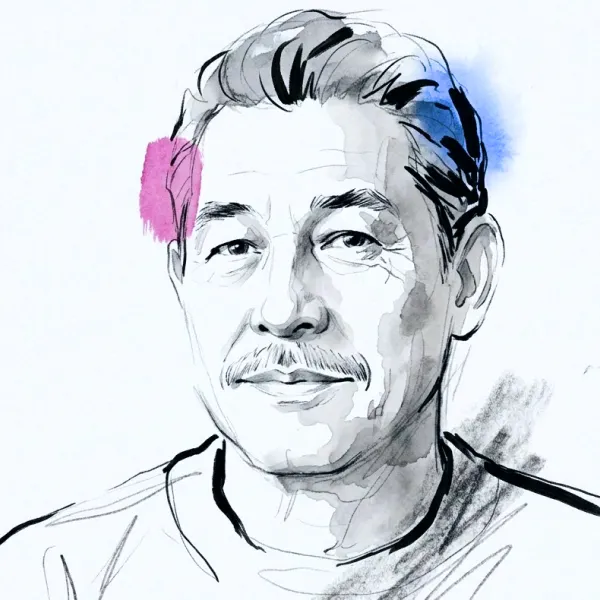
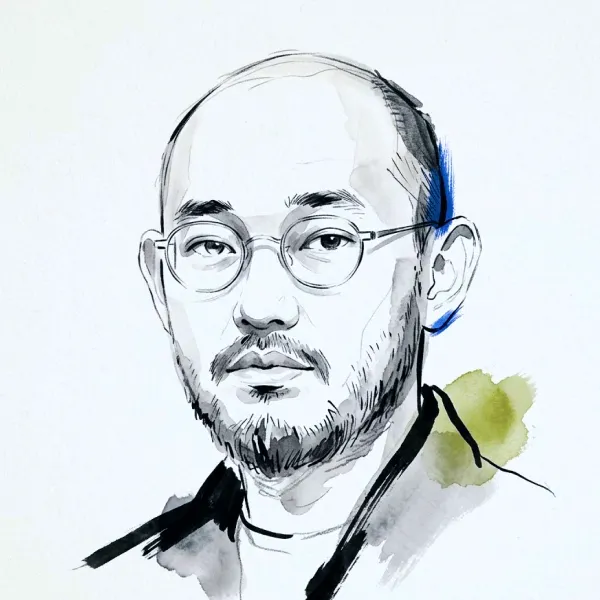
Satoshi Kondo’s current mainline era begins with the Spring/Summer 2020 collection, keeping the house focused on movement, body, cloth and team-based design language.
Satoshi Kondo's chapter at Issey Miyake turned on menswear precision and conceptual experimentation.
This stretch shifted Issey Miyake towards systems design, prototyping and shared studio authorship, even as the founder’s research ethos still framed the house.
Pleating became the brand’s most recognisable product system in this chapter, extending Miyake’s reach while keeping technical invention at the centre.
The late-1980s mainline pleating experiments introduced a garment system based on oversized garments being cut, sewn and heat-set after construction. This technical work later becomes central to PLEATS PLEASE and, by extension, HOMME PLISSÉ.
The Spring/Summer 1983 presentation aboard the U.S.S. Intrepid expanded the mainline beyond a standard runway frame, using setting and staging as part of the collection’s public meaning.
The museum presentation framed clothing through the idea of a piece of cloth: a foundational Miyake principle that later informs pleating, A-POC, 132 5. and other research systems without being identical to any one of them.
From Autumn/Winter 1973, ISSEY MIYAKE began participating in the Paris collections, establishing the mainline runway spine that later creative eras build on.
The first overseas collection in New York marks the beginning of ISSEY MIYAKE as an internationally presented fashion project rather than only a Tokyo studio practice.
Issey Miyake founded Miyake Design Studio in 1970, establishing the studio as the creative and research base for the later runway, pleating, product-design and research-system entities.
The label emerged from Issey Miyake's commitment to theatrical image-making and conceptual experimentation. Miyake positioned the house around body-led construction, exhibition thinking and material research, treating dress as a design problem rather than mere styling.
Issey Miyake divisions and systems
The Issey Miyake universe is less a ladder of sub-brands than a set of related design systems: menswear histories, pleating technologies, research structures, textile work, bags, lighting and compact everyday clothing all extending from the house’s central inquiry into cloth, body, movement and use.
Menswear lines
- ISSEY MIYAKE MEN
- Historical menswear line
- ISSEY MIYAKE MEN carried the house’s thinking about fabric, movement and utility into menswear, giving jackets, trousers, coats and shirts a language of ease rather than ceremony. Its history belongs to an earlier chapter of Miyake menswear, before that question was reopened through later structures.
- IM MEN
- Contemporary menswear brand
- IM MEN brings Miyake menswear into a newer research-led phase, with garments shaped by engineering, material development and collective studio authorship. It sits in conversation with ISSEY MIYAKE MEN, but speaks in a sharper, more contemporary register of structure and use.
Pleating-system brands
- PLEATS PLEASE ISSEY MIYAKE
- Pleating-system brand
- PLEATS PLEASE ISSEY MIYAKE turns the house’s pleating research into light, compact, washable clothing for daily life. Its power lies in making an advanced technical process feel almost effortless: colour, movement and industrial intelligence folded into a wardrobe system.
- HOMME PLISSÉ ISSEY MIYAKE
- Menswear pleating-system brand
- HOMME PLISSÉ ISSEY MIYAKE applies the pleating system to contemporary menswear, turning jackets, trousers, coats and separates into garments of lightness, recovery and movement. The line gives masculine dress an engineered sang-froid without collapsing into either tailoring nostalgia or technical severity.
Research systems
- A-POC
- Research-system brand
- A-POC, short for A Piece of Cloth, is one of the house’s most radical research systems: clothing generated from continuous cloth, with potential garments embedded in the textile itself. It shifts authorship toward process, manufacture and wearer participation.
- A-POC ABLE ISSEY MIYAKE
- Research-system brand
- A-POC ABLE ISSEY MIYAKE extends the A-POC inquiry into a contemporary field of engineering, collaboration and product research. Designers, engineers, artists and outside partners enter the system, allowing cloth, use and industry to keep testing one another.
- 132 5. ISSEY MIYAKE
- Research-system brand
- 132 5. ISSEY MIYAKE emerged from Reality Lab. as a study in flat-to-volume transformation. Its garments move between plane, fold, body and object, making geometry and material research feel less like abstraction than a quietly theatrical act of engineering.
Textile and craft brands
- HaaT
- Textile and craft brand
- HaaT brings the Miyake universe closer to textile craft, hand process and material tactility. With Makiko Minagawa’s authorship central to its identity, the brand connects Japanese design direction with Indian textile knowledge and a slower, more intimate intelligence of cloth.
Product-design brands and projects
- BAO BAO ISSEY MIYAKE
- Product-design brand
- BAO BAO ISSEY MIYAKE translates the house’s interest in surface, volume and movement into bags built from triangular panel construction. Its modular geometry bends, flexes and changes through use, turning the carried object into a small mobile architecture.
- IN-EI ISSEY MIYAKE
- Product-design project
- IN-EI ISSEY MIYAKE carries the folding logic of Reality Lab. and 132 5. into lighting, developed with Artemide. It belongs to the house’s design-beyond-clothing layer, where recycled material, shadow, structure and illumination become part of the same object language.
- GOOD GOODS ISSEY MIYAKE
- Product-design brand
- GOOD GOODS ISSEY MIYAKE sits on the product-design side of the Miyake universe, extending the house’s interest in practical objects, material behaviour and daily use. It belongs to the same wider field as BAO BAO and IN-EI, where the Miyake method leaves the garment without abandoning design discipline.
- ISSEY MIYAKE FOOT
- Footwear and product-design project
- ISSEY MIYAKE FOOT brings the house’s design language to footwear, where movement is no longer an abstract principle but the object’s basic condition. It belongs to the footwear and product-design layer of the house rather than to the mainline runway chronology.
Everyday clothing lines
- me ISSEY MIYAKE
- Everyday clothing line
- me ISSEY MIYAKE is a compact everyday clothing line built around lightness, colour, comfort and easy care. Its stretch pleats, tactile surfaces and small wardrobe pieces show Miyake’s practical intelligence at a more intimate scale, without becoming generic basics.


