
Introduction
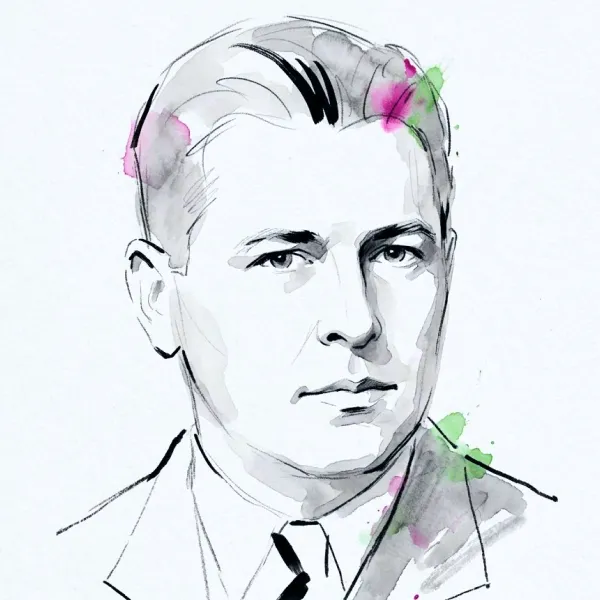
Jan Nehera was a Czechoslovak clothing manufacturer and entrepreneur who founded the original Nehera enterprise in Prostějov in 1923. Born on 31 December 1899 in Kostelec na Hané, then part of Austria-Hungary, he grew up around his father’s tailoring trade but trained as a machine fitter with the Kovářík engineering firm in Prostějov. That combination of garment knowledge and mechanical training shaped a career centred on industrial ready-to-wear, production organisation and retail.
Nehera established the business generally known as Nehera a spol. with a small group of partners and reportedly became sole proprietor in 1927. Early production concentrated on men’s and boys’ clothing before the range widened to womenswear, childrenswear, accessories and footwear. In 1931 he opened a company-owned shop on Wenceslas Square in Prague and expanded direct retail through standardised stores offering alterations, repairs and other services alongside ready-made clothing.
During the 1930s Nehera developed a large manufacturing and retail network extending beyond Czechoslovakia. The NEHERA figurative trade mark was registered in June 1936, and by the eve of the Second World War the enterprise employed almost 1,000 people and operated more than 130 outlets across Europe, the United States and Africa. Factory expansion in Prostějov and the creation of a Slovak operating base in Trenčín made the company one of the most ambitious industrial clothing businesses of interwar Czechoslovakia.
His control ended under coercive wartime conditions. Nehera was imprisoned in 1942 and the business passed under German control, followed by postwar nationalisation effective from 1 January 1946. He left Czechoslovakia for Morocco, where he continued using the NEHERA name through clothing shops into the 1950s. Jan Nehera died in Casablanca on 4 April 1958. The modern Nehera label launched decades later as a separate revival of his name and industrial legacy.
Design ethos
Nehera’s contribution to fashion was grounded in the organisation of ready-to-wear. He treated clothing as a manufactured product that could combine consistent cut, practical service and broad distribution without abandoning quality. Men’s suits, jackets and trousers formed an early base, while womenswear and other categories widened the offer as the company expanded.
Retail was integral to this approach. Company-owned shops gave Nehera control over presentation, pricing and direct contact with customers, while alterations, repair and ironing extended the life and fit of ready-made garments. Advertising and coordinated store identities helped turn a regional manufacturer into a recognisable consumer brand across a geographically dispersed network.
Manufacturing moved towards mechanised, divided operations that allowed garments to be produced at greater scale and with more consistent standards. His authorship lay principally in industrial organisation, product discipline and distribution, with no documented role as a conventional head designer. The clothes were built around utility, wearability and the practical demands of an urban wardrobe.
The enduring interest of Nehera’s model comes from this connection between garment, factory, shop and customer. The modern label has drawn selectively on the historical company’s functional clothing, tailoring and direct relationship with its audience, while operating through an entirely separate business and creative structure.
Disclaimer
Career history
1958
Jan Nehera died in Casablanca on 4 April 1958. His Moroccan clothing activity ended, and the NEHERA name disappeared from active fashion commerce for several decades.
1946
After leaving Czechoslovakia, Jan Nehera established clothing activity in Morocco and used the NEHERA name through at least two shops into the 1950s. This founder-led Moroccan period was geographically and legally separate from the nationalised Czechoslovak enterprise and ended with his death in 1958.
1946
The original Czechoslovak Nehera undertaking was nationalised from 1 January 1946 and its production assets passed into state-controlled clothing enterprises. The founder's name disappeared from the European operating companies, and the historic NEHERA trade mark lapsed in June 1946.
1942
Jan Nehera was imprisoned in 1942 and the company came under de facto German control through an imposed merger. The change ended his effective authority over the enterprise, with clothing production continuing under wartime administration.
1938
Jan Nehera and local associates contracted to establish a clothing company in Trenčín on 21 October 1938, creating a Slovak manufacturing and retail base connected to the Prostějov enterprise. The company was registered in July 1939 and became an important part of Nehera's regional production structure before wartime control intervened.
1936
The figurative NEHERA mark was registered in Czechoslovakia in June 1936 under number 6414. The registration formalised the public identity of Jan Nehera's expanding clothing enterprise during its interwar growth.
1931
Nehera opened its first company-owned shop on Wenceslas Square in Prague in 1931. The move brought retail presentation, customer service, alterations and repair into the company's own operation and changed how the manufacturer reached its audience.
1923
Jan Nehera established a small ready-to-wear manufacturing partnership in Prostějov in 1923. The enterprise began with men's and boys' clothing and later expanded into a broad industrial clothing and retail operation.
You’re in
When the archive opens, you’ll be among the first to know.
That’s all.
