

Introduction
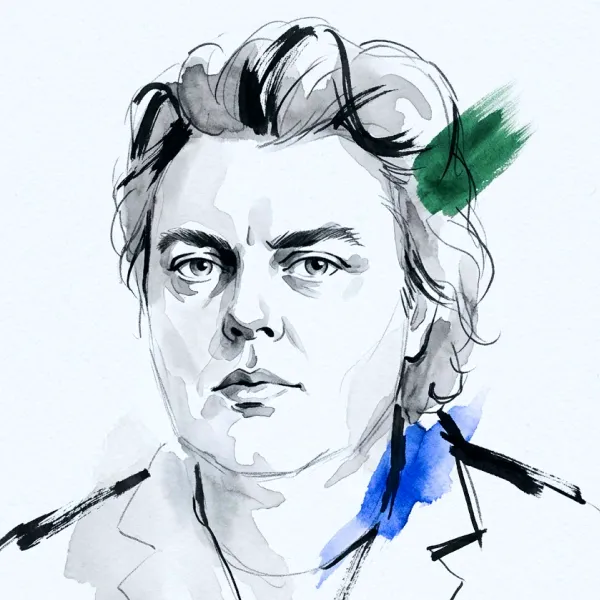
Josephus Thimister was a Dutch fashion designer whose severe romanticism and technical discipline made him an important figure in 1990s Paris fashion. Born in Maastricht in 1962, he graduated summa cum laude from the Royal Academy of Fine Arts Antwerp in 1987 and worked with Karl Lagerfeld and Jean Patou before joining Balenciaga.
As artistic director of Balenciaga’s luxury womenswear and accessories from 1992 to 1997, Thimister replaced the colourful pragmatism of the early revival with black, ink blue, rigid gazar, military line and ecclesiastical drape. His final show, accompanied by an abrasive live performance from Add N to (X), ended in a widely reported audience walkout and abrupt departure. He later developed his own label and returned to couture in 2010 with 1915: Bloodshed and Opulence. Thimister died in Paris in 2019.
Design ethos
Thimister worked through what critics described as broken elegance: immaculate cut disrupted by decay, military severity, historical trauma or a deliberately raw edge. He paired long lines and controlled drape with dark palettes, oversized proportion and materials that carried physical weight.
At Balenciaga he treated the archive structurally rather than nostalgically. Cocoon volume, sack-like distance from the waist, gazar and religious hoods were reduced to a 1990s vocabulary of austerity and deconstruction. That approach restored intellectual pressure to the house and created a direct foundation for the studio culture inherited by Nicolas Ghesquière.
Disclaimer
Career history
1997
Thimister’s tenure ended in 1997 after a final show with a punishing Add N to (X) soundtrack prompted a broad audience walkout and exposed the conflict between his avant-garde direction and Bogart’s commercial structure.
1992
Josephus Thimister replaced the early revival’s commercial colour with black, ink blue, gazar, military line and ecclesiastical drape, restoring architectural severity to Balenciaga before his abrupt 1997 exit.
1992
Josephus Thimister succeeded Michel Goma in 1992 and redirected Balenciaga from accessible late-1980s ready-to-wear towards severe black, gazar, military tailoring and ecclesiastical drape.
1992
Reopened Balenciaga with austere couture, dark minimalism and an architectural severity far removed from nostalgic revival.
You’re in
When the archive opens, you’ll be among the first to know.
That’s all.


