

Introduction
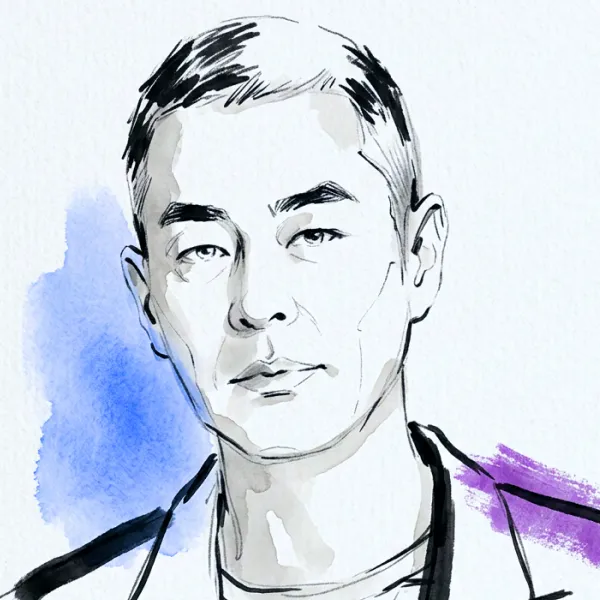
Jung Wook-jun is a South Korean fashion designer, founder of JUUN.J and the central author of one of Korea’s most internationally visible designer houses. Trained at ESMOD Seoul, he worked in the Korean and international menswear market before launching Lone Costume in Seoul in 1999, a label that built a domestic following around precise tailoring, deconstruction and a sharper vocabulary of masculine dress.
In 2007 Jung reworked that practice under the JUUN.J name and introduced it to Paris Men’s Fashion Week. The move turned a Seoul cult label into a global house with a clearer international identity, based on what he has described as the “Diversion of Classic”. Trench coats, MA-1 jackets, suits, uniforms and parkas became the recurring material for a practice that studies classic dress by altering its volume, construction and social code.
Jung’s position widened after Cheil Industries acquired JUUN.J in 2011 and the brand later came under Samsung C&T Fashion Group. He remained creative director, became the first South Korean designer invited as guest designer to Pitti Uomo in 2016, and was promoted to an executive role within Samsung C&T Fashion Group in late 2023. His career links independent Seoul menswear, Paris institutional visibility and the corporate scaling of Korean fashion without separating those chapters from the clothes themselves.
Design ethos
Jung Wook-jun’s design ethos is built on revision. He begins with familiar garments — the trench, the tuxedo, the bomber, the parka, denim, military clothing — and changes the logic of their authority through scale, layering and reconstruction. His silhouettes often look oversized at first glance, but the effect depends on controlled engineering: heavy shoulders, long sleeves, wide bodies, cinched waists, hard panels, deep pockets and fabric weight doing visible structural work.
The term “street tailoring” is useful because it keeps both sides of the practice in view. Jung does not abandon tailoring for streetwear, and he does not polish streetwear until its edge disappears. He brings denim, workwear, sportswear and technical outerwear into a tailored system, then lets friction remain. Black, leather, wool, cotton, nylon and denim recur as a pragmatic palette for experiments in volume and surface.
His genderless approach follows the same discipline. The “-less” vocabulary attached to JUUN.J — genderless, boundary-less, formless — is not a move into generic unisex dressing. It keeps the same architectural codes across menswear and womenswear, allowing skirts, dresses, suiting, outerwear and military forms to share one design grammar. The result is severe without being static: classic dress is kept in motion, tested season after season against youth, function and the changing body.
Disclaimer
Career history
2026
The FW26 NEWSTALGIA collection set archival tailoring against Alpinestars RSRV biker equipment, turning the house’s recurring contrast between classic form and technical protection into a precise Paris runway proposition.
2024
JUUN.J accelerated retail expansion in 2024 with a standalone REEL Shanghai store, China pop-ups and European visibility through Rinascente Milan, extending the Paris runway image into a broader store network.
2023
Jung Wook-jun was promoted to an executive role within Samsung C&T Fashion Group in late 2023, formalising his position as both creative director of JUUN.J and a senior figure in the group’s fashion strategy.
2018
By the SS19 Alternative period, JUUN.J’s womenswear had moved beyond capsule logic into a fuller co-ed proposition, extending the label’s tailoring, denim and oversized construction across both lines.
2017
The FW17 Archive show introduced womenswear into JUUN.J’s runway vocabulary, turning the tenth-anniversary collection into a co-ed statement built from the house’s own past forms.
2016
JUUN.J presented FW16 Less as guest designer at Pitti Uomo 89 in Florence, using the platform to articulate the label’s “-less” language of gender, boundary and form.
2013
Jung Wook-jun was granted membership in the French fashion federation in 2013, consolidating JUUN.J’s place within the Paris menswear system.
2011
Cheil Industries acquired JUUN.J in 2011, giving the Paris-facing label the Samsung fashion infrastructure needed for broader production, retail and international distribution.
2007
Jung Wook-jun launched JUUN.J in 2007 after closing the Lone Costume chapter, bringing his Seoul-developed menswear vocabulary to the Paris menswear calendar.
2000
Lone Costume made its Seoul Fashion Week debut in 2000, moving Jung Wook-jun’s early menswear practice from boutique scale into a visible domestic runway context.
1999
Jung Wook-jun founded Lone Costume in Seoul in 1999, using the independent menswear label to develop the tailoring, deconstruction and street-inflected codes that later moved into JUUN.J.
You’re in
When the archive opens, you’ll be among the first to know.
That’s all.


