

Introduction
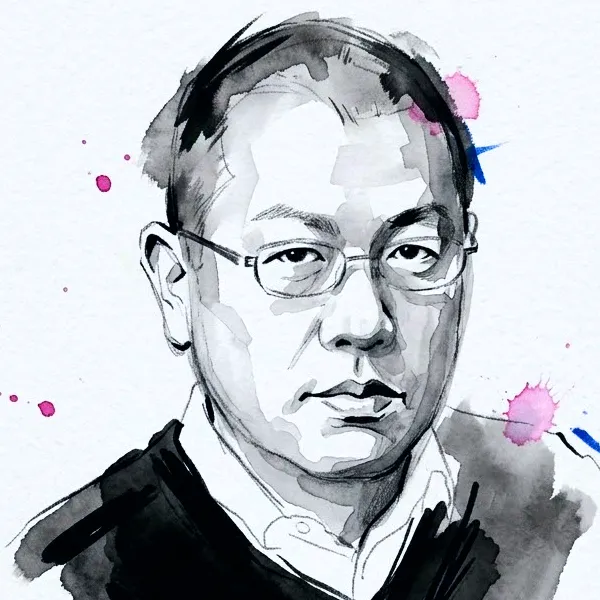
Junya Watanabe is a Japanese designer and a prominent protégé of Rei Kawakubo at Comme des Garçons. After honing his skills within the legendary house, he launched his own eponymous label under the Comme des Garçons umbrella in 1992, quickly establishing himself as a leading figure in avant-garde fashion. Based in Tokyo, his work is celebrated globally for its technical rigour and its ability to transform utilitarian concepts into complex, high-fashion statements. He remains a central figure in the Japanese design movement, noted for his unique position as both an independent creator and a key collaborator within the CDG family.
His role is defined by a commitment to experimentation and a mastery of pattern-making. Watanabe is regarded as a 'designer's designer', whose collections explore construction and materiality rather than conventional trends. By pushing the boundaries of what is possible with fabric and form, he has influenced a generation of creators and maintained a reputation for producing some of the most innovative and intellectually stimulating work in contemporary fashion.
Design ethos
Often described as 'techno-couture', the work of Junya Watanabe focuses on innovative pattern-making and an intricate approach to garment construction. His practice is characterised by a radical reimagining of utilitarian basics—such as denim, trench coats, and workwear—which he transforms through complex manipulations and unconventional fabrications. This obsession with textiles and materiality allows him to bridge the gap between industrial utility and avant-garde expression. By deconstructing familiar forms and reassembling them with a focus on geometric precision, he creates garments that are both structurally complex and intellectually provocative.
A recurring concern in his design language is the transformation of the familiar into the extraordinary through the use of high-tech materials and traditional artisanal techniques. He frequently employs architectural proportions and modular construction to explore the relationship between the garment and the body in space. This methodology rejects decorative ornament in favour of a more rigorous, structural beauty that highlights the process of making. By prioritising the formal properties of construction and the unique characteristics of each textile, he signals a commitment to a design ethos that values the precise execution of functional form. This focus on technical innovation and formal experimentation remains the hallmark of his intellectual approach to dressmaking.
Disclaimer
Career history
2026
THE BEST, DRESSED is a strong recent MAN anchor for collaboration structure, product heritage, dressed archetypes and utility codes pushed into formal presentation.
2025
Spring/Summer 2026 frames Watanabe’s found-object reconstruction as polished wearable assemblage, balancing couture presentation with material collage and sculptural clothing.
2022
Junya Watanabe MAN’s Fall/Winter 2022 film presentation made the mini-show format feel intentional: compact, musical and still rooted in the line’s product-and-archetype logic.
2018
Recent Junya Watanabe womenswear leans into assemblage, surface systems and found-object reconstruction, keeping the work technical while making its material collage more explicit.
2016
From the strongest MAN collaboration anchors, partner brands become part of the design grammar: workwear, denim, outdoor utility and product heritage are grafted into the runway system.
2007
Junya Watanabe MAN is treated as a menswear child line under Junya Watanabe, not a separate root brand, with its public chronology safest from Autumn/Winter 2007 onward.
2000
From Techno Couture through geometric and hyper-construction seasons, Watanabe’s womenswear becomes a laboratory for visible engineering, modular form and garment-object thinking.
1993
Junya Watanabe established his line inside Comme des Garçons with a language of precision, construction and technical curiosity rather than a simple break from Kawakubo’s house.
You’re in
When the archive opens, you’ll be among the first to know.
That’s all.


