

Introduction
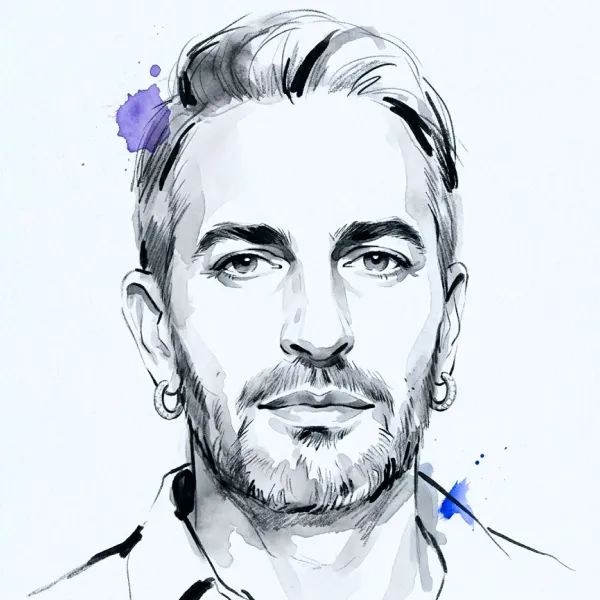
Marc Jacobs is an American designer born in New York City in 1963, known both for his own label and for leading Louis Vuitton from 1997 to 2013. That dual position made him one of the defining figures of turn-of-the-century fashion, able to move between personal authorship, luxury branding and broader cultural visibility.
His importance rests in part on expansion. At Vuitton he helped turn a leather-goods house into a fully developed fashion proposition, while his own work kept a distinct voice shaped by youth culture, irony, grunge references and a willingness to treat fashion history as something to be sampled rather than revered.
Design ethos
Jacobs’s work often starts from collision: luxury set against grunge, polish set against irreverence, fashion authority set against pop culture. That tension gives the clothes their charge and helps explain why collaboration and cultural quotation became so central to his practice.
He is not a minimalist designer, even when the silhouette is direct. What matters more is the ability to shift register without losing recognisability, moving from wit to elegance, from nostalgia to modern product, and from downtown reference to luxury image-making with unusual ease. That flexibility is central to his authorship, and it allowed him to reshape luxury without making it feel sealed off from the wider culture.
Disclaimer
Career history
2026
Marc Jacobs presented his Spring 2026 ready-to-wear collection at the Park Avenue Armory in New York on 9 February 2026.
2020
Marc Jacobs's finale condensed several features of late pre-pandemic NYFW into one show: star casting, performance choreography, and the expectation of a big theatrical close.
1997
Marc Jacobs transformed Louis Vuitton into a fashion force by opening its ready-to-wear era and embedding collaboration into the house identity.
1984
Marc Jacobs co-founded Marc Jacobs International in 1984 and established the label’s creative direction.
You’re in
When the archive opens, you’ll be among the first to know.
That’s all.


