

Louis Vuitton
Overview
Founded in 1854 in Paris, France by Louis Vuitton, Louis Vuitton developed into a distinct label. Louis Vuitton traces its origins to 1854 when its namesake founder opened a workshop on Rue Neuve des Capucines in Paris. Beyond leather goods, Louis Vuitton invests heavily in craftsmanship and innovation. Its workshops across France, Italy, Switzerland and Texas train artisans through the LVMH Institut des Métiers d’Excellence and preserve savoir-faire The brand continues to develop lightweight luggage and accessories to suit modern travel while expanding into perfumes and watches.
The label works across leather goods and accessories. Creative direction is currently led by Nicolas Ghesquière (women). By 2025 the company aims for all leather to be Leather Working Group certified and to eliminate single-use plastics demonstrating a blend of tradition and sustainability. The brand has remained visible within the fashion calendar and related retail networks. Changes in ownership or partnership have formed part of that development over time.
Philosophy
Louis Vuitton’s philosophy is grounded in craftsmanship, innovation and the art of travel. The house sees its mission as embodying the pinnacle of French Art de Vivre, melding tradition with modern design so that products fuse functionality and elegance This ethos manifests in the constant refinement of materials and locks that made its trunks signature and in the contemporary reinterpretation of historic motifs by artistic directors.
Business reports state that 78 % of its raw materials are certified or recycled and that the company prioritises preserving natural resources and animal welfare It aims to eliminate single-use plastics and ensures all leather is LWG certified Workshop programmes train artisans to preserve heritage skills while the brand invests in anti-counterfeiting measures and cultural initiatives Through these commitments Louis Vuitton balances its storied heritage with a vision of sustainable luxury. Narrative and cultural reference operate here as structuring devices rather than decorative afterthoughts. Material choice and construction are treated as part of the argument, not as secondary finishing touches.
Timeline
Disclaimer
Creative timeline
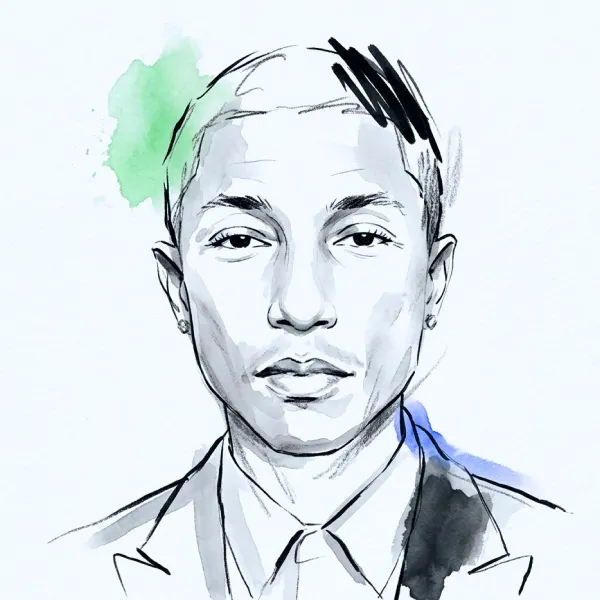
Button TextLouis Vuitton appointed Pharrell Williams as creative director (Men's). Replaced Virgil Abloh.
Pharrell Williams presented his first Louis Vuitton menswear collection on the Pont Neuf in Paris.
Pharrell Williams has pushed Louis Vuitton menswear toward spectacle, pop fluency and a broader entertainment-driven horizon.
Colm Dillane joined the Louis Vuitton men’s studio as guest designer for the house’s Autumn/Winter 2023 collection, presented on 19 January 2023. His contribution was embedded within the existing studio and did not constitute an appointment as permanent artistic director.
Virgil Abloh made Louis Vuitton menswear a defining site of cultural exchange between luxury, streetwear and contemporary art.
After an earlier student placement, Germanier worked as a junior designer at Louis Vuitton in Paris from 2016 to 2018. The role gave him experience of luxury development schedules, finishing standards and large-house production before he left to establish his own label.
Louis Vuitton staged its Women’s Pre-Fall 2023 show on Seoul’s Jamsugyo Bridge.
Defined Louis Vuitton womenswear through futuristic silhouette, technical fabrication and historical references spliced into modern speed.
Nicolas Ghesquière has driven Louis Vuitton womenswear with futurist tailoring, architectural silhouettes and a cinematic sense of movement.
Kim Jones recast Louis Vuitton menswear through travel, technical polish and high-profile cross-disciplinary collaboration.
Martina Tiefenthaler worked as a womenswear designer at Louis Vuitton from 2013 to 2016, contributing to show and pre-collections across tailoring, outerwear, trousers and skirts. The role followed her early work at Maison Martin Margiela and placed her inside a highly structured global studio.
Marc Jacobs transformed Louis Vuitton into a fashion force by opening its ready-to-wear era and embedding collaboration into the house identity.
Di Felice moved into senior womenswear and tailoring responsibilities.
Adrian Appiolaza worked as a senior designer at Louis Vuitton under Marc Jacobs from 2010 to 2012. He left to return to Chloé in a design-director role.
Louis Vuitton established the house’s travel-oriented identity long before a formal ready-to-wear creative succession took shape.
Virgil Abloh's cloud-filled Louis Vuitton set distilled the mood-setting power of late-2010s luxury menswear at the precise moment before the physical runway machine broke down.
Louis Vuitton closed Virgil Abloh’s menswear tenure with a posthumous final collection in Paris.
The Miami presentation transformed Virgil Abloh's planned runway into a large-scale farewell event.
Abloh's "Amen Break" joined the return of live runway scale to one of the year's strongest cultural statements.
Virgil Abloh used Louis Vuitton's scale to validate the film-led luxury presentation at the top end of menswear.


