

Introduction
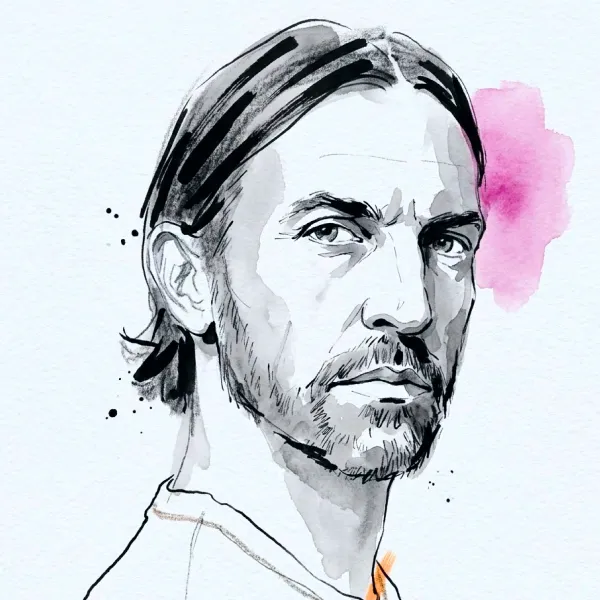
Nicolas Ghesquière is a French fashion designer who rebuilt Balenciaga into one of the defining houses of early twenty-first-century fashion. Born in Comines in 1971 and raised in Loudun, he entered the industry through internships at agnès b. and Corinne Cobson before working for Jean Paul Gaultier and on freelance knitwear and factory projects.
Ghesquière joined Balenciaga’s licensing division in 1995, designing products for the Japanese market, and was promoted to creative director in 1997 after Josephus Thimister’s departure. Over fifteen years he fused Cristóbal Balenciaga’s structural archive with sportswear, science fiction, industrial materials and severe urban tailoring. The Motorcycle or City bag turned critical influence into global expansion and helped prompt Gucci Group’s acquisition of the house in 2001. He left Balenciaga in 2012 and became artistic director of Louis Vuitton womenswear the following year.
Design ethos
Ghesquière designs through synthesis. Historical panniers, cocoon backs and Spanish court volume are combined with neoprene, bonded fabric, parachute silk, scuba equipment, motorcycle clothing and cinematic futurism. Slim high-waisted trousers often counterbalance enlarged shoulders or rigid upper-body construction, giving the wearer the appearance of controlled urban armour.
His Balenciaga also depended on a close image-making circle: Marie-Amélie Sauvé shaped styling, Pierre Hardy developed footwear and Dominique Gonzalez-Foerster translated the retro-futurist world into stores and sets. The method joined runway experiment to commercial product without treating the latter as secondary, though the growing pressure of that system contributed to his departure.
Disclaimer
Career history
2023
Louis Vuitton staged its Women’s Pre-Fall 2023 show on Seoul’s Jamsugyo Bridge.
2013
Defined Louis Vuitton womenswear through futuristic silhouette, technical fabrication and historical references spliced into modern speed.
2013
Nicolas Ghesquière has driven Louis Vuitton womenswear with futurist tailoring, architectural silhouettes and a cinematic sense of movement.
2012
Balenciaga and Nicolas Ghesquière announced the end of their fifteen-year partnership in November 2012, closing the revival that had transformed the house into a major Kering brand.
2001
Under Gucci Group and later PPR, Ghesquière’s runway experimentation was scaled through global retail, leather goods, footwear and the City bag, establishing the modern business model of the house.
1997
Before the Gucci Group acquisition, Ghesquière rebuilt Balenciaga with limited resources through monastic tailoring, synthetic fabrication, sportswear references and a close creative circle.
1997
Nicolas Ghesquière rebuilt Balenciaga through archival volume, technical sportswear, science-fiction image-making and the Motorcycle bag, turning a fragile revival into a globally influential modern luxury house.
1997
Balenciaga promoted Nicolas Ghesquière from its licensing division in 1997. His Spring/Summer 1998 debut began the modern revival that restored the house’s critical authority and commercial relevance.
1997
Turned Balenciaga into a laboratory for futuristic silhouette, technical fabrication and sharp historical hybridisation.
1995
Nicolas Ghesquière joined Balenciaga in 1995 to design licensed products for the Japanese market, including golf, bridal and mourning clothing, gaining factory and production experience before his promotion.
You’re in
When the archive opens, you’ll be among the first to know.
That’s all.


