

Introduction
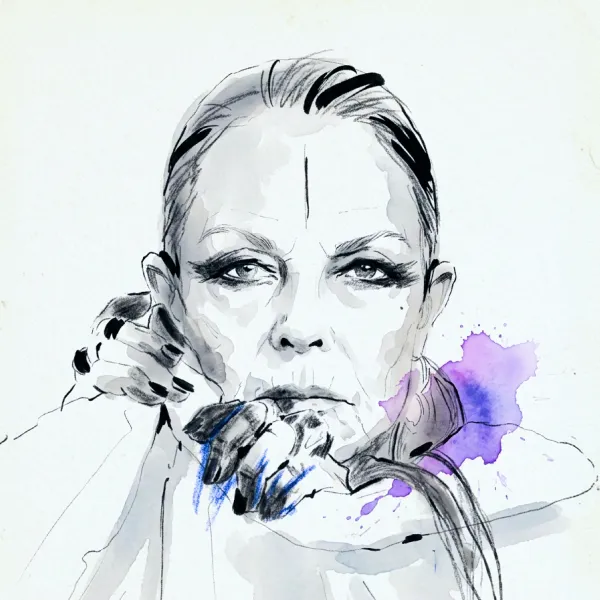
Michèle Lamy is a French creative operator, producer and entrepreneur whose work spans fashion, furniture, jewellery, installation, performance and cultural direction. Before the Rick Owens label developed into an independent house, she ran her own fashion activity and employed Owens in Los Angeles. Their partnership later became personal and professional, with Lamy repeatedly described as a co-founder and business partner within the wider Owens enterprise.
Her role inside Owenscorp has been practical as well as cultural. Gallery and institutional accounts identify Lamy as managing director of art and furniture at Owenscorp and as a central producer of Rick Owens Furniture. The furniture practice began in the mid-2000s and moved from a 2007 Paris presentation into galleries and museums, including the first US museum exhibition devoted to the furniture at MOCA Pacific Design Center in 2016–17. Lamy has also produced or curated later object-world projects including Glade and Rust Never Sleeps.
Lamyland, active from 2014, gives her independent projects a distinct platform outside the core fashion house. Its activity has included the Bargel and Bargenale series, installations, temporary retail environments, boxing, music and performance. In 2018 Lamyland occupied the Selfridges Corner Shop with an environment built around participation and boxing culture. Lamy has also worked through performance projects such as Lavascar and Black Hole.
Jewellery forms another independent strand. HUNROD, launched in 2014 as a Lamy-led collaboration with Loree Rodkin, developed a talismanic object language and later crossed back into the Owens orbit through HUNROD GOLD. Across these projects Lamy operates as an organiser of people, materials, spaces and production. Her position in the Rick Owens universe is therefore structural, with responsibilities that extend across business development, furniture execution, cultural direction and collaborative work.
Design ethos
Lamy’s practice begins with orchestration. She assembles makers, performers, designers, musicians, craftspeople and spaces, then uses production itself as a creative medium. This is especially visible in the Rick Owens furniture work, where difficult materials and limited-edition fabrication require close coordination between concept, engineering, surface and installation. Her contribution is tied to execution and cultural direction as much as to authorship of an isolated object.
Furniture and interiors give that method a physical vocabulary. Alabaster, stone, metal, wood, leather, bone and reclaimed materials are handled for weight, texture and ritual presence. Projects such as Glade extend the furniture into an inhabitable environment with light, connectivity and social use. Rust Never Sleeps pushes material change to the foreground through oxidised surfaces and renewed object forms, with Lamy’s curatorial role placing ageing and transformation inside the exhibition itself.
Lamyland shifts the same approach into temporary communities. Barges, shops, boxing spaces, music and live performance become settings in which fashion is one element among many. Participation and hospitality are recurrent tools. The result is a practice built around encounters and situations, where a project can move from jewellery or furniture into sound, sport or performance without losing its emphasis on material presence and collective experience.
Her jewellery work adds a smaller, bodily scale. HUNROD uses precious materials and talismanic forms as objects worn close to the body, while later crossovers connect that work to the broader Rick Owens environment. Across fashion, furniture and performance, Lamy’s authorship is most legible in the way she turns a creative proposition into a produced world with its own people, objects and atmosphere.
Disclaimer
Career history
2025
Carpenters Workshop Gallery opened Rust Never Sleeps in London in October 2025 with Michèle Lamy as curator. Rusted surfaces, renewed Double Bubble forms and the Antler Bed made oxidation, ageing and material transformation explicit concerns of the furniture practice.
2025
Salon 94 opened BACKSTAGE in New York in January 2025 with furniture built from reclaimed and rare materials. Tech Glade moved the object practice toward recording, charging and backstage use, extending furniture into the practical environment of creative production.
2019
Glade opened at Carpenters Workshop Gallery London in September 2019 as a modular furniture environment. Seating units, army blankets, lighting, connectivity and charging functions made the object practice social and infrastructural, with Michèle Lamy central to production.
2016
MOCA Pacific Design Center opened Rick Owens Furniture in December 2016 as the first United States museum exhibition devoted to the object practice. The exhibition placed Owens’s furniture inside an institutional design context and foregrounded Michèle Lamy’s central production role.
2009
Rick Owens Furniture was presented in London in 2009, extending the object practice beyond its first public Paris showing in 2007. The London presentation formed part of the division’s early gallery expansion before its first United States presentation in 2010.
2007
Rick Owens Furniture was first shown publicly in Paris in 2007. The presentation established a visible design branch with limited production, heavy materials and close involvement from Michèle Lamy in production and curation.
2005
Michèle Lamy’s continuing role at Owenscorp is documented from 2005, with institutional and gallery accounts identifying her as managing director of art and furniture. Her work spans production, business development, cultural direction and the execution of the furniture practice.
You’re in
When the archive opens, you’ll be among the first to know.
That’s all.


