

Introduction
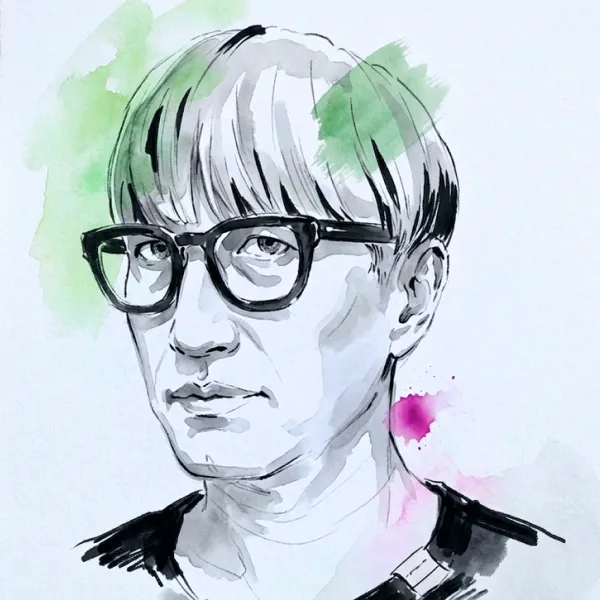
Mihara Yasuhiro is a Japanese fashion designer and the founder of Maison MIHARA YASUHIRO. Born in Nagasaki in 1972 and raised in Fukuoka, he moved to Tokyo to study textiles at Tama Art University, where his route into fashion began through shoes before it became a garment practice. He started making footwear from discarded leather and factory experimentation while still a student, first under the archi doom name and then, from 1997, under the MIHARAYASUHIRO name.
Mihara’s practice grew from handmade footwear into a full fashion house with ready-to-wear, runway collections, collaborations and retail projects. His 2000 partnership with PUMA gave the label international commercial weight, while his later Paris menswear collections established a more complex language of distorted tailoring, worn American casualwear, trompe l’oeil garments and comic unease. In the late 2010s and 2020s, the Original Sole sneakers made his footwear vocabulary newly visible to a global audience, turning hand-moulded imperfection into the house’s most widely recognised design code.
Design ethos
Mihara designs from construction outward. His shoes often begin with physical modelling, not clean digital form: rubber can look squeezed, melted, swollen or marked by the trace of a hand. That preference for irregularity also shapes the clothes. Jackets are cut into false layers, sleeves may hang as visual signs instead of functional parts, military and workwear garments appear aged before their time, and familiar wardrobe pieces are spliced until their category becomes unstable.
The work has a strong relation to use. Mihara’s archive of American casualwear, surf culture, rave, hip-hop, vintage clothing and daily shoes gives the house a vocabulary that feels lived-in even when the construction is strange. He treats humour and damage as tools, not decoration: stuffed animal bags, misregistered slogans, distressed surfaces and off-balance silhouettes all expose how fashion can become image, costume, product and joke at once. The best of his work keeps that tension physical, making the garment look like it has already had a life before it reaches the wearer.
Disclaimer
Career history
2023
From the SS23 and AW23 runway period, Maison MIHARA YASUHIRO sharpened its collections into commentaries on digital image culture, social tagging, false surfaces and the exhaustion of fashion spectacle.
2021
General Scale launched as an eco-conscious footwear project using biodegradable and recycled materials, with aged military references and the PAST sole bringing sustainability into Mihara’s language of decay.
2019
The Original Sole system gave the house its defining contemporary footwear signature: classic canvas and court forms set on hand-moulded rubber soles that look swollen, warped and marked by clay.
2016
The house adopted the Maison MIHARA YASUHIRO name around the Autumn/Winter 2016 period, clarifying its Paris-facing identity while the runway briefly moved through London.
2015
The long-running PUMA by MIHARAYASUHIRO partnership concluded in 2015, closing the first major sportswear chapter in Mihara’s international career before the house’s own footwear system took on greater visibility.
2010
The house introduced a dedicated women’s line around Spring/Summer 2010, extending Mihara’s distressed surfaces, layered construction and off-balance casualwear beyond the menswear runway frame.
2007
MIHARAYASUHIRO moved onto the Paris menswear calendar for Autumn/Winter 2007, placing the house inside the schedule that would become its main international runway platform.
2004
Mihara staged his first runway show outside Japan at Milan Fashion Week in June 2004, choosing a less expected European route before joining the Paris schedule several seasons later.
2000
PUMA by MIHARAYASUHIRO began in 2000, putting Mihara’s hybrid footwear language into a global sportswear structure and giving the young house a commercial force beyond Japan.
1999
Mihara established SOSU Co., Ltd. and began presenting full ready-to-wear collections in Tokyo, expanding a footwear-led practice into a wider garment vocabulary.
1997
The archi doom project was renamed MIHARAYASUHIRO in 1997, giving Mihara’s footwear practice a clearer designer-name identity as it moved towards a fuller fashion business.
1996
Mihara Yasuhiro launched archi doom in Tokyo in 1996, building the future house from handmade footwear, textile experimentation and a self-taught approach to shoemaking.
You’re in
When the archive opens, you’ll be among the first to know.
That’s all.


