

Introduction
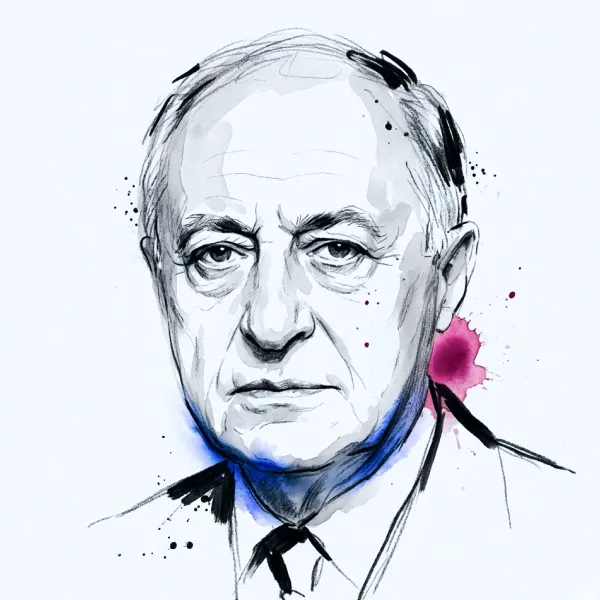
Pierre Bergé was a French fashion executive, cultural organiser and co-founder of the Yves Saint Laurent house. Born on Oléron in 1930, he entered Parisian literary and artistic circles before meeting Yves Saint Laurent in February 1958. During Saint Laurent’s military service and removal from Dior, Bergé organised the legal challenge to the broken contract, secured outside capital from J. Mack Robinson and assembled the premises and operating structure for the independent couture house that opened in December 1961.
Bergé directed finance, administration, pricing, publicity, licensing, retail expansion and corporate negotiations while Saint Laurent retained collection authorship. He helped establish Rive Gauche with Saint Laurent and Didier Grumbach in 1966, led the 1972 reacquisition of the fashion company, oversaw the 1986 purchase of Charles of the Ritz, the 1989 flotation and the 1993 transition to Sanofi control. His title changed across legal entities, but his durable function was to protect the house’s creative authority while constructing the business around it.
After Gucci Group acquired the commercial business in 1999, Bergé remained responsible for the founder couture operation until its closure in 2002. He co-founded the heritage foundation, developed its exhibitions and rights-stewardship work, and maintained wider cultural roles in theatre, publishing, philanthropy and public life. He died on 8 September 2017, shortly before the Paris and Marrakech museums opened.
Design ethos
Bergé was not a collection designer. His creative contribution lay in institutional design: separating couture prestige from ready-to-wear scale, negotiating licences without surrendering every approval right, financing work that was not independently profitable and giving the Studio and ateliers enough continuity to sustain the founder’s practice.
He treated image, distribution and cultural authority as parts of the same house. Boutique expansion, exhibitions, theatre, archives and later the foundation were organised to extend Saint Laurent’s work without collapsing commercial trademarks, personal rights and museum stewardship into one entity. That distinction became especially important after ownership of fashion, beauty and heritage separated.
His method was exacting and centralised. Bergé used contracts, executive appointments, public statements and institutional alliances to control the conditions around design, while leaving collection decisions to Saint Laurent and the creative teams. The house’s longevity depended on this division of labour as much as on any single product.
Disclaimer
Career history
2010
Bergé joined Xavier Niel and Matthieu Pigasse in the 2010 Le Monde investment and became president of its supervisory board. The media-governance role was personal and independent from Saint Laurent.
2002
Bergé co-founded and presided over the heritage foundation recognised on 5 December 2002. Its archive, exhibition and rights-stewardship mandate continued the founders’ institutional work without operating as Kering’s fashion house.
1996
Bergé became president of Ensemble contre le sida on 25 January 1996 and continued through its later Sidaction identity until his death. The role was senior institutional leadership, not evidence that he solely founded the organisation.
1995
Bergé backed Têtu from its 1995 launch and retained an ownership interest until 2012. The publishing investment was independent from the Saint Laurent company and did not make the magazine a house communications project.
1988
François Mitterrand appointed Bergé on 31 August 1988 to lead the Paris opera structure encompassing the developing Opéra Bastille, Palais Garnier and Nanterre dance school. He served through 1994 before taking an honorary role.
1987
Bergé co-founded and published Globe in 1987 with Georges-Marc Benamou. The political and publishing venture belonged to his independent public career rather than to Saint Laurent communications.
1986
Bergé founded the Institut Français de la Mode in 1986 and became its president, extending his work into the education of fashion managers and the coordination of creative, technical and commercial training.
1985
Bergé became president of ARCAT-SIDA in 1985, beginning a long public-health and philanthropic leadership strand. The evidence supports the presidency but not the recurring claim that he solely founded the organisation.
1977
Bergé acquired, renovated and directed the Théâtre de l’Athénée from 1977 until transferring it to the French state in 1982. The theatre was his independent cultural enterprise, not a Saint Laurent division.
1973
Bergé helped create the ready-to-wear Chambre syndicale and became its first president. Sources divide between 1973 and 1974, likely reflecting formation and formal office dates; the institution remained independent from Saint Laurent.
1966
Bergé co-founded Rive Gauche and organised its commercial structure, licensing, boutique network and international growth. His role was executive and strategic; the collection design remained with Saint Laurent and later named ready-to-wear directors.
1961
Pierre Bergé co-founded the house and directed its commercial, administrative and institutional structure. His authority covered finance, pricing, licensing, retail expansion and major transactions, while collection design remained with Saint Laurent and the creative organisation.
1961
Yves Saint Laurent co-founded the independent house with Pierre Bergé and held final creative authority from its public opening on 4 December 1961. He directed haute couture through the 2002 closure, oversaw Rive Gauche from 1966 and later delegated menswear and women’s ready-to-wear to named successors.
You’re in
When the archive opens, you’ll be among the first to know.
That’s all.


