

Introduction
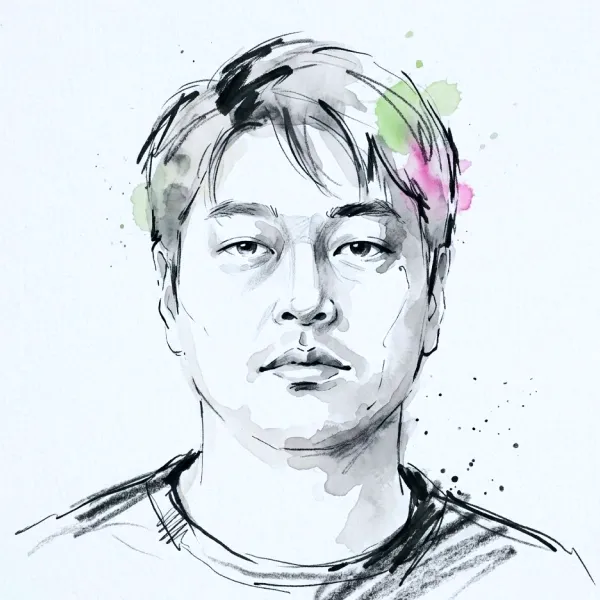
Soshi Otsuki is a Japanese fashion designer and the founder of SOSHIOTSUKI, the Tokyo menswear label he launched in 2015. Born in Chiba Prefecture in 1990, he studied menswear at Bunka Fashion College and also attended coconogacco, the independent Tokyo fashion school associated with more conceptual and experimental design training. That double education shaped the central character of his work: technically disciplined tailoring carrying a persistent interest in Japanese performance, ceremony and dress codes.
Otsuki introduced SOSHIOTSUKI through the Tokyo New Age platform in 2015. The brand’s second collection brought him onto the 2016 LVMH Prize semi-finalist list, but his practice developed slowly in Tokyo for much of the following decade, away from the immediate machinery of European fashion. During that period he refined a vocabulary of wrapped jackets, enlarged trousers, kimono-derived closures, interlining pockets and formal garments charged with references to Japanese classical arts, military uniform, dandyism and office culture.
His international profile changed sharply in 2025, when SOSHIOTSUKI won the LVMH Prize and entered a global wholesale partnership with Tomorrow Ltd. The following season brought a Zara capsule, ASICS-linked projects and a guest-designer runway at Pitti Uomo 109 in Florence. Otsuki’s current position is unusual for a young designer: he is expanding commercially while still working from a narrow and specific idea of Japanese tailoring, using the suit as a record of aspiration, imitation and cultural memory.
Design ethos
Otsuki’s design ethos is built from the friction between Japanese dress and Western tailoring. He is interested in the suit as something learned, imported, misread and remade, especially in the context of post-war and bubble-era Japan. His jackets often carry displaced balance, slack drape or exposed internal construction, while trousers expand into martial or delinquent subcultural volume. The clothes are precise, but they rarely chase the clean ideal of conventional sartorial fit.
Classical Japanese performance and ceremonial clothing give his work its ritual charge. Kimono closures, judo belts, Buddhist references, sword-vented jackets, formal coats and narrow kimono-silk fabric widths recur as structural prompts rather than decorative motifs. Otsuki tends to translate these references through patternmaking: a closure becomes a method of fastening, a sleeve gap becomes a pocket logic, a ceremonial silhouette becomes a tailored proportion.
His more recent work studies 1980s Tokyo salaryman style and the local afterlife of Italian tailoring. Otsuki treats the Armani-influenced power suit as both an object of desire and a cultural distortion, then rebuilds its slouch, grey palette and corporate aura for Japanese bodies. This gives his practice a controlled ambiguity: elegant, austere, slightly awkward and often quietly satirical, with craft used to hold social memory inside the garment.
Disclaimer
Career history
2026
SOSHIOTSUKI presented IN FLORENCE as guest designer at Pitti Uomo 109 on 15 January 2026, staging its first European runway show at the Refettorio di Santa Maria Novella. The collection brought Otsuki’s reverse-importation idea back to Italy through grey tailoring, softened corporate silhouettes and Japanese construction details.
2025
SOSHIOTSUKI released A Sense of Togetherness with Zara in December 2025, translating Otsuki’s oversized tailoring and family-memory references into a global capsule spanning menswear, womenswear and kidswear. The project marked the brand’s broadest public retail exposure to date.
2025
In November 2025, Tomorrow Ltd. announced a global partnership with SOSHIOTSUKI from the Autumn/Winter 2025 season, taking responsibility for wholesale operations and international market development. The agreement gave the label a stronger commercial framework after its LVMH Prize win.
2025
Soshi Otsuki won the 2025 LVMH Prize, giving one of the year’s major institutional endorsements to Japanese menswear.
2024
The Spring/Summer 2025 collection sharpened Otsuki’s focus on Japan’s bubble economy, Tokyo salaryman dress and the local afterlife of imported Italian tailoring. The phase recoded oversized grey suits, soft shoulders, exposed interlinings and awkward drape as a specifically Japanese menswear language.
2023
SOSHIOTSUKI returned to a physical runway format for Autumn/Winter 2023 at Rakuten Fashion Week TOKYO after several years of lookbook-led presentation. The show made the brand’s ritualised tailoring more legible as movement, posture and group image, not only as garment construction.
2019
From 2019 into the early 2020s, several SOSHIOTSUKI collections used Japanese four-character idioms and moon-related titles, including Aigetsutetto, Enkosokugetsu and Ginpurogetsu. The titles gave the clothes a literary and linguistic frame while Otsuki continued to refine his austere tailoring and ceremonial silhouettes.
2016
After only his second collection, Otsuki was named a semi-finalist for the 2016 LVMH Prize. The recognition gave SOSHIOTSUKI early international visibility while the label was still a small Tokyo practice centred on tailoring, classical performing arts and Japanese formalwear.
2015
Across the brand’s first years, SOSHIOTSUKI built a language of wrapped jackets, prayer-bead styling, kimono-like fastening, military structure, judo volume and formal coats. The work treated tailoring as a way to reconstruct Japanese ceremonial and masculine codes inside contemporary menswear.
2015
Soshi Otsuki founded SOSHIOTSUKI in Tokyo in 2015 and introduced the label through the Tokyo New Age platform with an Autumn/Winter 2015 collection. The debut placed his tailoring-led menswear inside a new generation of Tokyo designers working with Japanese cultural codes, experimental schooling and an independent runway structure.
You’re in
When the archive opens, you’ll be among the first to know.
That’s all.


