

Introduction
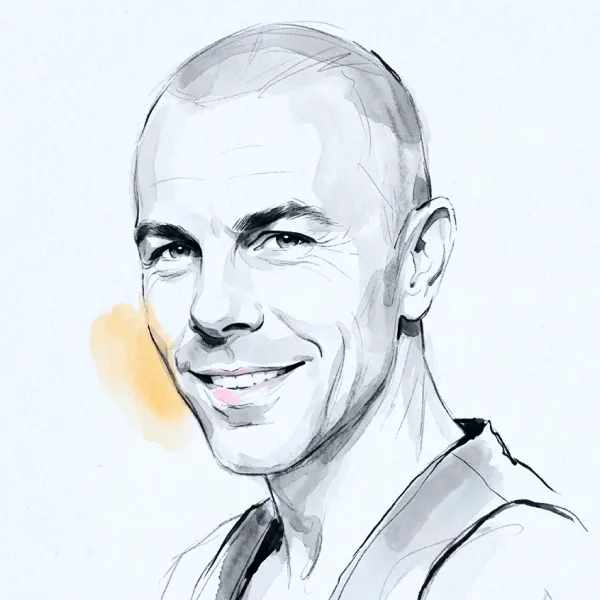
Manfred Thierry Mugler was a French fashion designer, photographer, director and stage author who established the Mugler house in Paris in 1974, after presenting the Café de Paris collections through Créateurs et Industriels in 1973. Trained in dance and decorative arts in Strasbourg, he entered fashion through sketch sales, boutique employment and freelance design before constructing one of the late twentieth century’s most recognisable systems of silhouette and spectacle.
His fashion work joined sharply built shoulders, corsetry, anatomical exaggeration and industrial or zoological references to an equally controlled world of casting, music, photography and performance. He also photographed campaigns, directed George Michael’s Too Funky, developed the creative world of Angel and worked across theatre, concert touring, circus and large-scale revue. After withdrawing from seasonal fashion in 2002, he continued through projects including Zumanity, Beyoncé’s I Am... World Tour, Mugler Follies, The Wyld, photography exhibitions and the 2019 McGREGOR + MUGLER production.
Design ethos
Mugler designed from posture outward. Tailoring tightened the waist and enlarged the shoulder line; corsetry, moulded surfaces and articulated metalwork could turn the body into an insect, machine, animal or cinematic archetype. These transformations were built through exact cut and specialist fabrication, not through costume effect alone. Even the most fantastical objects depend on a disciplined understanding of balance, movement and the force of an entrance.
He treated fashion as total direction. A collection could include commissioned hats, music, choreography, lighting, unusual casting and a public spectacle whose scale changed the way the clothes were read. Photography and performance were therefore not secondary promotion but extensions of the same authorship. His strongest work holds glamour and physical control together, making exaggeration function as a form of self-invention.
Disclaimer
Career history
2022
Manfred Thierry Mugler died on 23 January 2022 aged seventy-three. His death closed a multidisciplinary career that had extended beyond the fashion house into photography, film, costume and stage direction, while the travelling Couturissime exhibition continued after him.
2019
Polka Galerie in Paris presented Manfred Thierry Mugler, Photographe from 8 November 2019 to 25 January 2020. The exhibition was the first public presentation of Mugler’s photographic prints and belonged to his independent photographic practice rather than the fashion house chronology.
2019
Thierry Mugler: Couturissime was initiated, produced and circulated by the Montreal Museum of Fine Arts, curated by Thierry-Maxime Loriot, supported by Maison Mugler and developed with the founder’s participation. Its verified itinerary ran through Montreal, Rotterdam, Munich, Paris and Brooklyn, ending in May 2023. It was a travelling exhibition, not a return to founder management.
2002
After the final founder-attributed ready-to-wear collection for Fall/Winter 2001–02, Thierry Mugler withdrew from regular seasonal fashion and left the couture house in 2002. His departure preceded the company’s 2003 closure and did not end his independent work in costume, direction, photography and performance.
1997
The 22 January 1997 presentation of Les Insectes is the strongest marker for Mugler’s formalised couture-calendar position. It follows the first Ritz couture activity of 1992 and should not be used to revive the unsupported claim of a 1990 couture collection.
1995
Thierry Mugler photographed Jerry Hall at White Sands, New Mexico, for an Angel advertising campaign in 1995. The image is the strongest securely classified founder-authored fragrance campaign in the recovered record and belongs to the separate fragrance operation.
1992
Mugler presented the first collection institutionally identified as haute couture at the Ritz in 1992. The exact date, title and calendar category remain unresolved, so the event establishes the division’s beginning without supporting a fabricated named collection.
1992
Mugler conceived and directed George Michael’s Too Funky video, extending the Spring/Summer 1992 Les Cow-boys fashion world into a distinct screen project. The video’s direction, performance and costume system belong to his wider practice, while the runway collection remains a separate Collection record.
1978
By 1978–79 Mugler had opened a boutique at 10 place des Victoires, established commercial menswear and begun integrating his own campaign photography into the house image. The components have different date precision, but together they mark a durable expansion from an emerging women’s label into a broader fashion operation.
1974
Mugler’s first collections under his own name and the public establishment of the Paris house belong to 1974. This date is distinct from the 1973 Café de Paris precursor and the legal entity registered in 1976.
1974
Thierry Mugler established the public-facing eponymous house in 1974 after the Café de Paris precursor of 1973. Across ready-to-wear, menswear and haute couture he directed clothing, image and spectacle as one system, while named specialists supplied millinery, metalwork, corsetry and atelier fabrication. His final attributed ready-to-wear collection was Fall/Winter 2001–02; he withdrew from seasonal fashion in 2002, before the directly operated fashion business closed in 2003.
1973
Café de Paris was the identity used for Mugler’s first independent collection stage in 1973, with two collections sold or shown through Créateurs et Industriels. Exact seasons, dates and legal status remain unresolved, so the event belongs to the founder chronology without becoming a separate brand or a falsely precise Collection record.
1967
After moving to Paris in 1967, Mugler worked for the rue de Buci boutique Gudule, where his maxicoats and broad-shouldered designs were sold. The employment is secure, but the surviving source does not support a more specific title such as assistant, designer or window dresser.
1962
Mugler joined the ballet of the Opéra national du Rhin in 1962 while studying decorative arts in Strasbourg. Six years of touring gave movement, posture and stage scale a practical place in his formation before fashion became his principal profession.
You’re in
When the archive opens, you’ll be among the first to know.
That’s all.


