

Introduction
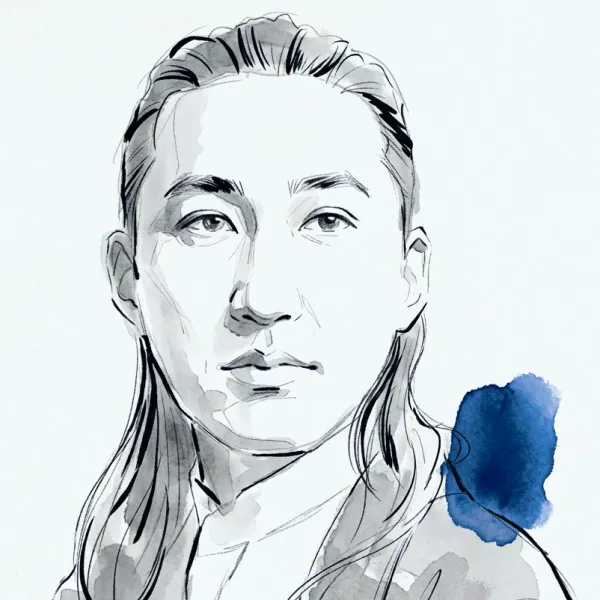
Yuima Nakazato is a Japanese fashion designer and the founder and artistic director of YUIMA NAKAZATO. Born in Tokyo in 1985, he studied at the Royal Academy of Fine Arts Antwerp from 2004 to 2008. His graduation work received an Innovation Award selected by Ann Demeulemeester, and footwear from the collection entered the MoMu fashion museum collection.
Nakazato established his label in Tokyo in 2009 and initially worked across experimental collections, menswear and custom stage clothing for musicians. The company YUIMA NAKAZATO Co., Ltd. was incorporated in 2015. In July 2016 he became an official guest designer at Paris Haute Couture Week with UNKNOWN, the first Japanese designer to enter that guest position since Hanae Mori.
His practice combines couture assembly, digital fabrication, performance costume and environmental research. Proprietary systems include modular Unit construction, TYPE-1 and Biosmocking, developed with Spiber’s Brewed Protein™ fibres. Nakazato also designs for opera and ballet, founded the FASHION FRONTIER PROGRAM and has been the subject of monographic exhibitions in Calais, Tokyo and Oulu.
Design ethos
Nakazato treats clothing as a structure that can respond to one body without relying on fixed industrial sizing. Modular units, resin bonding, metal fastenings and digitally controlled textile contraction allow garments to be assembled, adjusted and repaired through systems that differ from conventional seams. The aim is not frictionless mass production; variation and individual fit remain visible in the finished object.
Material research is paired with intensive handwork. Brewed Protein™ textiles, fragmented denim, deadstock uniforms, parachute cloth, airbags, ceramics, glass and metal chain are shaped through printing, knitting, dyeing, moulding and couture assembly. Recent collections have used fragile ceramic armour and sound-producing garments to question the assumption that clothing must be durable, functional or silent.
Fieldwork gives the technical process a narrative frame. Nakazato photographs bodies in Finnish ice, studies discarded clothing in Kenya, travels through the White Desert and works with clay after visiting Yakushima. These journeys are translated through silhouette and surface, not reproduced as scenery, keeping the body, environmental exposure and the protective function of dress at the centre of the work.
Disclaimer
Career history
2026
Oulu Art Museum opened GLACIER in May 2026 as part of the Oulu2026 European Capital of Culture programme. The exhibition brings together couture shaped by northern fieldwork, photography and process material, allowing the environmental research behind the runway work to be examined through a sustained museum presentation.
2026
In 2026, work by YUIMA NAKAZATO entered an acquisition and exhibition context connected to Costume Art at The Metropolitan Museum of Art in New York. The placement extended the house’s museum history beyond monographic surveys and situated its technology-led couture within a broader institutional history of dress and artistic practice.
2025
Tokyo City View marked the house’s fifteenth anniversary with an exhibition bringing couture, stage costume, field research and documentary material into one account of the practice. Its panoramic setting returned the international couture history to Tokyo and connected the atelier’s speculative landscapes to the city in which the company operates.
2024
The Cité de la dentelle et de la mode opened YUIMA NAKAZATO: Beyond Couture in Calais in 2024. The first major monographic museum exhibition devoted to the house presented more than fifty looks alongside process material, technologies and stage work. It established a public institutional record of the atelier’s development since its entry into Paris couture.
2023
From 2023, field research became a recurring part of the house’s design process. Work in Kenya, Egypt, Finland and Japan connected exported clothing waste, landscape, climate and local material knowledge to the atelier’s couture systems. The change broadened sustainability from technical efficiency into an examination of where garments, resources and discarded clothing travel.
2021
Nakazato founded the FASHION FRONTIER PROGRAM in 2021 as an award and educational platform for emerging creators working with social and environmental questions. The programme extended the designer’s research beyond his own studio and created a recurring structure for mentorship, public discussion and new fashion proposals.
2020
In 2020, YUIMA NAKAZATO publicly established Biosmocking as a central construction technology. Digitally applied patterns control the contraction of specially developed Brewed Protein™ textiles in water, producing three-dimensional form without conventional cutting and extensive seaming. The process joined computation, material behaviour and couture fitting in a system that could be adjusted for individual bodies.
2019
Around 2019, the atelier developed TYPE-1 as a needle- and thread-free assembly system using resin components and metal clasps. Garments could be built, adjusted and repaired without specialist sewing, translating the Unit System from a couture proposition into a product platform. TYPE-1 remains active through the house’s online store and later couture applications.
2019
By 2019, the long-term partnership with Spiber had become a central material programme for the house. Brewed Protein™ fibres were developed through repeated couture applications, weaving, dyeing and garment trials rather than a single capsule. The collaboration linked biological material research to the atelier’s modular construction and customisation goals.
2018
In 2018, the house studied clothing as a protective interface through dialogue with JAXA’s spacesuit development team and experiments with recovered parachute, airbag material and Toray’s Ultrasuede® PX. A dedicated exhibition at 21_21 DESIGN SIGHT in Tokyo presented the resulting garments alongside the atelier’s manufacturing system, moving the research beyond the runway into an institutional design context.
2017
Nakazato received the Shiseido Award for Best New Designer of the Year at the 2017 Mainichi Fashion Grand Prix and the WIRED Audi INNOVATION AWARD in 2018. Together, the awards recognised both the fashion practice and its use of technology, placing the young couture house within Japan’s design and innovation institutions.
2017
From 2017, the atelier developed a modular Unit System based on repeated components that could be connected, replaced and recomposed. The system treated a garment as an adaptable structure instead of a fixed shell and became the conceptual basis for Nakazato’s research into individual fit, repair and lower-waste production.
2016
Nakazato entered Paris Haute Couture Week as an official guest designer in July 2016. The appointment gave the Tokyo house a continuing place within the Paris couture schedule while leaving its studio and company in Japan. Recent FHCM calendars classify YUIMA NAKAZATO as a Guest House, distinct from permanent and corresponding members.
2015
YUIMA NAKAZATO Co., Ltd. was incorporated in Tokyo in 2015 with Nakazato as its representative. The company formalised the operating structure behind couture presentations, product systems, performance work and exhibitions. It also explains the distinction between the label’s 2009 foundation and the 2015 creation year recorded by the FHCM.
2010
YUIMA NAKAZATO presented a menswear collection on a Tokyo runway in 2010, extending the young label beyond its initial womenswear identity. Menswear remained integrated into the root house and anticipated later couture work in which tailoring, armour and fragile ornament were developed across gendered bodies.
2009
From the label’s first years, Nakazato designed custom stage clothing for performers including Fergie and Lady Gaga. The practice later expanded into ballet and opera commissions for institutions including the Grand Théâtre de Genève, Boston Ballet and the Bavarian State Opera. Performance introduced demands of movement, durability, sound and character that continued to inform the couture atelier.
2009
Yuima Nakazato founded his eponymous label in Tokyo in 2009 and remains its artistic director. The independent house developed from experimental seasonal collections and custom performance clothing into a Paris couture-calendar practice centred on modular construction, advanced materials, handwork and individual fit. Nakazato also serves as representative director of the company incorporated in 2015.
2008
Nakazato’s graduation collection received an Innovation Award selected by Ann Demeulemeester, while footwear from the project entered the permanent collection of MoMu in Antwerp. He also received the ITS Vertice Award in 2008 and the YKK Award in 2009. The sequence established institutional recognition before the launch of his label.
2004
Nakazato entered the Royal Academy of Fine Arts Antwerp in 2004 and completed its fashion programme in 2008. The school’s emphasis on concept, silhouette and independent authorship gave him a European framework for experiments begun in Tokyo and established the technical and research-led approach that later shaped his own house.
You’re in
When the archive opens, you’ll be among the first to know.
That’s all.


