

Introduction
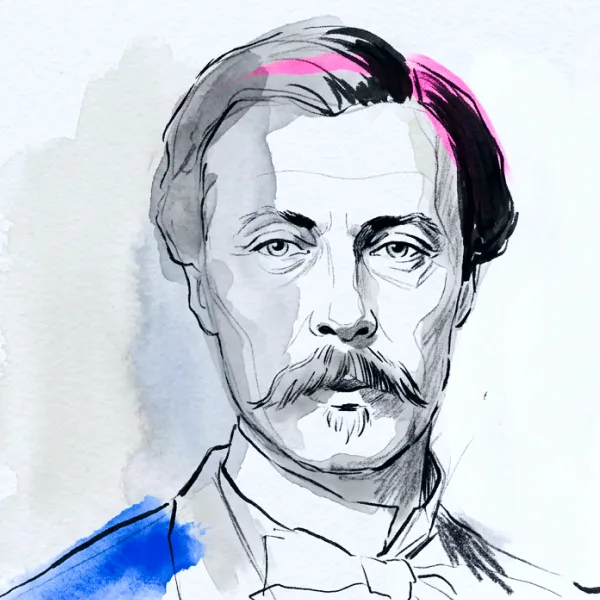
Charles-Émile Hermès was the son of Thierry Hermès and the second-generation operator of the family saddlery. He assumed operating responsibility in 1859, before formal succession after Thierry’s death in 1878. A harness made under his direction received a first-class medal at the 1867 Paris Universal Exhibition.
In 1880 he moved the workshops to 24 Faubourg Saint-Honoré and opened a store at the same address, creating the production-and-retail centre that remains central to Hermès. His sons Adolphe and Émile-Maurice later operated the business together under the Hermès Frères name.
Design ethos
Charles-Émile’s work remained centred on harness and saddlery, where fit, strength and finish were judged against professional use. The 1867 award places his workshop direction inside the competitive culture of nineteenth-century French craft and industry.
The 1880 move joined workshop and store, making direct service, repair and retail part of one system. That decision gave the house a stable Paris address from which it could serve international equestrian clients and later develop travel goods.
Disclaimer
Career history
1867
Hermès received a first-class medal at the 1867 Paris Universal Exhibition for a harness made under Charles-Émile Hermès’s direction. The award placed the second-generation workshop within the period’s international culture of craft and industry.
1859
Charles-Émile Hermès assumed operating responsibility in 1859, before formally succeeding Thierry Hermès after the founder’s death in 1878. His period connected the original workshop to the later Faubourg Saint-Honoré house.
You’re in
When the archive opens, you’ll be among the first to know.
That’s all.


