

Introduction
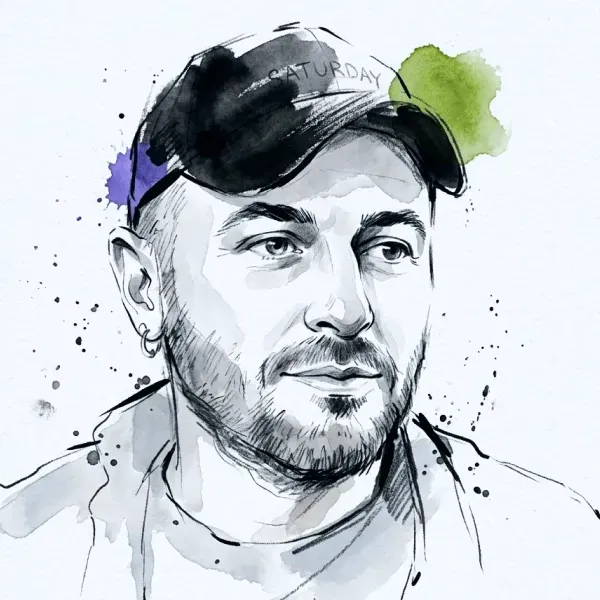
Demna is a Georgian designer born in Sokhumi in 1981. After studying at the Royal Academy of Fine Arts in Antwerp, he worked at Maison Martin Margiela and Louis Vuitton, co-founded Vetements in 2014 and became artistic director of Balenciaga in 2015. Across those roles he developed a practice based on social uniforms, found garments, extreme proportion and the friction between mass culture and luxury craft.
Gucci announced Demna as artistic director on 13 March 2025, with the mandate effective from July after his final Balenciaga couture collection. He introduced La Famiglia in September through a lookbook, retail release and The Tiger film, followed with Generation Gucci and made his physical runway debut with Gucci Primavera in February 2026. His remit covers the house’s collections and image while drawing directly on the Florence archive.
Design ethos
Demna studies clothing as a system of social information. Security jackets, office tailoring, hoodies, sportswear and ceremonial dress are enlarged, distressed or rebuilt until status becomes unstable. Long sleeves, raised shoulders, low waists and obscured bodies make proportion a psychological force as much as a formal one.
His work alternates between hyper-reality and exact craft. Products can imitate ordinary shopping bags or worn shoes, while couture uses embroidery, engineered textiles and severe tailoring. At Gucci, archetypal characters and archival remixes have placed recognisable house objects inside this broader method of typology, desire and public image.
Disclaimer
Career history
2025
Demna closed his Balenciaga chapter with a final couture show in Paris before departing for Gucci.
2025
Kering announced in March 2025 that Demna would leave Balenciaga to become Gucci artistic director, ending a decade that had changed the house’s scale, product system and cultural position.
2025
Demna’s mandate at Gucci took effect in July 2025 after his final Balenciaga couture collection. He introduced La Famiglia through image and film in September, then moved to archival remixing and a physical runway debut in February 2026.
2025
Gucci announced Demna as artistic director on 13 March 2025, naming him as Sabato De Sarno’s successor while he completed his final Balenciaga commitments. His Gucci mandate was scheduled to begin in July.
2023
After the 2022 advertising crisis, Demna reduced logos and spectacle, returned attention to tailoring, trompe l’oeil, material construction and couture technique, and closed the tenure with increasingly personal collections.
2023
Balenciaga staged its first major runway after the 2022 ad scandal, with coverage framing the collection as a reset.
2022
Balenciaga’s Fall 2022 show became one of the year’s most charged runway moments under the pressure of war.
2021
Balenciaga fused runway, red carpet, and animation into one of the year's most discussed fashion spectacles.
2021
Balenciaga's couture return reactivated one of fashion's most symbolic houses at the highest level.
2019
Balenciaga expanded fashion presentation into flooded arenas, a custom video game, red-carpet theatre, animation, brand hacking and the New York Stock Exchange, while its collaborations and product language reached peak cultural saturation.
2015
Demna established off-the-shoulder tailoring, oversized social uniforms, the Bazar bag, Knife footwear and the Triple S, making streetwear proportions and deliberately awkward product central to Balenciaga.
2015
Demna joined Cristóbal Balenciaga’s architecture to oversized social uniforms, luxury streetwear and mass-cultural spectacle, scaled the house through footwear and accessories, and restored haute couture in 2021.
2015
Kering appointed Demna, the co-founder of Vetements, as Balenciaga artistic director in October 2015, bringing an anti-fashion and sociological reading of everyday dress into the house.
2015
Reframed Balenciaga through oversized proportion, luxury distortion and the elevation of the ordinary into fashion spectacle.
2009
Demna worked within Maison Martin Margiela’s anonymous studio and led work on women’s collections through 2013. The role preceded Louis Vuitton, Vetements and his later named creative direction at Balenciaga and Gucci.
You’re in
When the archive opens, you’ll be among the first to know.
That’s all.


