

Introduction
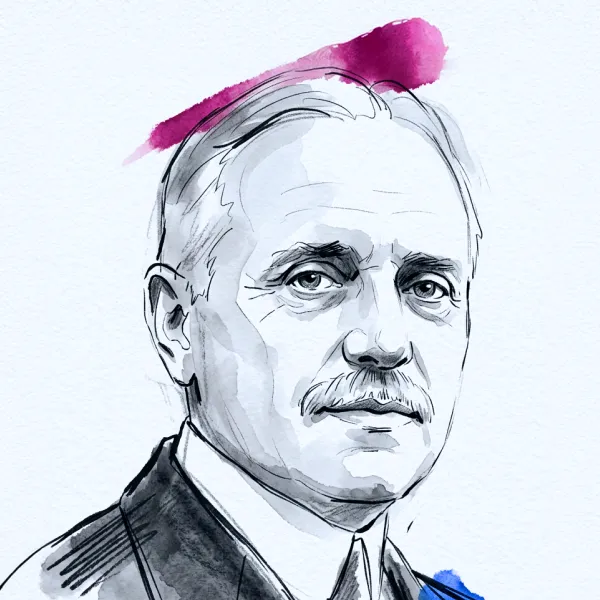
Émile-Maurice Hermès was a third-generation member of the Hermès family who first operated the house with his brother Adolphe under the Hermès Frères name. He developed international sales, acquired specialist saddlery businesses and expanded a branch network serving equestrian and sporting centres. In 1922 he bought his brother’s shares and restored the singular Hermès name.
Under his control, the house adapted leather work to rail and automobile travel, obtained limited rights to use a sliding fastener and applied it to bags, gloves and clothing. The 1920s and 1930s brought sustained expansion into ready-to-wear, jewellery, watches, footwear and silk, creating the multi-category structure inherited by Robert Dumas in 1951.
Design ethos
Émile-Maurice treated saddlery knowledge as a transferable technical resource. Closures, straps, handles and reinforced forms were adjusted for cars, travel and sport, most clearly in the zipped automobile bag marketed in 1923. The achievement was the adaptation of existing fastener technology to luxury leather goods, not the invention of the zipper.
His working model joined product development to commercial networks. Branches followed equestrian customers, travelling sales built foreign markets and acquisitions consolidated specialist capacity. Fashion and objects entered the house as linked programmes rather than as a sudden abandonment of saddlery.
Disclaimer
Career history
1922
Émile-Maurice Hermès bought Adolphe Hermès’s shares in 1922 and restored the singular Hermès name. Under his control, the house extended saddlery knowledge into travel goods, clothing and a growing set of product programmes.
You’re in
When the archive opens, you’ll be among the first to know.
That’s all.


