
Introduction
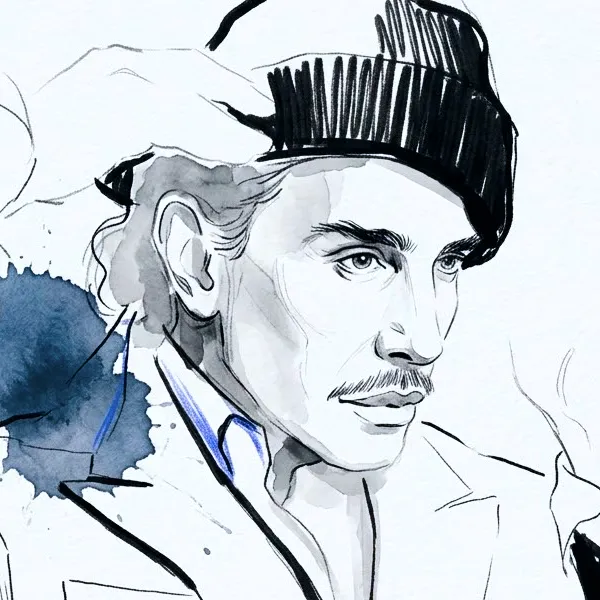
John Galliano is a Gibraltar-born British fashion designer whose career has moved between an independent eponymous practice and the direction of major Paris houses. After studying at the City of East London College, he completed a foundation course and BA in Fashion Design at Saint Martins School of Art. Theatre dressing and work experience with Savile Row tailor Tommy Nutter sharpened his understanding of costume, construction and movement. His graduate collection, Les Incroyables, was presented on 28 June 1984 and bought by Browns; the retailer’s display and sale of the work established the public John Galliano label that summer.
Galliano developed the label through a volatile sequence of London and Paris operations, combining historical research, bias cutting and highly authored runway narratives despite repeated changes of backer, production system and studio. The Paris breakthrough collections of 1993–95 led to his appointment at Givenchy in July 1995 and transfer to Christian Dior in October 1996, while his own house continued alongside both appointments. At Dior he led women’s haute couture and ready-to-wear and extended their image into advertising, accessories and licensed categories; the eponymous company simultaneously expanded into menswear, a second line, fragrance and other licensed products. This output depended on a recurring studio and image network in which Amanda Harlech, Steven Robinson, Bill Gaytten, Stephen Jones and other specialists held distinct, durable responsibilities.
After antisemitic and racist remarks became public, Dior suspended Galliano on 25 February 2011 and dismissed him on 1 March; the board of the John Galliano company dismissed him on 15 April. A Paris court later convicted him of public insults based on race, religion, ethnicity or origin. Following treatment for substance addiction and a gradual return to professional work, he was appointed creative director of Maison Martin Margiela in October 2014. His decade at the house made Artisanal the principal research and image-making engine for a wider system of ready-to-wear, accessories and genderless lines, and ended with his departure from Maison Margiela in December 2024.
In 2026 Galliano began a two-year creative partnership with Zara, initially producing custom work for the Met Gala before the first announced commercial collection. The Metropolitan Museum of Art subsequently announced John Galliano: Horizons for 2027–28, the first major museum exhibition devoted to the breadth of his career. Its scope places his technical and imaginative achievements alongside the conduct that altered his career and public reception, making ethical accountability part of the institutional assessment rather than an appendix to it.
Design ethos
Galliano constructs collections through accumulated research rather than a single visual reference. Portraiture, literature, film, theatre, social history, subculture and dress from different periods are assembled in drawings and research books, then reorganised around invented characters. The character determines posture, gesture, casting and styling as well as the garment itself; historical material is used as a working structure for new proportion and narrative rather than reproduced as costume.
His technical language is grounded in cutting and the behaviour of fabric. Bias-cut dresses, spiralling seams, circle-cut skirts, corsetry, tailored sleeves, controlled drape and garments capable of inversion or multiple arrangements recur across the independent label, Dior and Maison Margiela. These devices change the wearer’s stance and the rhythm of movement: cloth can skim, torque, collapse or flare around the body, while tailoring and understructure provide the discipline beneath the surface drama.
The runway operates as a total image system. Millinery, footwear, jewellery, hair, make-up, music, casting, choreography, graphics, photography and set design are coordinated to make the collection’s fiction legible. The method is collaborative even when the public narrative concentrates on Galliano. At the centre of the studio, conversations with Steven Robinson and Bill Gaytten became research books, patterns, fittings and final silhouettes; at Dior, the same logic extended beyond the show into campaigns, accessories, beauty and retail without making those categories interchangeable with the couture or ready-to-wear collection.
At Maison Margiela, Galliano redirected theatrical authorship through the house’s existing codes of deconstruction, anonymity, revealed construction, repurposing and memory. Artisanal became a laboratory whose techniques could be translated into Co-Ed ready-to-wear and the Icons line, while Recicla, décortiqué and inherited-garment studies made provenance and the evidence of making visible. Film and live-performance projects including S.W.A.L.K., A Folk Horror Tale and Cinema Inferno further joined couture, process documentation and narrative image-making, culminating in the Spring/Summer 2024 Artisanal collection.
Disclaimer
Career history
2026
The Metropolitan Museum of Art announced John Galliano: Horizons on 31 July 2026 for presentation from 9 May 2027 to 9 January 2028. The exhibition will span his graduate work, eponymous label, Givenchy, Dior and Maison Margiela while explicitly examining ethical accountability and the consequences of his conduct.
2026
Zara announced a two-year creative partnership with John Galliano on 17 March 2026 to re-author its archive. Custom Galliano-for-Zara designs appeared at the May 2026 Met Gala, while the first announced commercial collection was scheduled for September.
2025
Christian Louboutin and Maison Margiela released two linked footwear capsules in March 2025. Each house revised the other’s most recognisable sign: the Tabi moved through Louboutin’s forms, while Maison constructions took on the red sole in a deliberately reciprocal exchange.
2024
Maison Margiela announced the end of John Galliano’s tenure on 11 December 2024. His final runway collection had been the Spring/Summer 2024 Artisanal presentation beneath Pont Alexandre III, closing a decade in which couture became the house’s principal research and image-making engine.
2023
Maison Margiela and Gentle Monster began a continuing eyewear collaboration in 2023. Shielded lenses, wrapped profiles and sculpted frames expanded Line 8 through concealment and altered proportion, with successive chapters treating the frame as both facial architecture and fashion object.
2022
Fine jewellery was assigned Line 12 in 2022, adding a specialist category for precious material, casting and displaced scale. Familiar objects and bodily details could now be reconsidered through a permanent jewellery structure within the numbered house architecture.
2021
Maison Margiela launched Icons in November 2021 as a genderless line of enduring wardrobe and formalwear codes developed through Galliano’s creative pyramid. It gave the Artisanal-to-ready-to-wear workflow a permanent commercial expression outside the ordinary seasonal calendar.
2020
Recicla launched through the Autumn/Winter 2020 Co-Ed collection as a programme for selected vintage garments and accessories. Each object was restored and reworked as a limited piece while retaining its provenance, extending Replica from reproduction into the direct recirculation of existing clothing.
2020
Maison Margiela and Reebok joined the Instapump Fury to the split-toe Tabi in 2020. The hybrid placed one of the house’s oldest forms inside a widely recognised technical sneaker, preserving the inflated upper while changing the shoe’s stance, toe and cultural register.
2020
Recicla launched on 26 February 2020 as a system for limited pieces made from selected vintage or found garments and identified by provenance. The project connected Galliano’s developing themes of memory and reuse to a durable house platform rather than a single seasonal motif.
2018
The Spring/Summer 2019 ready-to-wear presentation made Maison Margiela’s co-ed direction explicit, with garments proposed for whoever chose to wear them rather than assigned through a fixed binary division. The shift later developed into the house’s formal Co-Ed and genderless Icons structures.
2015
John Galliano presented his first collection for the house to a small audience in London on 12 January 2015. Beginning with Artisanal placed reconstruction and atelier technique at the centre of his mandate while introducing a visibly named author after the anonymous-team period.
2014
John Galliano directed Maison Margiela from October 2014 to December 2024. He made Artisanal the principal research and image-making laboratory, then translated its methods into Co-Ed ready-to-wear, Recicla, Icons, film and live performance.
2011
The board of JOHN GALLIANO dismissed John Galliano on 15 April 2011 after the separate Dior dismissal. The founder-designed Autumn/Winter 2011–12 cycle remained commercially presented, and the studio and company continued while a new creative structure was established.
2011
Dior dismissed John Galliano on 1 March 2011 after suspending him on 25 February. The decision preceded the criminal judgment later that year and opened a vacancy in women’s creative leadership that continued until Raf Simons’s appointment.
2011
A Paris court convicted John Galliano on 8 September 2011 of public insults based on race, religion, ethnicity or origin and imposed a suspended €6,000 fine. The ruling followed, rather than caused, his earlier dismissals from Christian Dior and the John Galliano company.
2007
John Galliano signed an eleven-year worldwide fragrance licence with Selective Beauty in March 2007. The first scent launched in October 2008 with body products, converting a long-discussed category into a completed licensed programme with separate perfumery and industrial authorship.
2006
Ittierre and Les Jardins d’Avron announced a five-year agreement in January 2006 for the lower-priced Galliano women’s line, launched for Spring/Summer 2007. Menswear was added for Autumn/Winter 2010–11, creating a licensed second-line system distinct from John Galliano mainline menswear.
2003
John Galliano menswear was commercially introduced during 2003, followed by the first securely dated independent runway on 23 January 2004. The line established a separate Paris men’s calendar and remained distinct from Dior Homme and from the lower-priced Galliano second line.
1996
A July 1996 share transfer and capital restructuring placed majority control of JOHN GALLIANO within the Dior and Financière Agache sphere, while Galliano and earlier investors retained reported minority interests. The company was converted from SARL to SA at the end of the month, securing group-backed continuity without merging the John Galliano and Christian Dior creative institutions.
1996
LVMH transferred John Galliano from Givenchy to Christian Dior in October 1996 after a tenure of roughly fifteen months. The move ended his Givenchy authorship while his final ready-to-wear season and the incoming Alexander McQueen transition briefly overlapped in the house calendar.
1996
John Galliano moved from Givenchy to Christian Dior in October 1996 and led women’s haute couture, ready-to-wear and a wider commercial image system. Dior dismissed him on 1 March 2011; Dior Homme remained institutionally separate throughout the tenure.
1995
John Galliano was announced as Hubert de Givenchy’s successor in July 1995 and led women’s haute couture and ready-to-wear. He produced four collections before LVMH transferred him to Christian Dior in October 1996.
1994
JOHN GALLIANO was constituted as a French société à responsabilité limitée on 2 April 1994 and began registered activity later that month. It is the first French company securely documented in the research, but no instrument proves uninterrupted legal continuity with the earlier London operations.
1992
An agreement reached with Fayçal Amor in June 1992 and announced on 12 August gave Galliano a Plein Sud studio, staff, factory capacity, showroom, management and distribution. Galliano retained design authority while Amor controlled the operating infrastructure until support and fulfilment wound down around 1993–94.
1991
Aguecheek formally withdrew financing on 26 November 1991 after declining to produce the Spring/Summer 1992 collection. The London studio was emptied, staff were dismissed and patterns and samples were lost, creating an operating shutdown without a verified legal closure of the public label.
1990
John Galliano presented its first Paris runway at the Cour Carrée du Louvre on 14 March 1990 to reach international buyers. Design and production remained based in London, making this a presentation-market transition rather than an immediate studio relocation.
1986
Peder Bertelsen’s Aguecheek announced a new operating agreement with Galliano on 1 July 1986, adding budgeting, production management, premises and sales support. The mandate concentrated the house on womenswear and continued until Aguecheek withdrew financing in November 1991.
1986
Staff were locked out of the Earl Street studio on 20 March 1986 as the Brun-backed operation broke down amid debts, cancelled orders and disputes over company assets. A joint announcement on 24 June confirmed dissolution of the partnership, but no court record proves that Galliano personally went bankrupt.
1984
The John Galliano label emerged publicly in summer 1984 after Browns bought, displayed and sold garments from Les Incroyables. Johann Brun offered backing several weeks later, but the legal vehicle for the first London operation remains unresolved.
You’re in
When the archive opens, you’ll be among the first to know.
That’s all.