

Introduction
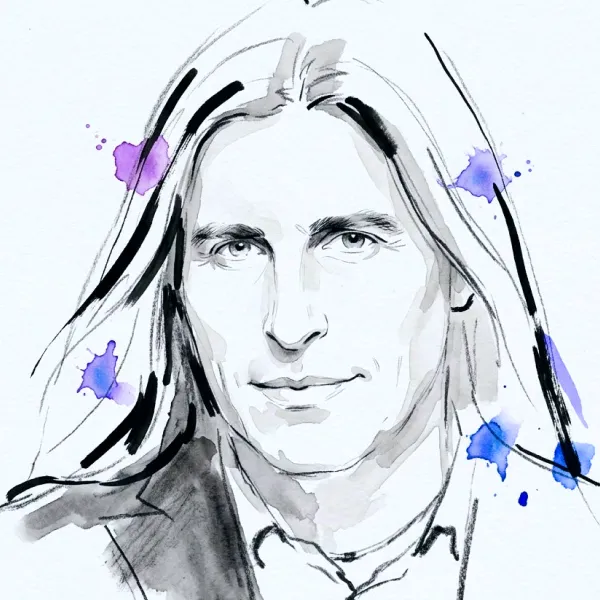
Roberto Menichetti is an American-born Italian fashion designer associated with technical outerwear, manufacturing research and the repositioning of heritage houses. His early career developed through the Menichetti family atelier in Gubbio, project work for GFT and Claude Montana, and Jil Sander, where he worked from 1992 to early 1998 across women’s research, menswear development and the Jil Sander–Puma project.
Menichetti joined Burberry in early 1998 as Creative Director, with Design Director also documented as a title variant. His principal remit was the new Burberry Prorsum runway line rather than sole authority over the core collections. Across six seasons, he shifted trench coats, check, leather, cashmere and lightweight technical fabrics into a more concentrated fashion proposition and gave the GUS-era house its first securely named modern central design leadership.
Burberry did not renew his three-year contract after March 2001. He subsequently held a short Cerruti appointment, developed work under his own name and served as Céline’s creative lead in 2004–05. Later projects have included Brema, Ballantyne, JH 1912 and advisory work for Turnbull & Asser.
Turnbull & Asser formally appointed Menichetti Creative Director in December 2025 after an extended advisory period. In March 2026 he also became Creative Director of Tricker’s in connection with a new majority investment. His exact birth date remains unverified.
Design ethos
Menichetti modernises established dress through material research and editing. Technical cloth, leather, cashmere, sportswear construction and restrained tailoring are used to reduce heritage forms without stripping away their practical purpose.
At Burberry Prorsum, lightweight outerwear and altered trenches supplied the central structure. Check changed colour, scale and placement, functioning as material within the garment rather than as branding applied after design. The strongest season, Autumn/Winter 2000–01, brought motorcycle reference, compact tailoring and weatherproof construction into a clearer system.
His career repeatedly joins design to manufacturing knowledge. That proximity can produce exact product and fabric development, but it also requires careful credit between the designer, family atelier, heritage company and specialist makers.
Disclaimer
Career history
2005
Celine announced Roberto Menichetti’s departure on 25–26 May 2005 after two collections and began another search for design leadership. The departure confirmed the post-Kors period as a sequence of brief and distinct recalibrations.
2004
Roberto Menichetti succeeded Michael Kors and presented two collections that moved from graphic reduction towards more conservative tailoring. His brief appointment exposed the difficulty of resetting Celine’s fashion identity while maintaining its leather-goods business.
2001
Burberry announced on 8 March 2001 that Roberto Menichetti’s three-year contract would not be renewed beyond the end of that month. The company credited him with launching Prorsum and establishing a new design sensibility; no reliable contemporary source establishes dismissal, resignation or a specific creative dispute.
1998
Roberto Menichetti joined Burberry in early 1998 as its first securely named modern central fashion authority. His principal responsibility was the launch and development of Burberry Prorsum; Deborah Lloyd and Michael McGrath retained the core women’s and men’s collections, preventing the role from being inflated into sole authorship of all Burberry product.
You’re in
When the archive opens, you’ll be among the first to know.
That’s all.


