

Introduction
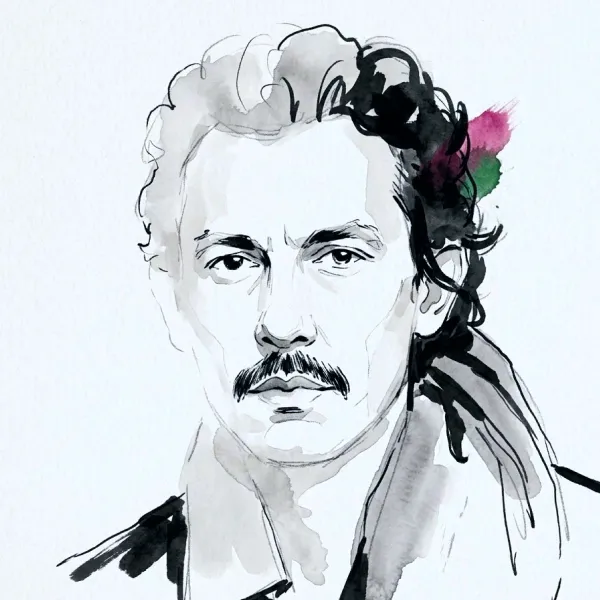
Haider Ackermann is a Colombian-born, Antwerp-trained designer whose career connects an independent Paris label with appointments at Berluti, Canada Goose and Tom Ford. Born in Bogotá on 29 March 1971 and raised across Chad, Ethiopia, Algeria and the Netherlands, he entered the Royal Academy of Fine Arts in Antwerp in 1994 and left without graduating in 1997. A five-month internship with John Galliano in 1998 was followed by assistant, showroom and concept-design work for Wim Neels, Bernhard Willhelm, Patrick Van Ommeslaeghe and Mayerline.
Ackermann formed his namesake label in 2001 and presented its first public womenswear collection in Paris in March 2002. He designed two seasons for Ruffo Research, won the Swiss Textiles Award in 2004 and expanded the label through Anne Chapelle’s BVBA 32 from 2005. A continuing menswear line followed in 2013. He later served as artistic director of Berluti from 2016 to 2018 and designed Jean Paul Gaultier’s one-season Spring 2023 haute couture guest collection.
The authorised runway record of the Haider Ackermann label ended in 2020 amid a corporate rupture; its former operating company entered bankruptcy in 2021 and the label remains dormant. Ackermann became Canada Goose’s first creative director on 15 May 2024 and Tom Ford creative director on 4 September 2024. His concurrent work separates Snow Goose’s technical outerwear from Tom Ford’s evening, tailoring and brand-image system while independent collaborations and custom dressing continue under his own name.
Design ethos
Ackermann works through tension: strict tailoring against liquid drape, dense leather against silk and cashmere, low light against sudden colour. Jackets are cut close or extended into long vertical lines, trousers sit with deliberate ease, and fabric wraps, reveals or interrupts the body. His palette often moves from black, white, tobacco and mineral neutrals into cobalt, emerald, lilac and acid tones.
The construction is precise but rarely static. Asymmetric closures, elongated sleeves, softened shoulders and low-slung proportions allow formal clothes to appear lived in, while surface and movement carry as much force as decoration. His early Ruffo Research work strengthened a material practice in which supple leather and specialist Italian manufacture support silhouettes that feel protective and exposed at once.
Across Berluti, Jean Paul Gaultier, Canada Goose and Tom Ford, Ackermann adapts a stable personal vocabulary to different institutional systems. At Berluti, it entered patinated leather and menswear craft; at Gaultier, couture construction was reduced to line and controlled colour; at Snow Goose, protection became lightweight technical utility; at Tom Ford, power dressing and sexuality are recast through restraint, psychological tension and cinematic image-making.
Disclaimer
Career history
2026
Jacques Marie Mage introduced its collaboration with Ackermann on 5 May 2026. The limited-edition project translated his interest in protection, exposure and tactile luxury into Japanese-made acetate, beta-titanium and leather-wrapped eyewear without establishing an Ackermann-owned eyewear line.
2025
Haider Ackermann’s first Tom Ford runway was one of the headline Paris debuts of early 2025.
2024
Haider Ackermann became Tom Ford creative director on 4 September 2024, responsible for menswear, womenswear, accessories and the wider brand vision. Based in Paris, he shifted the house from literal founder-era continuity toward precise tailoring, saturated colour and restrained sensuality.
2024
Canada Goose appointed Ackermann as its first creative director on 15 May 2024. Based in Paris and working alongside chairman and CEO Dani Reiss, he introduced the recurring Snow Goose platform while the exact extent of his authority over the mainline remained publicly undefined.
2023
Ackermann designed limited-edition refillable chrome Nomad vessels for Augustinus Bader in 2023. His remit covered the physical packaging and object language of The Cream and The Rich Cream, not the skincare formulations.
2023
Jean Paul Gaultier selected Ackermann as the fourth designer in its one-season haute couture guest programme. Working with the house ateliers, he completed a single Spring 2023 mandate centred on precise tailoring, controlled colour and reduced spectacle.
2022
FILA announced a one-off collaboration with Ackermann on 13 September 2022. The project returned him to a physical runway in Manchester on 17 November and translated his colour and body-conscious construction into technical sportswear without relaunching his own label.
2020
On 30 October 2020, Ackermann terminated his agreements with Atelier Haider Ackermann after unpaid remuneration and the collapse of the relationship with BVBA 32. The separation ended his authorised role in the operating company and left the namesake label without an active seasonal design structure.
2018
The label consolidated its men’s and women’s runway presentations in September 2018. The calendar shift made a shared tailoring vocabulary and interchangeable styling explicit while retaining commercial menswear and womenswear categories.
2018
Berluti announced Ackermann’s departure in March 2018 after three seasons. The separation closed his first leadership tenure at a major heritage house; his final authored runway collection had been presented in January.
2016
Berluti appointed Ackermann artistic director on 1 September 2016. Across three menswear seasons, he brought softened tailoring, saturated colour and a less conventional treatment of the house’s leather expertise; the tenure ended in March 2018.
2013
Colombiamoda staged a retrospective presentation of 38 Ackermann looks in Medellín in 2013, drawing from the label’s archive back to its 2002 debut. The institutional survey brought his work to Colombia without presenting a new seasonal collection.
2013
The label introduced its continuing menswear line in June 2013, three years after Ackermann’s one-off Pitti commission. The new division carried his low-slung trousers, silk, jacquard, scarves and elongated outerwear into a recurring commercial sequence.
2010
Fondazione Pitti Discovery gave Ackermann a carte blanche commission in Florence on 16 June 2010. The invitation produced his first securely documented menswear-centred project, but it remained a one-off institutional event and continuous menswear production did not follow until 2013.
2009
Following Martin Margiela’s departure, Ackermann was formally approached in 2009 about succeeding him at Maison Martin Margiela. He declined and continued to concentrate on his own label, so the contact belongs to his institutional chronology but does not constitute an appointment or collection authorship.
2005
Ackermann guest-curated the third issue of A Magazine Curated By in 2005, assembling contributions from figures including Tilda Swinton, Ann Demeulemeester and Raf Simons. The commission extended the newly capitalised label’s identity into publishing and made its themes of discretion, shadow and uncommon beauty explicit.
2004
Ackermann received the Swiss Textiles Award in November 2004, including a €100,000 prize. The funding and industry recognition helped stabilise the young label before its 2005 agreement with BVBA 32.
2002
Ruffo selected Ackermann for its experimental leather programme after his first own-label collection. He designed the Spring/Summer 2003 and Autumn/Winter 2003–04 Ruffo Research collections, using specialist Italian production while continuing his independent line; sources differ on whether the appointment began in late 2002 or 2003.
2001
Ackermann formed his namesake label in 2001 and directed its womenswear, later menswear and overall image through 2020. He terminated his agreements with Atelier Haider Ackermann on 30 October 2020 after the commercial relationship with the operating company broke down.
2000
Before founding his label, Ackermann worked as a concept designer for the Belgian womenswear company Mayerline. The commercial role provided experience of industrial production and conventional product development outside the avant-garde studio system; its precise start date remains unresolved.
1999
Ackermann worked for Patrick Van Ommeslaeghe around 1999–2000, including showroom sales responsibilities. The position exposed him to wholesale and the commercial mechanics surrounding an independent collection; it did not carry autonomous design authorship.
1999
Ackermann contributed to Bernhard Willhelm’s studio around 1999–2000 in an assistant capacity. The work formed part of a wider period of short, practical roles across Belgian and French independent fashion before he established his own label.
1998
After returning from Paris, Ackermann worked as an assistant to Wim Neels in Belgium around 1998–99. The role shifted his formation from academy work into the practical demands of sourcing, production and studio management.
1998
Haider Ackermann completed a five-month internship with John Galliano in Paris in 1998 after leaving the Antwerp Academy. The placement introduced him to a professional atelier built around historical construction, bias cutting and theatrical presentation, without giving him independent collection authorship.
1994
Ackermann entered the fashion programme at Antwerp’s Royal Academy of Fine Arts in 1994. He left without graduating in 1997 after perfectionism and missed submissions interrupted his studies, but the academy’s deconstructive discipline became a defining counterweight to his instinct for colour and drape.
You’re in
When the archive opens, you’ll be among the first to know.
That’s all.


