

Introduction
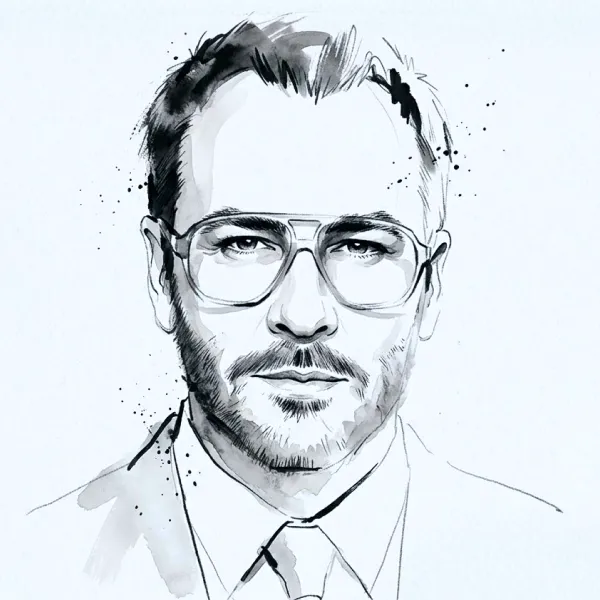
Tom Ford is an American designer, filmmaker and founder whose career joined fashion authorship to corporate image-making. Born in Austin, Texas, in 1961, he studied environmental design and interior architecture at Parsons and worked in the Chloé press office in Paris before entering New York fashion through Cathy Hardwick and Perry Ellis.
Ford joined Gucci in Milan in 1990 as chief women’s ready-to-wear designer, became design director in 1992 and creative director in 1994. Working with chief executive Domenico De Sole, he redirected the struggling leather-goods house through ready-to-wear, accessories, stores and provocative campaigns, then assumed creative control of Yves Saint Laurent Rive Gauche and YSL Beauté after Gucci Group acquired the house.
Ford and De Sole founded the Tom Ford label in 2005, launching first through beauty and eyewear before adding menswear, retail and womenswear. He retained creative control until the brand’s 2023 sale to The Estée Lauder Companies, concluding with an archival final collection. His parallel film company, Fade to Black, produced his directorial work, including A Single Man and Nocturnal Animals.
Design ethos
Ford approaches fashion as a complete environment. Garments, casting, photography, fragrance, interiors and retail architecture are organised around one legible character, with design decisions judged as much by image and atmosphere as by construction. This method expanded the creative-director role into oversight of the whole commercial and visual system.
His clothing is built from controlled glamour: close velvet tailoring, satin shirting, long evening lines, polished leather and exact surface finish. References to the 1970s, Hollywood and nightclub culture are sharpened into a disciplined luxury wardrobe, where exposed skin and direct sexuality are counterweighted by severe proportion and material precision.
Ford’s strongest work also depends on editing and commercial clarity. He repeatedly translated runway ideas into accessories, eyewear, fragrance and red-carpet dressing, while using scarcity, cinematic release formats and tightly controlled campaigns to manage desire. The result is less an isolated silhouette language than a reproducible system for making fashion, product and publicity reinforce one another.
Disclaimer
Career history
2023
Tom Ford stepped down from creative leadership when the acquisition closed, ending eighteen years as the house’s controlling author. He and Domenico De Sole remained advisers through the end of 2023, without continuing day-to-day executive authority.
2023
Tom Ford signalled his exit from the label with a final Fall 2023 collection release after the sale of the business.
2017
The house abandoned see-now-buy-now after one principal season, citing the production and shipping friction created by immediate availability. Tom Ford returned to the conventional seasonal sequence and resumed a standard New York Fashion Week rhythm.
2016
Tom Ford shifted Autumn/Winter 2016 to an immediate-retail model, presenting menswear and womenswear in New York as the collection became available to buy. The move compressed the conventional fashion calendar and tested whether luxury production could support instant delivery.
2005
Ford established the film production company Fade to Black in March 2005, separating his cinema work from the fashion business. The company became the production vehicle for his directing career, including A Single Man and Nocturnal Animals.
2005
Tom Ford co-founded his eponymous house with Domenico De Sole in April 2005 and served as its principal creative author. He directed fashion, retail, fragrance, eyewear and image through the sale of the business, stepping down when the acquisition closed on 28 April 2023.
2004
Ford’s Gucci Group contract ended on 30 April 2004 after the November 2003 non-renewal announcement. His final men’s and women’s collections remain separate Collection records; the structural succession passed to Stefano Pilati.
2004
Tom Ford and Domenico De Sole left Gucci Group in April 2004 after contract negotiations with controlling shareholder PPR failed over creative and managerial autonomy. The departure ended Ford’s fourteen-year progression from womenswear designer to group-wide creative authority.
2004
Tom Ford and Domenico De Sole left Gucci Group in April 2004 after contract negotiations with controlling shareholder PPR failed over creative and managerial autonomy. The departure ended Ford’s fourteen-year progression from womenswear designer to group-wide creative authority.
2003
Contract negotiations between PPR, Tom Ford and Domenico De Sole collapsed in November 2003 over the future governance of Gucci Group. Ford and De Sole announced that they would leave when their contracts ended, setting the April 2004 transition in motion.
2003
Contract negotiations between PPR, Tom Ford and Domenico De Sole collapsed in November 2003 over the future governance of Gucci Group. Ford and De Sole announced that they would leave when their contracts ended, setting the April 2004 transition in motion.
2000
Ford received overall YSL brand and image authority on 18 January 2000, assumed direct responsibility for women’s Rive Gauche in March and took over menswear after Slimane’s departure. His mandate covered collections, products, campaigns, communications and stores while the founder couture house remained separate.
1994
Tom Ford became Gucci creative director in 1994 and consolidated responsibility for ready-to-wear, accessories, stores, fragrance and advertising. Working with Domenico De Sole, he made a unified, sexually charged image central to the house’s commercial revival and international expansion.
1992
Ford was promoted to design director in 1992, extending his remit across multiple product lines, fragrance and store design. The role established the house-wide scope that preceded his elevation to creative director.
1992
Ford was promoted to design director in 1992, extending his remit across multiple product lines, fragrance and store design. The role established the house-wide scope that preceded his elevation to creative director.
1990
Dawn Mello recruited Tom Ford to Gucci in 1990 as chief women’s ready-to-wear designer. Over fourteen years he expanded from product design into control of the house’s collections, stores, fragrance and image before departing Gucci Group with Domenico De Sole in April 2004.
1990
Dawn Mello recruited Tom Ford to Gucci in 1990 as chief women’s ready-to-wear designer. Over fourteen years he expanded from product design into control of the house’s collections, stores, fragrance and image before departing Gucci Group with Domenico De Sole in April 2004.
1988
Ford joined Perry Ellis in 1988 as a design director working across the women’s American division and jeans under the broader creative leadership of Marc Jacobs. He left in 1990 to pursue a European luxury-house career.
1986
During his Parsons studies in Paris, Tom Ford interned in Chloé’s press and public-relations office. The experience gave him direct exposure to a European fashion house before he completed his environmental-design degree and entered New York apparel design.
1986
Tom Ford began his professional fashion career as a design assistant to Cathy Hardwick in New York. The two-year role gave him his first sustained experience inside a Seventh Avenue sportswear studio.
You’re in
When the archive opens, you’ll be among the first to know.
That’s all.


